
Adhesive capsulitis, more commonly known as frozen shoulder, is a challenging condition marked by persistent, deep-seated pain and a progressive stiffening of the shoulder joint. This loss of mobility can significantly disrupt daily activities, from reaching for a shelf to simply getting dressed. While conventional medical treatments are available, many individuals seek complementary options to support their recovery. This guide is designed to provide a comprehensive overview of effective natural remedies for frozen shoulder, focusing on holistic strategies that address the root causes of pain and inflammation.
We will explore seven distinct, evidence-supported methods that can help manage symptoms and restore function without relying solely on pharmaceuticals. Each remedy is presented with practical, actionable steps, allowing you to create a personalized and integrative treatment plan. From targeted exercises and traditional therapies like acupuncture to specific anti-inflammatory nutritional support, you will gain the knowledge to actively participate in your healing journey. This article moves beyond generic advice to offer a detailed roadmap for reducing discomfort, improving your range of motion, and ultimately breaking free from the constraints of a frozen shoulder. We will delve into how these natural approaches work, empowering you with the tools needed for lasting relief and recovery.
1. Heat Therapy and Warm Compresses
Applying warmth is one of the most accessible and effective natural remedies for frozen shoulder, particularly for managing the hallmark stiffness and deep, aching pain. Heat therapy works by dilating blood vessels, which increases blood flow to the affected shoulder capsule. This enhanced circulation delivers more oxygen and nutrients to the tissues, facilitating healing and reducing inflammation. Furthermore, the warmth helps to decrease the viscosity of the synovial fluid within the joint, promoting smoother, less painful movement.

How to Apply Heat Therapy Effectively
The primary goal of using heat is to relax the tight muscles and connective tissues surrounding the shoulder joint, making them more pliable. This is especially beneficial before performing gentle stretching or physical therapy exercises, as it can significantly improve your range of motion and reduce the discomfort associated with movement.
- Pre-Stretch Preparation: Use a heating pad or a warm, moist towel on your shoulder for 15-20 minutes immediately before your daily stretching routine. This "warms up" the capsule, making the tissues more receptive to the exercises.
- Soothing Soak: Take a warm bath or shower for at least 20 minutes. Allow the warm water to flow directly over your shoulder to deeply penetrate the joint and alleviate morning stiffness.
- Convenient Relief: Apply wearable heat wraps during the day for continuous, low-level warmth. This can help manage persistent aching while you are at work or performing daily activities.
Key Considerations for Safe Application
While heat therapy is a powerful tool, proper application is crucial to maximize benefits and avoid injury. To manage the different phases of frozen shoulder, investing in tools that can provide both warmth and cold is a practical approach. High-quality reusable hot and cold packs offer the versatility needed for comprehensive care. To maximize the benefits of both heat and cold applications, versatile and durable solutions like these are indispensable.
Pro Tip: Opt for moist heat over dry heat. A damp towel placed between the heating pad and your skin allows the warmth to penetrate more deeply into the muscle and connective tissue for superior relief.
Always place a cloth barrier between the heat source and your skin to prevent burns. Limit each session to a maximum of 20 minutes to avoid skin irritation. This simple yet profound natural remedy can significantly improve comfort and mobility throughout your recovery journey.
2. Gentle Stretching and Range of Motion Exercises
Engaging in regular, gentle stretching is one of the most crucial natural remedies for frozen shoulder, as it directly addresses the progressive stiffening of the shoulder capsule. The goal of these exercises is to carefully and gradually restore mobility without causing further inflammation or pain. By consistently moving the joint through its available range, you can help break down adhesions, improve the flexibility of the joint capsule, and prevent the loss of muscle mass due to disuse.
How to Perform Key Stretches Effectively
The key to success with stretching is consistency and gentleness. These movements should be performed slowly and deliberately, focusing on elongating the tissues around the joint. Engaging in regular active range of motion exercises for pain relief is paramount to restoring mobility and alleviating the stiffness associated with frozen shoulder.
- Pendulum Swings: Lean forward, supporting your good arm on a table. Let the affected arm hang down and use your body's momentum to gently swing it in small circles, both clockwise and counterclockwise.
- Wall Walks: Stand facing a wall, about an arm's length away. Slowly "walk" the fingers of your affected arm up the wall as high as you can comfortably go, hold for a few seconds, and then slowly walk them back down.
- Cross-Body Stretch: Use your good arm to gently pull the affected arm across your chest until you feel a light stretch in the shoulder. Hold this position without bouncing.
Key Considerations for Safe Application
Proper form and listening to your body are essential to prevent injury and promote healing. Never push into sharp pain; the sensation should be a mild, pulling tension. Consistent, gentle effort is far more effective than aggressive, infrequent stretching. For a deeper understanding of therapeutic movements, you can learn more about how to relieve shoulder blade pain.
Pro Tip: Always warm up your shoulder with heat therapy for 15-20 minutes before starting your exercises. This increases blood flow and makes the connective tissues more pliable, allowing for a safer and more effective stretch.
Start with passive stretches (where your good arm does the work) and gradually progress to active-assisted and then fully active movements as your range of motion improves. Hold each stretch for 15-30 seconds and aim to perform your routine 3-5 times per day for optimal results.
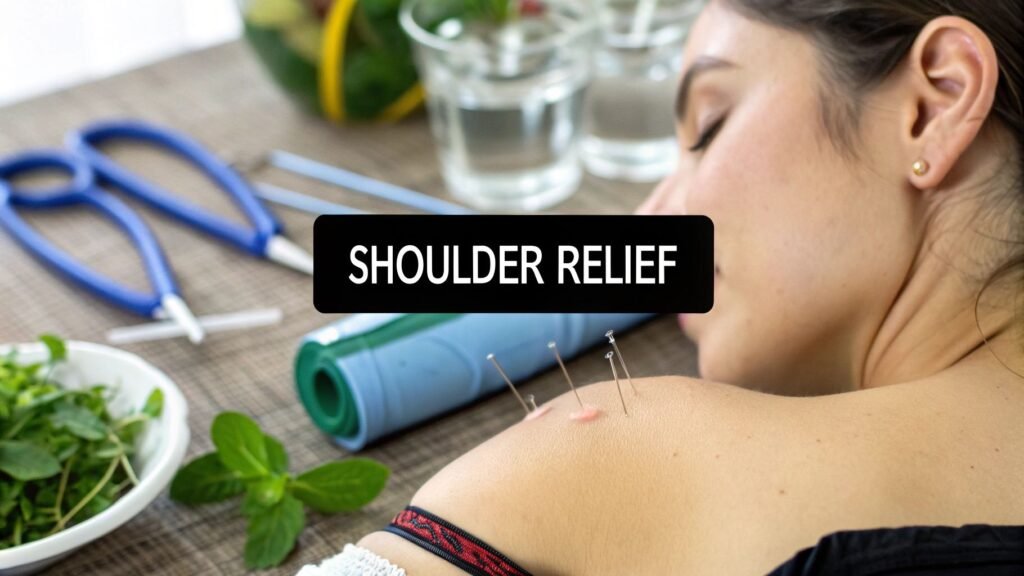
3. Acupuncture and Traditional Chinese Medicine
Acupuncture, a cornerstone of Traditional Chinese Medicine (TCM), stands as one of the most respected ancient natural remedies for frozen shoulder. This practice involves the insertion of ultra-thin needles into specific acupoints on the body to restore the balanced flow of energy, or "Qi." By stimulating these points, acupuncture is believed to trigger the body’s natural painkillers, reduce inflammation, and increase circulation to the stiff shoulder capsule, thereby promoting healing and pain relief.
How to Apply Acupuncture Effectively
The goal of acupuncture for frozen shoulder is to alleviate pain, break down adhesions, and restore functional mobility. A licensed acupuncturist will typically target specific points around the shoulder joint, such as LI-15 (Jianyu) and SJ-14 (Jianliao), as well as distal points on the arms and legs to address underlying imbalances contributing to the condition. This holistic approach helps manage pain and accelerate recovery.
- Targeted Treatment: Practitioners often combine needling with other TCM modalities like electro-acupuncture, where a small electric current is passed between needles to enhance pain relief and muscle relaxation.
- Combination Therapy: To amplify results, your practitioner may recommend applying an herbal liniment, such as Dit Da Jow, to the shoulder after treatment to further improve circulation and reduce bruising or soreness.
- Consistent Sessions: For chronic conditions like frozen shoulder, a consistent treatment schedule is key. Most practitioners recommend one to two sessions per week initially to build therapeutic momentum.
Key Considerations for Safe Application
To ensure safety and efficacy, it is crucial to seek a qualified and credentialed practitioner, such as a Licensed Acupuncturist (LAc). A thorough initial consultation will help them understand your specific condition and any other health issues. When administered by a trained professional, acupuncture for joint pain is a safe and powerful therapy for restoring movement.
Pro Tip: Inform your acupuncturist of all medications and health conditions before your first session. This ensures they can create a safe and effective treatment plan tailored to your needs while avoiding any potential contraindications.
Give the treatment at least 6-8 weeks to fully assess its effectiveness, and continue your gentle stretching routine between sessions to maintain progress. Avoid strenuous activity immediately following a treatment to allow your body to integrate the therapeutic effects.
4. Turmeric and Curcumin Supplements
Harnessing the power of botanicals is a cornerstone of natural remedies for frozen shoulder, and turmeric stands out for its potent anti-inflammatory properties. The vibrant yellow spice contains an active compound called curcumin, which has been utilized for centuries in Ayurvedic and traditional medicine to manage pain and inflammation. Curcumin works by inhibiting key inflammatory pathways and enzymes in the body, which can help reduce the chronic inflammation within the shoulder capsule that contributes to the pain and stiffness of frozen shoulder.
This natural approach helps to decrease pain signaling and supports the body’s intrinsic healing mechanisms by mitigating oxidative stress. Incorporating turmeric and its concentrated extract, curcumin, into your routine offers a systemic way to address the underlying inflammation, complementing more direct physical treatments.
How to Use Turmeric and Curcumin Effectively
The goal is to achieve a therapeutic dose of curcumin, which can be challenging through diet alone. For this reason, targeted supplementation and specific preparation methods are often recommended to maximize its benefits for joint health.
- Daily Golden Milk: Prepare a "golden milk" latte by warming milk (or a non-dairy alternative) with a teaspoon of turmeric powder, a pinch of black pepper, and a healthy fat like coconut oil. Consuming this daily can provide consistent anti-inflammatory support.
- High-Potency Supplements: For more significant effects, consider a standardized curcumin supplement. Look for formulations like BCM-95 or Meriva that are specifically designed for enhanced bioavailability and are backed by clinical research.
- Culinary Integration: Add fresh or powdered turmeric generously to your meals. It pairs well with smoothies, soups, curries, and roasted vegetables, providing a steady, low-dose intake.
Key Considerations for Safe Application
To get the most out of this powerful spice, proper consumption is key. Curcumin is not easily absorbed by the body on its own, so how you take it matters significantly. Consistency is also crucial, as its effects build up over time.
Pro Tip: Always consume turmeric or curcumin with a source of piperine (found in black pepper) and a healthy fat (like avocado, nuts, or olive oil). Piperine can increase curcumin's bioavailability by up to 2,000%, while fat further aids its absorption into the bloodstream.
Choose supplements that clearly state a standardized content of 95% curcuminoids to ensure you are getting a potent product. It is advisable to use the supplement for at least 4-8 weeks to accurately assess its effectiveness. If you are taking blood-thinning medications or have other health conditions, consult your healthcare provider before starting a curcumin regimen.
5. Massage Therapy and Myofascial Release
Therapeutic massage and myofascial release are powerful hands-on natural remedies for frozen shoulder, directly addressing the adhesions and scar tissue that restrict movement. These techniques work by applying sustained pressure to the tight connective tissues (fascia) and muscles surrounding the shoulder joint. This process helps to break up adhesions, release muscle tension, and improve tissue pliability, which is essential for restoring a healthy range of motion. The increased blood flow stimulated by massage also brings vital oxygen and nutrients to the area, promoting healing and reducing pain signals.

How to Apply Massage and Myofascial Release Effectively
The main objective is to release trigger points and lengthen shortened muscle fibers, particularly in the chest, upper back, and rotator cuff muscles that contribute to the shoulder’s immobility. This approach is particularly effective when used consistently to manage pain and progressively increase flexibility.
- Targeted Self-Massage: Use a massage ball (like a lacrosse ball) to apply pressure to trigger points. Place the ball between your back and a wall, lean into it, and hold on a tender spot for 30-60 seconds until the tension eases. Focus on the infraspinatus muscle below your shoulder blade.
- Professional Deep Tissue: A qualified therapist can target specific muscles, such as the pectoralis minor and subscapularis, which are often tight and difficult to reach on your own. This can provide significant relief from the deep, aching pain characteristic of frozen shoulder.
- Broad Release with Foam Rolling: Use a foam roller to address general tightness in your upper back (thoracic spine) and latissimus dorsi muscles. Gently rolling these areas can improve overall upper-body mobility and take pressure off the shoulder joint itself.
Key Considerations for Safe Application
While massage is highly beneficial, it's crucial to approach it with care, especially during the painful freezing stage. Start gently and communicate with your therapist about your pain levels. Combining this technique with other natural remedies for frozen shoulder can create a more comprehensive and effective treatment plan.
Pro Tip: For maximum benefit, perform your massage or myofascial release after applying heat. The warmth makes the muscles more pliable and receptive to the pressure, allowing for a deeper and more comfortable release. Follow up with gentle stretching to capitalize on the newly created mobility.
Always listen to your body and avoid any movements that cause sharp pain. Start with short, 3-5 minute self-massage sessions daily and consider scheduling professional therapy 1-2 times per week during the most acute phases of your condition. Remember to breathe deeply throughout the process to help your nervous system relax and enhance the therapeutic effect.
6. Omega-3 Fatty Acids and Anti-Inflammatory Diet
While external therapies are crucial, addressing systemic inflammation from within is a powerful and often overlooked natural remedy for frozen shoulder. An anti-inflammatory diet rich in omega-3 fatty acids provides the body with the building blocks to combat the chronic inflammation that contributes to the thickening and tightening of the shoulder capsule. This nutritional approach works by decreasing the production of pro-inflammatory compounds like cytokines, supporting overall joint health and enhancing the body's innate healing capabilities.
How to Implement an Anti-Inflammatory Diet
The core principle is to shift your diet away from processed, pro-inflammatory foods and toward whole, nutrient-dense foods that actively reduce inflammation. This strategy supports your recovery by creating a healthier internal environment that is less prone to the pain and stiffness characteristic of adhesive capsulitis. Over time, these dietary changes can lead to noticeable improvements in pain levels and mobility.
- Embrace Healthy Fats: Incorporate fatty fish like salmon, mackerel, and sardines into your meals 2-3 times per week. For plant-based sources, add ground flaxseed or walnuts to oatmeal, salads, and smoothies.
- Power Up with Phytonutrients: Consume a wide variety of colorful fruits and vegetables, aiming for 8-10 servings daily. Berries, leafy greens, and cruciferous vegetables are particularly potent anti-inflammatory agents.
- Spice Up Your Meals: Liberally use anti-inflammatory spices like turmeric and ginger in your cooking. A warm cup of "golden milk" made with turmeric, ginger, and black pepper can be a soothing daily ritual.
Key Considerations for Nutritional Support
Consistency is the key to reaping the benefits of dietary changes. Adopting this as a long-term lifestyle modification rather than a short-term diet will yield the best results. For those seeking a structured approach, the Mediterranean diet, which emphasizes fish, olive oil, and fresh produce, serves as an excellent framework. Understanding how to reduce inflammation through nutrition can be a game-changer in your healing process.
Pro Tip: Keep a food and symptom journal for a few weeks. This can help you identify specific foods that may trigger an increase in your shoulder pain or stiffness, allowing you to personalize your anti-inflammatory approach for maximum effect.
Simultaneously, it's vital to reduce or eliminate foods that promote inflammation, such as refined sugars, processed carbohydrates, and unhealthy trans fats. A high-quality omega-3 supplement (providing 1000-2000mg of combined EPA/DHA daily) can also be a practical way to ensure you are meeting your therapeutic needs.
7. Cold Therapy and Ice Application
While heat therapy is excellent for stiffness, cold therapy is a crucial natural remedy for frozen shoulder during its initial, painful "freezing" stage. Cryotherapy, or the application of ice, works by constricting blood vessels in the shoulder area. This vasoconstriction reduces blood flow, which in turn significantly decreases inflammation, swelling, and nerve activity, providing a numbing effect that can offer immediate relief from sharp, acute pain.
How to Apply Cold Therapy Effectively
The primary goal of cold therapy is to manage the acute inflammation and pain that characterize the first phase of frozen shoulder. By controlling this initial inflammatory response, you can make daily activities more tolerable and set the stage for a more comfortable transition into the later "frozen" and "thawing" phases where mobility becomes the main focus.
- Initial Injury Management: During the first few weeks after symptoms begin, apply a gel ice pack or a bag of frozen peas to the most painful area of your shoulder for 15 minutes, several times a day.
- Post-Activity Relief: If a particular movement or activity causes a flare-up of sharp pain, apply ice immediately afterward to calm the inflammation and prevent prolonged discomfort.
- Contrast Therapy: In the transitional phase, when the shoulder feels both stiff and painful, try alternating between cold and heat. Apply an ice pack for 15 minutes, followed by a heating pad for 15 minutes, to address both inflammation and stiffness.
Key Considerations for Safe Application
Using cold therapy correctly is essential for it to be effective and to prevent skin or nerve damage. It is most beneficial during the acute inflammatory phase (typically the first 2-4 weeks) when the shoulder is painful even at rest.
Pro Tip: For targeted relief, try an ice massage. Freeze water in a paper cup, peel back the rim, and massage the ice directly onto the most painful points of your shoulder in a circular motion for 5-7 minutes. This allows for deeper, more focused cold penetration.
Always place a thin towel or cloth between the ice pack and your skin to prevent ice burn. Limit each application to 10-15 minutes, and wait at least two hours between sessions. If you find that ice increases stiffness or worsens your pain, discontinue use and focus on gentle movement and heat instead. This approach is a key part of a comprehensive strategy for managing the early stages of this condition.
Frozen Shoulder: 7 Natural Remedies Comparison
| Treatment | Implementation Complexity 🔄 | Resource Requirements ⚡ | Speed / Efficiency ⚡ | Expected Outcomes 📊 | Ideal Use Cases 💡 | Key Advantages ⭐ |
|---|---|---|---|---|---|---|
| Heat Therapy and Warm Compresses | Low — simple self-application 🔄 | Low — heating pad, warm bath, wraps ⚡ | ⚡ Immediate, short-lived relief (minutes) | 📊 Temporary pain/stiffness reduction; improves pre-stretch flexibility | 💡 Chronic/frozen stage or before stretching; avoid acute inflammation | ⭐ Accessible, low-risk, combines well with other therapies |
| Gentle Stretching & ROM Exercises | Moderate — progressive technique, adherence required 🔄 | Minimal — space/time; optional PT guidance ⚡ | ⚡ Slow but cumulative (weeks–months) | 📊 Gradual mobility restoration; prevents atrophy; variable by patient | 💡 First-line rehab for frozen shoulder; home or supervised PT | ⭐ Evidence-supported, non-invasive, empowers self-management |
| Acupuncture & TCM | Moderate–High — requires trained practitioner 🔄 | Moderate — clinic visits, possible adjuncts (cupping) ⚡ | ⚡ Moderate — multiple sessions over weeks | 📊 Many report pain reduction and improved ROM; study support exists | 💡 Chronic pain or adjunct when conventional care insufficient | ⭐ Drug-free pain relief; can complement other modalities |
| Turmeric / Curcumin Supplements | Low — oral supplementation routine 🔄 | Low–Moderate — quality supplements, piperine for absorption ⚡ | ⚡ Slow onset (2–8 weeks) | 📊 Systemic anti-inflammatory effect; modest pain reduction | 💡 Adjuvant for systemic inflammation; long-term joint support | ⭐ Natural, generally safe, cost-effective adjunct |
| Massage Therapy & Myofascial Release | Moderate — skill-dependent; self-options available 🔄 | Moderate — therapist fees or self-tools (balls, foam) ⚡ | ⚡ Often immediate symptomatic relief; lasting benefit needs repeat | 📊 Breaks adhesions, reduces muscle tension, often improves mobility | 💡 Soft-tissue restrictions or when pain referral pattern present | ⭐ Rapid relief and improves tissue mobility; pairs with stretching |
| Omega-3 & Anti‑Inflammatory Diet | Moderate — requires sustained dietary change 🔄 | Moderate — food sourcing or supplements, planning ⚡ | ⚡ Slow — weeks to months to change markers/symptoms | 📊 Reduces systemic inflammatory markers; supports joint health | 💡 Long-term inflammation management and prevention | ⭐ Broad health benefits with low adverse effects |
| Cold Therapy & Ice Application | Low — simple correct application 🔄 | Low — ice pack, gel pack, frozen goods ⚡ | ⚡ Fast (minutes) for acute pain/inflammation | 📊 Reduces acute swelling and pain; short-term effect | 💡 First 48–72 hours after onset or acute flares; transition to heat later | ⭐ Highly effective for acute inflammation and analgesia |
Your Next Steps Toward Unlocking Your Shoulder
Navigating the challenging journey of a frozen shoulder requires a dedicated, multi-layered approach. The natural remedies detailed in this guide, from targeted heat therapy and gentle range-of-motion exercises to the powerful anti-inflammatory properties of turmeric and omega-3s, are not just isolated solutions. They are integral components of a comprehensive healing strategy designed to work in synergy, addressing the condition from every angle. By consistently integrating these practices, you can actively reduce inflammation, alleviate persistent pain, and gradually reclaim the mobility you have lost.
The core principle behind successfully using natural remedies for frozen shoulder is creating a supportive environment for your body to heal. This involves both proactive measures and attentive self-care. It's about combining the internal benefits of an anti-inflammatory diet with the external relief provided by acupuncture, massage, and strategic temperature therapy. Your path to recovery is not a sprint; it is a marathon built on consistent, daily habits.
Key Takeaways for Your Healing Journey
To make your efforts as effective as possible, it is crucial to move forward with intention and a clear plan. Focus on these essential takeaways as you begin to implement these strategies:
- Consistency is Crucial: The benefits of gentle stretching, anti-inflammatory supplements, and acupuncture are cumulative. Sporadic efforts will yield limited results. Commit to a daily or weekly routine to see meaningful, long-term improvement.
- Listen to Your Body: Pain is a signal. While gentle stretching is essential for restoring mobility, pushing through sharp or intense pain can cause setbacks. Learn to differentiate between the discomfort of a productive stretch and the warning signs of overexertion.
- A Multi-Faceted Approach Works Best: Do not rely on a single remedy. True progress comes from layering multiple strategies. For example, use a warm compress to relax the shoulder muscles before performing your daily stretches to maximize their effectiveness and minimize discomfort.
- Patience is Your Ally: The "thawing" phase of a frozen shoulder can be slow and frustrating. Acknowledge and celebrate small victories, such as a slight increase in your range of motion or a day with less pain. This mindset is vital for staying motivated throughout the recovery process.
Ultimately, mastering these approaches empowers you to take an active role in your own healing. It moves you from being a passive recipient of pain to an engaged participant in your recovery. By understanding and applying these natural remedies for frozen shoulder, you are not just treating symptoms; you are addressing the underlying inflammation and stiffness, paving the way for a future with less pain and greater freedom of movement. Your next step is to choose one or two of these methods and begin incorporating them into your life today, building a foundation for a stronger, more mobile tomorrow.
If you are in the Chino, CA area and seeking expert guidance, consider a personalized treatment plan that integrates these principles with advanced techniques. At Eric Tsai Acupuncture and Herbs, Dr. Tsai specializes in creating customized strategies for complex conditions like frozen shoulder, helping you accelerate your recovery and achieve lasting relief. Visit Eric Tsai Acupuncture and Herbs to learn more and schedule your consultation.