

When we talk about the best supplements for the nervous system, a few key players always come to mind. We have the foundational nutrients like B-vitamins, magnesium, and omega-3s, but we also have more targeted compounds like L-theanine and various adaptogens. Their job is to support neurotransmitter production, shield our nerve cells from damage, and help the body handle stress more effectively.
How Supplements Support Your Nervous system
Think of your nervous system as the body's sophisticated electrical grid. It's the intricate network that powers every single thought, feeling, and movement you make. For this grid to work without a hitch, it needs constant upkeep and high-quality materials. This is where supplements come in—they act like a specialized maintenance crew, delivering the precise raw materials needed to keep the power flowing smoothly.
When we have nutritional gaps, that grid starts to falter. You might experience what feels like a 'power surge'—anxiety or irritability—or a 'brownout' that manifests as brain fog and fatigue. Targeted supplementation helps shore up this neurological infrastructure, making it more resilient and high-functioning.
Building Blocks for Brain Communication
One of the most important jobs supplements have is providing the raw materials for making neurotransmitters. These are the chemical messengers—serotonin, dopamine, GABA, and others—that allow our nerve cells to talk to each other. You can think of them as data packets zipping across your body's internal internet.
If you don't have enough of the right nutrients, like certain B-vitamins, your body simply can't produce enough of these messengers. The result is a communication breakdown, which we often experience as mood swings or an inability to focus.
A well-nourished nervous system is a resilient one. Supplements are not a quick fix but rather a foundational strategy to supply the essential components your body needs for optimal nerve function, stress adaptation, and cognitive clarity.
Protecting the Wiring
Another critical role for these nutrients is maintaining the myelin sheath, a fatty layer that insulates our nerve fibers. It's just like the rubber coating on an electrical wire; it prevents signals from short-circuiting and ensures they travel at top speed. Nutrients like omega-3 fatty acids are absolutely essential for building and repairing this protective coating.
A Growing Field of Interest
With the rising focus on mental wellness, it's no surprise that there's a huge interest in this area. The global market for mental well-being supplements says it all, valued at around $11.49 billion in 2025 and projected to climb to $17.37 billion by 2030.
This growth highlights a growing awareness of how natural compounds and nootropics can support our cognitive health and stress response. To really understand how these aids work, it's helpful to explore what focus supplements for adults explained are and how they demystify key ingredients for enhanced mental clarity.
It’s crucial to remember that supplements work best as part of a personalized, holistic strategy. They aren't standalone cures. For those interested in an integrated approach, it’s worth exploring how these nutritional tools can complement other modalities. For instance, understanding the synergy between supplements and traditional Chinese herbal formulas can offer a more complete picture of nervous system support. Ultimately, these supplements provide the essential resources to build a stronger, more adaptable neurological framework.
Foundational Supplements for Neuronal Health
Think of your nervous system like a house. It needs a strong foundation to stand firm and function properly. In the same way, key nutrients act as the non-negotiable building blocks for neuronal health, providing the raw materials for everything from nerve signaling to the protective insulation around your nerves.
When these foundational elements are missing, the entire system can falter. This can show up as brain fog, persistent anxiety, or a deep sense of fatigue. We'll start with three of the most critical players I see in my practice: Omega-3 fatty acids, Magnesium, and the B-Vitamins. These aren't just trendy supplements; they are fundamental components every clinician should consider when building a protocol for nervous system support.
Omega-3s: The Flexible Wiring for Your Nerves
Picture your neurons as a massive, intricate network of electrical wires. For signals to zip across this network quickly and cleanly, the wiring needs to be flexible and well-insulated. That's exactly the role Omega-3 fatty acids play, especially DHA and EPA. They are physically integrated into the neuronal cell membranes, keeping them fluid and responsive.
A lack of these healthy fats can lead to brittle, sluggish "wiring," which directly impairs how brain cells communicate with one another. This is why a consistent supply of Omega-3s—whether from fatty fish, flaxseeds, or walnuts—is so vital. For supplementation, a combined daily dose of 1,000 to 2,000 mg of EPA and DHA is a common clinical starting point for general neurological support.
Magnesium: The Calming Gatekeeper
If Omega-3s are the wiring, then Magnesium is the gatekeeper that prevents the whole system from getting overloaded. It has a critical job at nerve junctions, known as synapses, where it helps regulate the flow of ions. You can think of it as a natural calcium channel blocker, putting the brakes on excessive nerve cell excitation.
This calming effect is precisely why magnesium is so helpful for patients dealing with anxiety, muscle tension, and poor sleep. When magnesium levels are too low, nerve cells can become hyper-excitable, leaving a person stuck in a constant state of "on" alert.
- Magnesium Glycinate: This form is highly bioavailable and gentle on the stomach. I often prefer it for neurological benefits because the attached glycine molecule has its own calming properties.
- Magnesium L-Threonate: A standout form that has shown a unique ability to cross the blood-brain barrier, making it a very promising option for direct cognitive support.
- Magnesium Citrate: While it works, this form has a more pronounced laxative effect, which can make it less ideal when the goals are purely neurological.
A typical dosage for neurological support is 200-400 mg of elemental magnesium per day, and taking it in the evening often enhances its relaxing effects.
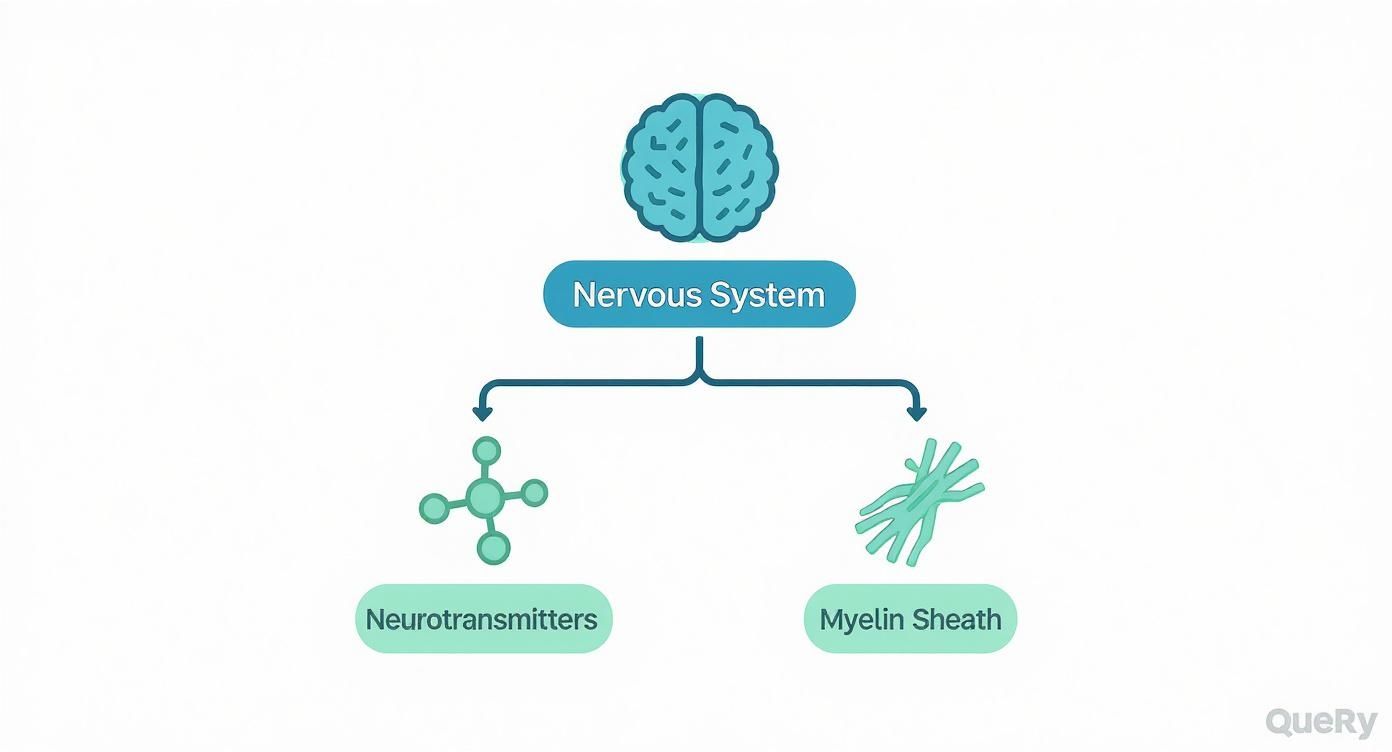
The image above really drives home the point. A healthy nervous system depends on the proper function of both its messengers (neurotransmitters) and its physical infrastructure (the myelin sheath).
B-Vitamins: The Neurotransmitter Factory Workers
Last but not least, we have the B-Vitamins. I like to call them the essential factory workers for your nervous system. They are the catalysts—the cofactors—that help create and break down neurotransmitters, the very chemicals that govern mood, focus, and sleep. For brain health, the big three are B6, B9 (Folate), and B12.
Without enough B-Vitamins, your body simply can't produce adequate serotonin, dopamine, or GABA. This creates a metabolic bottleneck that can directly contribute to symptoms of depression, anxiety, and cognitive decline.
These vitamins work as a team in a critical biochemical process called methylation, which is necessary for both building neurotransmitters and maintaining the protective myelin sheath.
- Vitamin B6 (Pyridoxine): A direct cofactor needed to synthesize GABA, serotonin, and dopamine. Typical doses are in the 25-50 mg daily range.
- Vitamin B9 (Folate): Essential for DNA repair and neurotransmitter production. I almost always recommend the active form, L-methylfolate (5-MTHF), especially for patients with MTHFR gene variations. Doses often range from 400-1,000 mcg.
- Vitamin B12 (Cobalamin): Absolutely vital for maintaining the myelin sheath. Methylcobalamin is the preferred active form for neurological support, with doses from 1,000-5,000 mcg.
Because these vitamins function so closely together, a high-quality B-complex supplement is often the most effective and balanced starting point. It's also crucial to remember that a healthy circulatory system is needed to deliver these nutrients to the brain. For more on that synergistic relationship, you can read our guide on the best herbs for blood circulation.
Let's pull this all together. These three supplement categories form the bedrock of any nutritional protocol aimed at supporting the nervous system. Below is a quick-reference table summarizing the key details we've just covered.
Foundational Supplements for Nervous System Support
| Supplement | Primary Neurological Function | Typical Daily Dosage Range | Key Clinical Considerations |
|---|---|---|---|
| Omega-3s (EPA/DHA) | Supports cell membrane fluidity and reduces neuroinflammation. | 1,000–2,000 mg combined EPA + DHA | Choose a high-quality, third-party tested fish oil to ensure purity and potency. Triglyceride form is best absorbed. |
| Magnesium | Regulates neurotransmitter function and provides a calming, anti-excitatory effect. | 200–400 mg elemental magnesium | Form matters: Glycinate for calm, L-threonate for cognition. Start low to assess bowel tolerance. |
| B-Vitamins (B6, B9, B12) | Act as cofactors for neurotransmitter synthesis and myelin sheath maintenance. | Varies: B6 (25-50 mg), B9 (400-1,000 mcg), B12 (1,000-5,000 mcg) | A B-complex is often best. Always use active forms (P-5-P, L-methylfolate, methylcobalamin) for superior bioavailability. |
This table serves as a solid starting point for clinical decision-making. Of course, the real art lies in tailoring these recommendations to the individual patient's presentation, lab work, and overall health picture.
Targeted Supplements for Stress and Cognition

While foundational nutrients set the stage, we can get much more specific. For patients struggling with stress or cognitive issues, certain specialized compounds offer a more direct line of support. We're talking about adaptogens and nootropics—substances that help fine-tune the nervous system’s response to life's pressures.
These aren't sedatives. Instead, they work to modulate our internal "alarm systems" and sharpen mental clarity. This targeted approach is incredibly useful for clients dealing with chronic stress, brain fog, or anyone simply looking to optimize their cognitive performance. Let's dig into some of the most reliable options I use in my practice.
Ashwagandha: The Stress Modulator
Ashwagandha (Withania somnifera) is the quintessential adaptogen, famous for its remarkable ability to help the body adapt more gracefully to stress. I often explain the body's stress response system—the HPA axis—as being like a sensitive smoke detector. When someone is under chronic stress, that detector gets hair-trigger sensitive, blasting the alarm (and a flood of cortisol) at the slightest provocation.
Ashwagandha doesn't unplug the detector. It just helps recalibrate its sensitivity, ensuring it only goes off when there's a real fire. By helping to modulate cortisol levels, it can quiet that feeling of being constantly "on edge."
Clinical evidence backs this up, showing that standardized Ashwagandha root extracts can significantly lower scores on perceived stress and anxiety questionnaires. A typical clinical dose is 300-600 mg of a standardized extract daily, usually split into two doses.
A quick note: Ashwagandha can have a mild sedative effect for some, and it’s important to be mindful of potential interactions with thyroid, sedative, and immunosuppressant medications.
L-Theanine: Calm Focus Without Drowsiness
Found almost exclusively in tea leaves, L-Theanine is a fascinating amino acid. It’s what gives you that unique feeling of "alert calmness." It does this by boosting alpha brain wave activity, which is the same brain state you see in deep meditation—relaxed, but highly focused.
This makes it a fantastic choice for people who feel both wired and tired. It can take the jittery edge right off of stimulants like caffeine, while leaving the focus-enhancing benefits intact.
- Mechanism: It works by increasing levels of calming neurotransmitters like GABA, serotonin, and dopamine.
- Typical Dosage: A good starting point is 100-200 mg, taken once or twice a day.
- Safety: It’s exceptionally well-tolerated, with a very low risk of side effects or drug interactions.
If you’re interested in how botanicals like this fit into a broader wellness plan, our guide on herbal remedies for anxiety and stress offers more perspective.
Rhodiola Rosea: The Fatigue Fighter
Rhodiola is another powerhouse adaptogen, historically used to fight fatigue and boost both mental and physical stamina, especially under pressure. It seems to work by influencing key neurotransmitters and protecting cells from the oxidative stress that comes with being run down.
I find this herb particularly helpful for patients hitting a wall—that classic burnout feeling of mental and physical exhaustion. It can lift mood, sharpen focus, and restore energy without making you feel jittery.
Look for a standardized extract containing 3% rosavins and 1% salidroside, as this is the clinical standard. Dosages of 200-400 mg per day are common, but it's best taken earlier in the day so it doesn't interfere with sleep. A word of caution: individuals with bipolar disorder should avoid it, as it has been known to trigger manic episodes.
Lion's Mane: The Brain Builder
Shifting gears from stress to pure cognition, Lion's Mane mushroom (Hericium erinaceus) is a top-tier nootropic. Its real claim to fame is its ability to stimulate the production of Nerve Growth Factor (NGF), a crucial protein for the growth, maintenance, and survival of our neurons.
By supporting NGF, Lion's Mane may enhance neuroplasticity—the brain's amazing ability to forge new connections. This makes it a compelling option for supporting memory, focus, and long-term brain health. The demand for natural compounds that support the nervous system is significant; the global market for herbal supplements for mental health was valued at an estimated $15.04 billion in 2025 and is projected to reach about $27.73 billion by 2034.
In clinical studies, dosages typically range from 500-3,000 mg of a high-quality extract each day. For those looking to dive deeper into enhancing specific cognitive functions, exploring other dedicated supplements for brain health can provide further avenues for support. These targeted supplements offer a sophisticated layer of care, allowing us to build nuanced protocols that address the very specific challenges of stress and cognitive demand.
A Clinician's Checklist for Choosing Quality Supplements

Walking through the supplement aisle can be overwhelming, even for a seasoned clinician. It’s a space filled with bold claims and confusing labels. As the demand for nervous system support grows, our role in guiding patients toward safe, effective products has never been more critical.
A high-quality supplement isn't just about the active ingredients. It's about ensuring purity, confirming potency, and—most importantly—choosing a form the body can actually use. This guide offers a practical framework to cut through the marketing noise and select supplements with clinical confidence.
First, Look for Third-Party Certifications
Your first and most important filter should be a seal of approval from an independent, third-party organization. Think of these certifications as an unbiased quality control check, verifying that what’s on the label is actually what’s in the bottle.
In a loosely regulated industry, this is a non-negotiable step. These groups test for potency (does it contain the amount it claims?), purity (is it free of contaminants like heavy metals or pesticides?), and proper manufacturing practices. Without this external validation, you’re simply taking the manufacturer's word for it.
Here are the key players in third-party testing. Knowing what each seal represents helps you and your patient make an informed choice based on objective data, not just marketing.
Third-Party Certification Comparison
| Certification Body | What It Guarantees | Key Benefit for Clinicians |
|---|---|---|
| NSF International | Confirms the product contains the ingredients and amounts listed on the label and is free from undeclared substances or unsafe levels of contaminants. | Provides confidence in product identity and purity, crucial for athletes and patients with sensitivities. |
| U.S. Pharmacopeia (USP) | Ensures the supplement meets stringent standards for identity, strength, purity, and performance (e.g., proper dissolution). | Verifies that the supplement will break down and release ingredients in the body as expected. |
| ConsumerLab.com | Independently tests a wide range of products for identity, strength, and purity, then publishes detailed reports on its findings. | Offers an additional layer of trusted, independent verification and comparative product reviews. |
Ultimately, guiding patients toward products with these certifications is the foundational step in ensuring both safety and efficacy. It protects them from ineffective formulas and, more seriously, from potentially harmful contaminants.
Second, Prioritize Bioavailability Over Brute Force Dosage
More isn't always better. The critical question isn't how much of a nutrient is packed into a capsule, but how much the body can actually absorb and put to work. This is the principle of bioavailability.
A massive dose of a poorly absorbed nutrient often ends up being far less effective—and more expensive—than a smaller dose of a highly bioavailable form. Take magnesium, for example. Magnesium oxide is cheap and commonly used, but it's poorly absorbed and more likely to cause digestive upset. Chelated forms like magnesium glycinate or L-threonate, on the other hand, are bound to amino acids, which the body recognizes and absorbs much more efficiently.
Teaching patients to spot these superior forms is a game-changer. It helps them invest in supplements that will deliver real physiological benefits.
Common Bioavailable vs. Less Effective Forms:
| Nutrient | Superior Bioavailable Forms | Less Effective Forms |
|---|---|---|
| Magnesium | Glycinate, L-Threonate, Malate | Oxide, Sulfate |
| B9 (Folate) | L-methylfolate (5-MTHF) | Folic Acid (synthetic) |
| B12 | Methylcobalamin, Adenosylcobalamin | Cyanocobalamin |
| Zinc | Picolinate, Gluconate | Oxide, Sulfate |
Third, Watch Out for Red Flags and Marketing Gimmicks
Finally, a discerning eye can spot the tell-tale signs of a lower-quality product. One of the biggest red flags is the use of "proprietary blends."
This term allows manufacturers to list a mix of ingredients without disclosing the exact amount of each one. It sounds impressive, but it’s often used to hide the fact that the blend is mostly inexpensive fillers with only trace amounts of the expensive, active ingredients. Always advise patients to choose products with transparent labeling.
Also, be cautious of a long list of "other ingredients." While some excipients are needed to create a stable pill, a laundry list of additives like artificial colors, talc, or titanium dioxide suggests the product is diluted with unnecessary junk. Simpler is almost always better.
Weaving Supplements into Your Holistic Treatment Plan
While highly targeted nervous system supplements can be incredibly effective, they rarely do the job alone. True, lasting wellness doesn't come from a single pill; it emerges from a cohesive strategy that treats the whole person, not just a collection of symptoms. The best clinical outcomes happen when we thoughtfully weave nutritional science together with acupuncture, herbal medicine, and meaningful lifestyle changes.
Think of it this way: supplements are like delivering high-quality lumber and wiring to a construction site. These materials are essential, but you still need an architect (acupuncture) to draw up the blueprints and skilled electricians (mindfulness practices) to connect the circuits properly. This integrated approach creates a powerful synergy where each component amplifies the effects of the others.
The Synergy of Combined Therapies
When you combine nutritional support with traditional practices, you create a dynamic where the whole is far greater than the sum of its parts. Often, one modality sets the stage for another to work more effectively, kicking off a positive feedback loop that accelerates healing and builds resilience.
For example, a patient struggling with anxiety might begin an acupuncture protocol designed to calm the shen and regulate the nervous system. While this is effective on its own, its impact can be magnified tenfold if we simultaneously address an underlying magnesium deficiency. Correcting that deficit provides the biochemical foundation for calm, allowing the acupuncture treatments to land on much more fertile ground for a deeper, more lasting effect.
Integrating supplements isn't about just adding more tools to the toolbox; it’s about making sure every tool works together. A patient's diet provides the fuel, supplements fill specific gaps, and practices like acupuncture direct the body’s qi and resources toward healing and rebalancing.
This synergy shows up in countless clinical scenarios:
- B-Vitamins and Mindfulness: B-vitamins are crucial for synthesizing neurotransmitters like serotonin and GABA. When a patient practices meditation to manage their mood, having adequate B-vitamin levels ensures their brain actually has the chemical building blocks it needs to achieve that calm, focused state.
- Omega-3s and Physical Therapy: Imagine a patient recovering from a nerve injury. Supplementing with potent, anti-inflammatory Omega-3s can help manage the underlying inflammation, which can make the physical rehabilitation process smoother, less painful, and ultimately more effective.
- Adaptogens and Lifestyle Shifts: An individual using Ashwagandha to buffer the effects of chronic stress will see far better results if they also adopt lifestyle habits that support their HPA axis. This could mean establishing a consistent sleep schedule, engaging in gentle movement, and setting healthy boundaries to reduce their allostatic load.
Building a Cohesive Clinical Strategy
Crafting a successful, multi-faceted plan requires looking past the chief complaint to understand the patient’s complete health picture. It’s a collaborative process that respects both modern nutritional science and the wisdom of traditional healing systems. This approach ensures every recommendation—from a specific supplement to a particular acupuncture point—serves a unified goal.
A practical, layered plan often involves these key steps:
- Foundational Nutrition: We always start with diet. This means balancing blood sugar, removing inflammatory foods, and ensuring the patient is properly hydrated with adequate electrolytes. No supplement can out-perform a poor diet.
- Targeted Supplementation: Based on symptoms and, whenever possible, lab testing, we introduce specific supplements to correct deficiencies and provide targeted support for neuronal function and repair.
- Mind-Body Practices: Incorporating techniques like diaphragmatic breathing, yoga, or somatic exercises helps retrain the nervous system’s response to stress. The goal is to guide it out of a chronic fight-or-flight state and back into one of safety and regulation.
- Clinical Interventions: Modalities like acupuncture and custom herbal formulas work to rebalance the body’s energetic systems, release stored tension, and address the root constitutional patterns driving the nervous system dysregulation.
Ultimately, the objective is to create a self-reinforcing cycle of wellness. As a patient's nutrition improves, they have more energy for mindfulness. As acupuncture calms their system, their sleep deepens. This layered strategy addresses health from every angle, fostering a profound and sustainable return to balance.
Common Questions About Nervous System Supplements
It's only natural to have questions when you're considering supplements for nervous system health. As a clinician, I hear them every day. Getting clear, straightforward answers is the first step toward feeling confident and safe with any new health strategy.
Let's walk through some of the most common questions that come up in my practice, so you have the information you need to make smart decisions.
How Long Until I Notice a Difference?
This is usually the very first thing people ask, and it's a great question. Unlike a medication that forces a specific chemical reaction, supplements work by giving your body the raw materials it needs to heal itself. The timeline for that process depends entirely on where you're starting from.
Think of it like trying to fill a reservoir that's run nearly dry. If you have a significant, long-standing deficiency in something like vitamin B12 or magnesium, it can take several weeks to a few months of consistent supplementation to fully replenish your body's stores. Only then will you start to notice real shifts in things like your energy levels, mood, or nerve-related symptoms.
Several factors will influence how quickly you see results:
- Your Starting Point: Someone with a severe deficiency will naturally take longer to feel better than a person with a mild insufficiency.
- Dose and Form: We can speed things up by using therapeutic doses and highly absorbable forms of a nutrient, like choosing methylcobalamin for B12 instead of a less effective form.
- Diet and Lifestyle: A nutrient-dense diet and solid stress management create the perfect environment for supplements to do their job effectively.
- Your Unique Biology: Everyone’s metabolism is a little different, affecting how quickly you absorb and use nutrients.
It's all about setting realistic expectations. While some people feel a sense of calm from L-theanine within an hour, rebuilding foundational health with omega-3s or B-vitamins is a more gradual process. It’s a marathon, not a sprint.
Can I Get All I Need From Food?
In a perfect world, yes. A well-planned diet rich in fatty fish, leafy greens, nuts, and seeds is the cornerstone of neurological health. But we don't live in a perfect world. Several real-world challenges make it incredibly difficult for most people to get everything they need from food alone.
A food-first approach is always the best foundation. Think of targeted supplementation as a crucial insurance policy, filling the specific nutritional gaps that modern diets and lifestyles often create.
For one, modern farming has depleted many of our soils, which means the fruits and vegetables we eat today often contain fewer vitamins and minerals than they did 50 years ago. On top of that, the chronic stress that’s so common in our lives burns through key nutrients—especially magnesium and B-vitamins—at an accelerated rate. Your body’s demand simply outpaces what a healthy diet can supply.
This is why, even for those who eat well, smart supplementation often becomes a necessary strategy to give the nervous system the high-quality resources it needs to thrive.
Are There Any Risks or Side Effects?
Even though they're "natural," supplements are still powerful substances and should be treated with respect. Most side effects are mild and often related to digestion. For example, some forms of magnesium can cause loose stools, which is why I typically recommend starting with a low dose of a gentle form, like magnesium glycinate.
The more serious risks involve potential interactions with prescription medications. For instance, an adaptogenic herb like Ashwagandha can amplify the effects of sedatives or thyroid medication, so we have to be smart about it.
To keep you safe, I always follow these three principles:
- Start Low, Go Slow: We’ll begin with a minimal effective dose and only increase it if needed.
- Choose Quality: I only recommend professional-grade supplements from reputable brands that use third-party testing to verify their purity and potency.
- Consult a Professional: Never start a new supplement regimen without talking to a knowledgeable healthcare provider, especially if you have a pre-existing condition or take any medications.
This expert oversight is essential for building a safe, effective plan that truly supports your overall health.
At Eric Tsai Acupuncture & Herbs, we believe in a fully integrated approach to wellness. We combine the precision of acupuncture and the wisdom of herbal medicine with evidence-based nutritional guidance to create a treatment plan that addresses your unique health needs from every angle. If you're ready to restore balance and support your nervous system's health, we invite you to schedule a consultation and discover how our personalized care can help you on your journey to lasting well-being.