
Feeling persistently drained, wired yet tired, and overwhelmed by daily stressors is a common experience that many attribute to "adrenal fatigue." While this term isn't a formal medical diagnosis, the cluster of symptoms it describes points to a genuine state of imbalance, often rooted in the body's chronic stress response. This profound exhaustion signals that the hypothalamic-pituitary-adrenal (HPA) axis, our central stress command center, may be dysregulated and in need of support. Addressing this requires a multifaceted approach that goes beyond simply managing symptoms; it involves nurturing the body's resilience from the ground up.
Herbal medicine, particularly adaptogens, offers a powerful toolkit for restoring balance. These remarkable plants help the body adapt to physical, chemical, and biological stress, normalizing physiological processes without overstimulating or inhibiting them. This guide provides a comprehensive roundup of the best herbs for adrenal fatigue, offering an evidence-aware perspective that integrates both Western research and the time-tested wisdom of Traditional Chinese Medicine (TCM).
In the following sections, we will explore eight key herbs, including Ashwagandha, Rhodiola, and Licorice Root. For each one, you will find:
- Claimed Benefits & Mechanisms: How each herb supports HPA axis function and alleviates symptoms.
- Quality of Evidence: A realistic look at the scientific backing for its use.
- Dosing & Practical Tips: Actionable guidance for safe and effective implementation.
- Interactions & Contraindications: Critical safety information to consider.
This listicle is designed to empower you with the knowledge to make informed decisions alongside your healthcare provider. True recovery involves a holistic strategy that includes nutrition, lifestyle adjustments, and stress management techniques. Beyond herbal remedies, managing chronic stress is paramount. For instance, exploring the benefits of Swedish massage therapy in reducing anxiety and stress offers a valuable complementary approach to calm the nervous system and support adrenal recovery. Let's begin our exploration of these botanical allies.
1. Rhodiola Rosea
Rhodiola Rosea, also known as golden root, is a powerful adaptogenic herb revered for its ability to enhance the body's resilience to stress. Hailing from the cold, high-altitude regions of Europe and Asia, this herb has a long history of use in traditional medicine, particularly in Scandinavian and Russian cultures, to combat fatigue and improve mental clarity. As one of the most researched and effective herbs for adrenal fatigue, Rhodiola helps to balance the hypothalamic-pituitary-adrenal (HPA) axis, the body's central stress response system.

How It Supports Adrenal Health
Rhodiola's primary action is modulating cortisol, the body's main stress hormone. During periods of chronic stress, cortisol levels can become dysregulated, leading to the exhaustion and burnout associated with adrenal fatigue. Rhodiola helps normalize cortisol levels, preventing the extreme peaks and valleys that can tax the adrenal glands.
It contains active compounds like rosavins and salidroside, which are believed to enhance energy metabolism at the cellular level and protect against oxidative stress. This dual action not only improves physical stamina and mental focus but also helps restore a sense of calm and well-being. By supporting the HPA axis, Rhodiola helps your body adapt more efficiently to stressors rather than succumbing to them. For more details on cortisol regulation, you can learn how to reduce cortisol levels naturally on drerictsai.com.
Practical Tips for Use
To get the most out of Rhodiola, consider these guidelines:
- Timing is Key: Take Rhodiola in the morning or early afternoon. Its energizing properties can interfere with sleep if taken too late in the day.
- Standardized Extracts: Look for supplements standardized to contain at least 3% rosavins and 1% salidroside. This ensures you are receiving a consistent and therapeutic dose.
- Be Patient: While some people notice effects within a few days, it can take 3-4 weeks for the full adaptogenic benefits to become apparent.
- Typical Dosing: A common starting dose is 100-200 mg per day, which can be increased if needed. Always follow the product's instructions or consult with a healthcare provider.
- Interactions: Rhodiola may interact with blood pressure medications, diabetes drugs, and antidepressants. Consult your practitioner before starting, especially if you have a pre-existing condition or are on medication.
2. Ashwagandha (Withania somnifera)
Ashwagandha, often called "Indian Ginseng," is a cornerstone of Ayurvedic medicine, where it has been used for over 3,000 years to rejuvenate the body and mind. As a premier adaptogenic herb, it excels at calming the nervous system and enhancing the body's ability to cope with both physical and emotional stress. Its unique, dual-action properties help restore energy while promoting a sense of tranquility, making it one of the best herbs for adrenal fatigue, particularly when stress manifests as anxiety and exhaustion.
How It Supports Adrenal Health
Ashwagandha's primary benefit for adrenal health lies in its proven ability to lower cortisol levels. In a state of chronic stress, the adrenal glands are constantly signaled to produce cortisol, which can lead to HPA axis dysregulation and burnout. Ashwagandha helps to down-regulate this stress response, providing the adrenal glands with a much-needed respite.
The active compounds in ashwagandha, known as withanolides, are responsible for its therapeutic effects. These compounds help to reduce inflammation, improve insulin sensitivity, and protect brain cells from the damaging effects of stress. By moderating the body's stress pathways, ashwagandha not only alleviates the symptoms of adrenal fatigue, such as weariness and irritability, but also supports the foundational health of the endocrine system. For a deeper dive into this topic, you can learn more about how to support adrenal glands on drerictsai.com.
Practical Tips for Use
To effectively incorporate Ashwagandha into your wellness routine, follow these practical tips:
- Timing for Your Needs: Take it in the morning to manage daytime stress or in the evening to promote restful sleep. Its calming properties make it versatile for either purpose.
- Enhance Absorption: Ashwagandha is fat-soluble, so taking your supplement with a meal that contains healthy fats (like avocado or olive oil) can improve its absorption.
- Choose Standardized Extracts: For reliable and consistent effects, opt for a supplement standardized to a specific percentage of withanolides, typically between 1.5% and 5%.
- Typical Dosing: A common dose is 300-600 mg of a standardized extract per day, often split into two doses. Always begin with a lower dose to assess your tolerance.
- Interactions: Ashwagandha can potentially interact with thyroid medications, sedatives, and immunosuppressants. If you have an autoimmune condition or are taking medication, consult your healthcare provider before use.
3. Licorice Root (Glycyrrhiza glabra)
Licorice Root, or Glycyrrhiza glabra, is a foundational herb in both Traditional Chinese Medicine (TCM) and Western herbalism, known for its unique ability to support adrenal function. Unlike adaptogens that modulate the stress response, licorice works by directly influencing cortisol metabolism. This makes it a particularly strategic choice for individuals in the later stages of adrenal exhaustion, where cortisol levels are often low, and the body struggles to maintain energy and resilience throughout the day.

How It Supports Adrenal Health
Licorice root contains a key active compound called glycyrrhizin. This compound inhibits the enzyme (11-beta-hydroxysteroid dehydrogenase type 2) that breaks down cortisol into its inactive form, cortisone. By slowing this conversion process, licorice effectively extends the life of active cortisol in the bloodstream. This action helps maintain more stable energy levels and reduces the burden on overworked adrenal glands to produce more cortisol.
This mechanism is why it is considered one of the best herbs for adrenal fatigue when cortisol output is low, providing a sense of stability and endurance. In TCM, it is often used to harmonize ingredients in complex formulas and support the qi, or vital energy. Modern protocols, like those developed by Dr. James Wilson, often incorporate licorice to help restore HPA axis balance in cases of severe adrenal depletion.
Practical Tips for Use
To use licorice root safely and effectively, consider the following recommendations:
- Confirm Low Cortisol: This herb is best used when cortisol levels are confirmed to be low, typically through lab testing. Using it with high cortisol can exacerbate symptoms.
- Use the Right Form: For adrenal support, you need the whole licorice root containing glycyrrhizin. Avoid deglycyrrhizinated licorice (DGL), which has had this compound removed and is used primarily for digestive issues.
- Short-Term Use: Due to its potent effects, licorice should be used for limited periods, generally 3-6 months, followed by a break. Long-term use can lead to side effects.
- Monitor Blood Pressure: Glycyrrhizin can cause sodium and water retention, potentially leading to elevated blood pressure. Monitor your blood pressure regularly while using it.
- Balance with Potassium: To offset the potential sodium-retaining effects, increase your intake of potassium-rich foods like bananas, avocados, and leafy greens.
- Interactions: Licorice can interact with blood pressure medications, diuretics, and blood thinners. Always consult with a qualified healthcare provider before adding it to your regimen.
4. Eleuthero (Eleutherococcus senticosus) – Siberian Ginseng
Eleuthero, commonly known as Siberian Ginseng, is a classic adaptogenic herb praised for its ability to bolster physical and mental endurance under stressful conditions. Native to Northeastern Asia, this powerful plant has a storied history, particularly in Russia, where it was extensively researched and used by cosmonauts and Olympic athletes to enhance performance, reduce stress, and combat fatigue. Unlike other ginsengs, Eleuthero is not a stimulant; instead, it works by helping the body adapt more efficiently to environmental and psychological stressors, making it a cornerstone herb for adrenal fatigue.
How It Supports Adrenal Health
Eleuthero's primary benefit for adrenal support lies in its ability to enhance the body's resistance to stress without over-exhausting its resources. It helps to regulate the entire hypothalamic-pituitary-adrenal (HPA) axis, promoting a more balanced stress response. The active compounds, called eleutherosides, are believed to help conserve adrenal hormones like cortisol and adrenaline, preventing the glands from becoming overworked during prolonged periods of stress.
This mechanism not only supports adrenal gland function but also improves overall stamina and mental acuity. By moderating the effects of the stress hormone cortisol, Eleuthero helps prevent the fatigue, brain fog, and weakened immunity often linked to adrenal exhaustion. It essentially helps the body maintain a state of equilibrium, or homeostasis, even when faced with significant challenges.
Practical Tips for Use
To effectively incorporate Eleuthero into your routine, consider the following practical advice:
- Consistent Morning Use: Take Eleuthero in the morning or early afternoon to align with your body's natural energy cycles. Its supportive effects can sometimes interfere with sleep if taken later in the day.
- Look for Quality Extracts: Choose supplements standardized to a specific percentage of eleutherosides (typically 0.8% or higher) to ensure you receive a potent and reliable dose.
- Cycle for Sustained Benefits: To maintain its effectiveness, many practitioners recommend cycling Eleuthero. A common protocol is taking it for three weeks, followed by a one-week break.
- Synergistic Pairing: Eleuthero combines very well with other adaptogens. Pairing it with Rhodiola can create a powerful synergistic effect, with Eleuthero providing stamina and Rhodiola boosting mental focus.
- Be Aware of Interactions: Eleuthero may interact with blood thinners, diabetes medications, and drugs that affect the immune system. It's crucial to consult with a healthcare provider before starting, especially if you have a medical condition or are on medication.
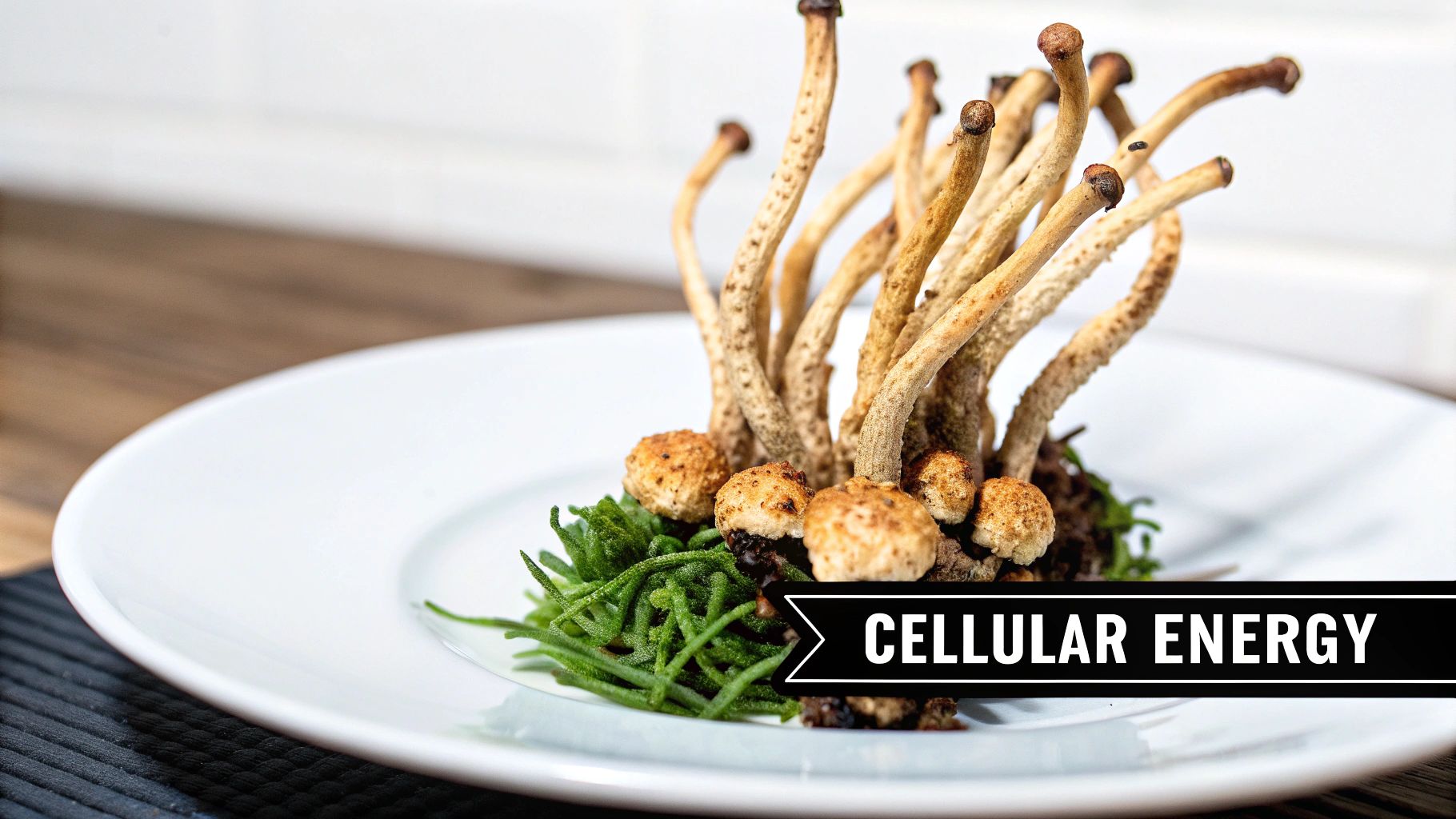
5. Cordyceps (Cordyceps militaris/sinensis)
Cordyceps is a unique medicinal mushroom with a long history in Traditional Chinese and Tibetan medicine, where it has been prized for centuries as a tonic for vitality and longevity. Unlike many adaptogens that primarily modulate the HPA axis, Cordyceps directly addresses the profound energy depletion at the core of adrenal fatigue. By enhancing cellular energy production, this fungus helps restore physical stamina and combat the deep-seated exhaustion that characterizes this condition, making it one of the best herbs for adrenal fatigue when a lack of physical energy is a primary symptom.
How It Supports Adrenal Health
Cordyceps works at the mitochondrial level, the powerhouses within our cells. Its active compounds, like cordycepin and adenosine, are known to increase the body's production of adenosine triphosphate (ATP), the primary molecule for storing and transferring energy in cells. This direct boost in cellular energy can lead to significant improvements in physical performance, endurance, and oxygen utilization, which is why it is popular among athletes.
By improving energy efficiency and reducing oxidative stress, Cordyceps helps alleviate the physical burden on the adrenal glands. This allows the body to recover more effectively from exertion and chronic stress, rather than continuing to draw on already depleted adrenal reserves. This mechanism offers a foundational approach to rebuilding energy from the ground up.
Practical Tips for Use
To effectively integrate Cordyceps into your wellness routine, consider the following:
- Choose Cultivated Cordyceps: Wild Cordyceps sinensis is rare and prohibitively expensive. Look for high-quality, cultivated Cordyceps militaris, which is more sustainable and contains consistent levels of active compounds.
- Take with Food: Consuming Cordyceps with a meal can help improve the absorption of its beneficial compounds.
- Consistency is Crucial: The benefits of Cordyceps are cumulative. Consistent daily use over several weeks is necessary to experience a noticeable improvement in energy levels and stamina.
- Typical Dosing: A common dose is 1,000-3,000 mg per day of a high-quality extract, often divided into two doses. Always adhere to the manufacturer's recommendations or consult your practitioner.
- Interactions: Cordyceps may have blood-thinning and blood-sugar-lowering effects. If you are on anticoagulant or diabetes medications, or have an autoimmune condition, consult with your healthcare provider before use.
6. Holy Basil (Ocimum sanctum) – Tulsi
Holy Basil, also known as Tulsi, is a revered herb in Ayurvedic medicine often called the "Queen of Herbs" for its restorative and spiritual properties. Considered a sacred plant in India, it is traditionally used to promote longevity and a state of calm well-being. As an adaptogen, Holy Basil is particularly effective for managing the mental and emotional strain that often accompanies adrenal fatigue, helping the body and mind cope with the pressures of modern life.
How It Supports Adrenal Health
Holy Basil's primary strength lies in its ability to modulate the body's stress response, specifically by helping to lower and regulate cortisol levels. Chronic stress keeps cortisol elevated, which taxes the adrenal glands and contributes to feelings of being overwhelmed and exhausted. Holy Basil contains active compounds like eugenol, rosmarinic acid, and ocimarin, which have been shown to reduce physiological stress markers.
Beyond cortisol regulation, this herb also possesses neuroprotective qualities, helping to enhance cognitive function and mental clarity, which are often compromised during periods of burnout. By calming the nervous system and fostering emotional balance, Holy Basil addresses the psychological aspects of adrenal fatigue. This makes it one of the best herbs for adrenal fatigue when stress manifests as anxiety, brain fog, and emotional instability.
Practical Tips for Use
To effectively incorporate Holy Basil into your routine, consider the following:
- Enjoy as a Daily Tea: Sipping on Tulsi tea throughout the day offers gentle, cumulative benefits. This is a traditional and accessible way to manage daily stress.
- Standardized Extracts for Potency: For a more therapeutic effect, look for supplements standardized to contain at least 2.5% ursolic acid to ensure consistent potency.
- Combine for Synergy: Holy Basil pairs well with other calming herbs like Ashwagandha or chamomile for enhanced relaxation. For comprehensive support, it can be taken with energizing adaptogens like Rhodiola to address both physical fatigue and mental stress.
- Mindful Consumption: Given its role in Ayurvedic and spiritual practices, consider incorporating Holy Basil into mindfulness or meditation routines to amplify its calming effects.
- Interactions: Holy Basil may have a mild blood-thinning effect and can lower blood sugar. Consult with a healthcare practitioner before use if you are on blood-thinning medications, have a bleeding disorder, or are taking diabetes medication.
7. Ginseng (Panax ginseng) – Korean/Asian Ginseng
A cornerstone of Traditional Chinese Medicine for thousands of years, Panax ginseng, often called Korean or Asian ginseng, is one of the most revered adaptogenic herbs worldwide. It is celebrated for its profound ability to bolster the body’s vitality and enhance resilience against physical and mental stressors. For those experiencing the deep exhaustion, weakness, and low mood associated with adrenal fatigue, ginseng offers a powerful restorative effect, making it a key component in many herbal protocols.
How It Supports Adrenal Health
Ginseng’s primary benefit for adrenal support lies in its capacity to regulate the hypothalamic-pituitary-adrenal (HPA) axis and modulate the release of stress hormones like cortisol. The active compounds, known as ginsenosides, help the body maintain homeostasis, preventing the extreme hormonal fluctuations that can lead to adrenal exhaustion. This balancing act helps restore normal adrenal function and improve the body's overall stress response.
Furthermore, Panax ginseng is known to combat fatigue by boosting energy production at a cellular level, enhancing physical performance and sharpening mental focus. Unlike stimulants such as caffeine, which can further tax the adrenal glands, ginseng provides a more sustained and nourishing form of energy. This makes it particularly effective for individuals who feel "wired but tired" and struggle with both physical and mental burnout.
Practical Tips for Use
To integrate ginseng into your wellness routine safely and effectively, consider the following:
- Morning Use Only: Ginseng is stimulating. To avoid potential sleep disruption, take it in the morning or early afternoon.
- Red vs. White Ginseng: Red ginseng is steamed and dried, a process that makes it more warming and stimulating. White ginseng is air-dried and considered slightly less potent, which may be better for more sensitive individuals.
- Implement Cycling: To maintain its effectiveness and prevent tolerance, many practitioners recommend cycling ginseng. A common approach is to take it for three weeks, followed by a one-week break.
- Quality Matters: Look for high-quality supplements sourced from Korea or China, as these are often considered the gold standard. A standardized extract ensures you receive a consistent therapeutic dose of ginsenosides.
- Consult a Professional: Ginseng can interact with blood thinners, diabetes medications, and certain antidepressants. It is essential to consult with a healthcare provider before use, especially if you have high blood pressure or an autoimmune condition.
8. Maca Root (Lepidium meyenii)
Maca Root, a cruciferous vegetable native to the high Andes of Peru, is a nutritional powerhouse often classified as a superfood. For centuries, indigenous Andean populations have used it to enhance vitality, endurance, and fertility. Unlike many adaptogens that exert a direct pharmacological effect on the HPA axis, Maca supports adrenal function primarily through its dense nutritional profile, providing the raw materials the body needs to produce hormones and manage stress effectively. It is considered one of the best herbs for adrenal fatigue due to its ability to nourish rather than stimulate the glands.
How It Supports Adrenal Health
Maca's strength lies in its rich content of essential amino acids, fatty acids, vitamins, and minerals like iron, magnesium, and zinc, all of which are crucial for optimal endocrine function. Instead of directly modulating cortisol, it provides the building blocks that help the adrenal glands maintain healthy hormone production without becoming overtaxed. This nutritional support helps the body build resilience from the ground up, improving energy levels, stamina, and overall mood.
Its balancing effect on the endocrine system makes it particularly beneficial when adrenal fatigue is linked to hormonal imbalances. By supporting the pituitary gland, a master controller in the HPA axis, Maca can help regulate the function of both the adrenal and thyroid glands, contributing to a more stable internal environment. This makes it a great choice for those experiencing symptoms of both low energy and hormonal disruption. You can explore a list of the best herbs for hormone balance at drerictsai.com to learn more.
Practical Tips for Use
To integrate Maca root into your wellness routine, consider the following:
- Choose Whole Powder: Opt for organic, gelatinized maca powder. The gelatinization process removes starches, making it easier to digest. Mix it into smoothies, oatmeal, or yogurt.
- Start Low, Go Slow: Begin with a small dose, such as one teaspoon (about 3-5 grams) per day, and gradually increase as needed. Its flavor is earthy and slightly nutty.
- Be Consistent: Maca's benefits are cumulative. It can take 6-8 weeks of consistent daily use to experience its full effects on energy and vitality.
- Combine with Other Adaptogens: Maca pairs well with other adaptogenic herbs like Ashwagandha or Holy Basil for a more comprehensive approach to adrenal support.
- Sourcing is Important: Ensure your Maca is sourced from its native region in Peru to guarantee quality and potency. Look for non-GMO and certified organic products.
Adrenal Fatigue: 8-Herb Comparison
| Herb | 🔄 Implementation Complexity | ⚡ Resource Requirements / Cost & Availability | 📊 Expected Outcomes (evidence) | 💡 Ideal Use Cases | ⭐ Key Advantages |
|---|---|---|---|---|---|
| Rhodiola Rosea | Moderate — standardized extract, 200–600 mg, effects in 2–4 weeks | Moderate cost; standardized (3% rosavins) preferred; widely available | Reduces fatigue, improves cognition & recovery (High) | Morning energy, stress resilience, physical & mental fatigue | Well-researched; non‑stimulating energy; dual mental/physical benefits |
| Ashwagandha (Withania) | Low–Moderate — 300–600 mg, 4–6 weeks to peak | Affordable; quality varies (5% withanolides recommended) | Lowers cortisol/anxiety, improves sleep and sustained energy (High) | Anxiety-driven adrenal fatigue, sleep support, evening or morning use | Strong anxiolytic and sleep benefits; safe long‑term |
| Licorice Root | Moderate — 400–800 mg, short cycles (3–6 months); monitor BP/electrolytes | Moderate cost; requires medical monitoring for hypertension | Extends cortisol action, supports BP and digestion (Moderate–High) | Later-stage cortisol depletion where preservation needed | Unique cortisol preservation; enhances other adrenal herbs |
| Eleuthero (Siberian Ginseng) | Low–Moderate — 300–600 mg, may benefit from cycling (e.g., 3w on/1w off) | Affordable but quality-dependent; standardized eleutherosides advisable | Improves stamina, endurance and focus (Moderate–High) | Physical fatigue, low motivation, athletic recovery | Enhances physical endurance with long safety history |
| Cordyceps (mushroom) | Moderate — 1000–2000 mg, cumulative 4–8 weeks | Cultured forms affordable; wild varieties costly; choose reputable source | Increases cellular ATP/oxygen use; boosts endurance (Moderate) | Cellular energy depletion, endurance athletes, respiratory support | Direct mitochondrial support; complementary to adaptogens |
| Holy Basil (Tulsi) | Low — easy as tea or 400–600 mg extract; gentle onset | Very affordable and widely available; fresh or extract forms | Reduces stress/anxiety, modest cortisol lowering (Moderate–High) | Daily stress, mental overwhelm, cumulative tea use | Very safe, pleasant taste, suitable for daily consumption |
| Ginseng (Panax) | Moderate — 400–800 mg, quality/age affects effect; morning use only for many | Often expensive; quality and source (Korean/Chinese) crucial | Boosts stamina, mood, resilience (High) | Fatigue with weakness or low mood, performance support | Powerful adaptogen with strong tradition and research |
| Maca Root | Low — 1500–3000 mg daily as whole food; 6–8 weeks for effect | Affordable whole food/superfood; source matters (Peru preferred) | Nutritional support for energy & hormones; mild stamina boost (Moderate) | Hormonal imbalance, nutritional adrenal support, gentle endurance | Nutrient-dense whole food; gentle, well‑tolerated energy support |
Your Next Step Towards Restored Vitality
Navigating the landscape of "adrenal fatigue" can feel overwhelming, but as we've explored, nature offers a powerful and nuanced toolkit to support your body's resilience. This journey through the best herbs for adrenal fatigue has highlighted a central theme: true recovery isn’t about finding a single magic bullet. Instead, it’s about creating a synergistic, personalized strategy that addresses your unique physiology and stressors.
We've covered a range of potent adaptogens and nervines, from the stimulating energy of Rhodiola Rosea and Panax Ginseng to the calming, restorative properties of Ashwagandha and Holy Basil. We examined how Licorice Root can support cortisol levels and how Eleuthero and Cordyceps can enhance endurance and combat profound fatigue. Each herb presents a distinct profile, underscoring the importance of matching the plant's action to your specific symptoms, whether you're feeling "wired and tired," completely depleted, or struggling with sleep and anxiety.
Key Takeaways for Your Wellness Journey
The most critical takeaway is the principle of bio-individuality. The right herb for you depends on your personal constitution, the nature of your stress, and your specific symptoms. An herb that energizes one person might be overstimulating for another.
- Adaptogens are Modulators, Not Just Stimulants: Remember that adaptogens work to balance your body's systems. Their goal is to help you adapt to stress more efficiently, not just to provide a temporary energy boost like caffeine. This means their effects are often subtle and build over time.
- Quality and Sourcing Matter: The efficacy of any herbal protocol is directly tied to the quality of the supplements you use. Always choose reputable brands that perform third-party testing for purity and potency to ensure you are getting an effective and safe product.
- Herbs are Part of a Holistic Picture: These powerful plants work best when integrated into a comprehensive wellness plan. This includes foundational lifestyle practices like prioritizing sleep, managing stress through mindfulness or meditation, engaging in gentle movement, and nourishing your body with a whole-foods diet.
- Professional Guidance is Essential: Self-diagnosing and self-prescribing, especially with potent herbs like Licorice Root or Panax Ginseng, can be risky. Certain herbs can interact with medications or may be contraindicated for specific health conditions like high blood pressure or autoimmune disorders.
Creating Your Action Plan
Feeling empowered by this knowledge is the first step. Translating it into action is the next. Avoid the temptation to start taking all eight herbs at once. A more strategic and sustainable approach will yield far better results and help you identify what truly works for you.
- Start with Self-Assessment: Review the profiles of the herbs discussed. Which one resonates most with your primary symptoms? Are you struggling more with anxiety and poor sleep (consider Ashwagandha or Holy Basil) or with physical exhaustion and low motivation (consider Rhodiola or Cordyceps)?
- Introduce One Herb at a Time: Begin with a low dose of a single herb. Monitor your body's response for at least two to four weeks before considering adding another or making a change. Keep a simple journal to track your energy levels, sleep quality, mood, and any other relevant symptoms.
- Prioritize Lifestyle Foundations: While you begin your herbal protocol, double down on the basics. Aim for 7-9 hours of quality sleep, incorporate a 10-minute daily mindfulness practice, and ensure your meals are rich in protein, healthy fats, and colorful vegetables. These actions create the foundation upon which herbs can build.
Ultimately, reclaiming your energy and vitality is a marathon, not a sprint. The thoughtful and strategic use of the best herbs for adrenal fatigue can be a profound ally on this path, offering support that respects and enhances your body's innate healing intelligence. By partnering with nature and seeking expert guidance, you can move from a state of surviving to one of thriving.
Ready to create a personalized herbal and acupuncture plan tailored to your unique needs? At Eric Tsai Acupuncture and Herbs, we specialize in integrating the wisdom of Traditional Chinese Medicine with modern insights to help you overcome fatigue and restore your body's natural balance. Schedule a consultation to discover how a targeted approach can help you reclaim your energy and vitality. Visit us at Eric Tsai Acupuncture and Herbs to learn more and book your appointment.