
Lower back pain is a pervasive issue, affecting millions and often stemming from a combination of weak core muscles, poor posture, and the demands of a sedentary lifestyle. Addressing this discomfort isn't just about managing symptoms; it’s about proactively building a resilient, functional spine. This guide moves beyond generic advice to provide a curated list of the best exercises for lower back health, covering everything from foundational strengthening movements to crucial mobility drills and pain-relieving stretches. We're here to help you take definitive, informed action.
This comprehensive listicle will delve into the precise mechanics of why each exercise works, offering detailed instructions, common pitfalls to avoid, and safe progressions for all fitness levels. By understanding the critical interplay between strength, stability, and flexibility, you can begin to not only alleviate current pain but also fortify your back against future issues. Beyond specific exercises, it's also important to consider your daily environment. A supportive sleep posture is a non-negotiable part of spinal health, which is why understanding how the right mattress can help alleviate back pain is a crucial, often overlooked, component of a holistic recovery plan.
We will explore eight evidence-based exercises, including Glute Bridges, Bird Dogs, and Cat-Cow stretches. For each movement, you will find:
- Step-by-step instructions for perfect form.
- Targeted muscle groups and their role in spinal support.
- Modifications for different fitness levels and conditions.
- Safety cues and signs you should stop.
Our goal is to provide a clear, actionable roadmap to building a stronger, more supportive core and achieving lasting relief.
1. Glute Bridges
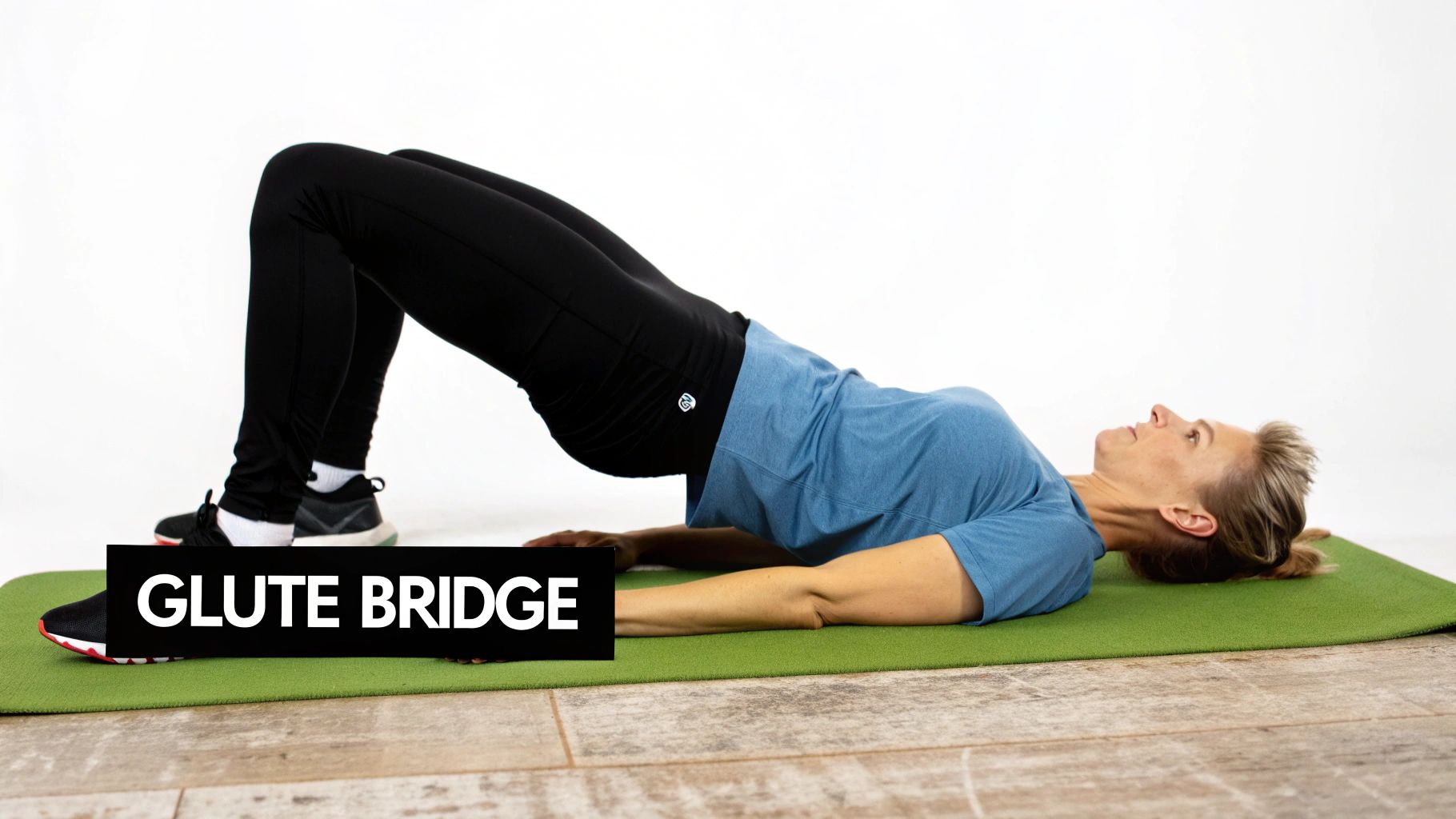
The Glute Bridge is a foundational exercise revered in both physical therapy and strength training for its ability to fortify the posterior chain, the group of muscles on the backside of your body. It directly targets the gluteus maximus, hamstrings, and the erector spinae muscles that run alongside the spine, making it one of the best exercises for lower back health. By strengthening these key supporters, the Glute Bridge helps stabilize the pelvis and lumbar spine, effectively counteracting the negative effects of prolonged sitting, such as weak glutes and tight hip flexors.
This exercise re-educates the body to use the glutes as the primary hip extensors, reducing the compensatory strain often placed on the lower back muscles during daily movements like lifting or climbing stairs. Its simplicity and effectiveness make it a staple in rehabilitation programs for back pain, warm-up routines for athletes, and core stability sequences in practices like Pilates.
How to Perform the Glute Bridge Correctly
Proper form is crucial to maximize benefits and prevent injury. Follow these steps for a perfect Glute Bridge:
- Starting Position: Lie on your back with your knees bent and feet flat on the floor, about hip-width apart. Your heels should be close enough that you can just graze them with your fingertips. Keep your arms by your sides with your palms facing down.
- Execution: Engage your core and glutes. Press firmly through your heels to lift your hips off the floor until your body forms a straight line from your shoulders to your knees. Avoid arching your lower back; the movement should be driven by your glutes.
- Peak Contraction: At the top of the movement, squeeze your glutes powerfully for 1-2 seconds.
- Return: Slowly lower your hips back to the starting position with control.
Actionable Tips for Maximum Benefit
- Mind-Muscle Connection: Focus on squeezing your glutes to initiate the lift rather than using your lower back or hamstrings.
- Pacing: Perform the exercise slowly and deliberately. A controlled movement is more effective than rushing through repetitions.
- Breathing: Exhale as you lift your hips and inhale as you lower them.
- Progression: To increase the challenge, you can perform a single-leg Glute Bridge or place a resistance band around your thighs just above the knees to engage your hip abductors.
For optimal results, aim for 2-3 sets of 12-15 repetitions. Integrating Glute Bridges into your daily routine can significantly improve gluteal activation and provide robust support for a healthier, pain-free lower back.
2. Bird Dogs (Quadruped Reaches)
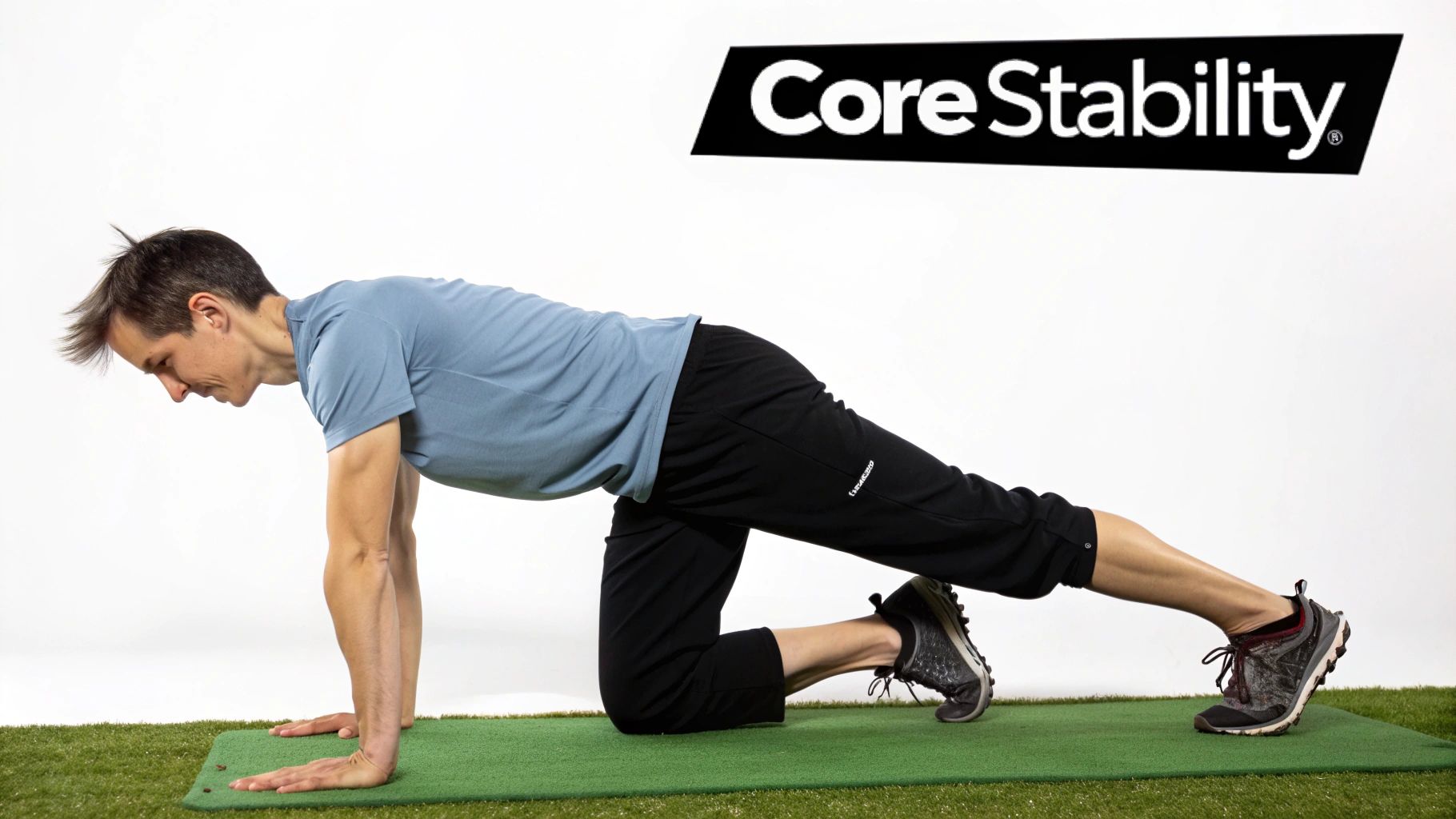
The Bird Dog is a dynamic core stability exercise widely endorsed by physical therapists and fitness professionals for its profound impact on spinal health. Performed from a hands-and-knees position, it involves extending the opposite arm and leg simultaneously, which challenges the body's ability to maintain a neutral spine. This movement specifically targets deep core muscles, including the transverse abdominis, multifidus, and the erector spinae, making it one of the best exercises for lower back strength and injury prevention.
By promoting stability without placing excessive load on the lumbar spine, the Bird Dog enhances neuromuscular control and coordination. It trains the core to properly brace and protect the back during everyday activities, from lifting groceries to athletic movements. Its inclusion in everything from post-surgery rehabilitation protocols to elite athlete conditioning programs highlights its versatility and effectiveness in building a resilient and pain-free back.
How to Perform the Bird Dog Correctly
Executing the Bird Dog with precision is key to engaging the correct muscles and protecting your spine. Follow these steps for proper form:
- Starting Position: Begin on all fours in a tabletop position with your hands directly under your shoulders and your knees directly under your hips. Your back should be flat, forming a neutral spine.
- Execution: Brace your core as if preparing for a punch to the stomach. Simultaneously and slowly extend your right arm straight forward and your left leg straight back, keeping both parallel to the floor. Avoid any rotation or tilting in your hips and torso.
- Peak Contraction: Pause for 1-2 seconds at full extension, focusing on maintaining balance and keeping your core tight. Your head should remain in a neutral position, with your gaze directed toward the floor.
- Return: With control, slowly lower your arm and leg back to the starting position. Repeat on the other side by extending your left arm and right leg.
Actionable Tips for Maximum Benefit
- Maintain a Neutral Spine: Imagine balancing a glass of water on your lower back throughout the entire movement. Avoid sagging or arching your back.
- Quality Over Speed: Perform the exercise slowly and deliberately. The goal is controlled stability, not fast repetitions.
- Breathing: Exhale as you extend your arm and leg, and inhale as you return to the starting position.
- Core Bracing: Actively engage your core muscles before you lift your limbs. This is crucial for spinal protection and exercise effectiveness.
For optimal results, aim for 2-3 sets of 8-12 repetitions per side. Consistently practicing Bird Dogs can dramatically improve your core stability, reduce compensatory strain on your lower back, and enhance overall functional strength.
3. Dead Bugs
The Dead Bug exercise is a cornerstone of core stabilization and motor control training, highly recommended by physical therapists for its safety and profound effectiveness. It targets the deep core musculature, including the transverse abdominis and pelvic floor, which act as a natural corset for the lumbar spine. This makes it one of the best exercises for lower back pain because it teaches the body to keep the spine stable while the limbs are in motion.
By challenging the body to resist rotation and extension forces, the Dead Bug improves core strength without putting dangerous shear forces on the lumbar discs. It's frequently used in rehabilitation settings to retrain proper movement patterns, in prenatal fitness for safe core engagement, and by athletes to build a foundation for more complex movements. The exercise enhances body awareness and dissociates limb movement from spinal movement, a critical skill for preventing back injuries during everyday activities.
How to Perform the Dead Bug Correctly
Mastering the form is key to unlocking the core-strengthening benefits of the Dead Bug. Follow these steps precisely:
- Starting Position: Lie on your back with your arms extended straight up toward the ceiling. Lift your legs and bend your knees to a 90-degree angle, so your shins are parallel to the floor (this is the tabletop position).
- Execution: Engage your core by gently pressing your lower back into the floor. Slowly lower your opposite arm and opposite leg toward the floor simultaneously. Go only as low as you can without your lower back arching or lifting off the ground.
- Hold and Return: Pause briefly at the lowest point of the movement.
- Alternating Sides: Return to the starting position with control and repeat the movement with the other arm and leg.
Actionable Tips for Maximum Benefit
- Maintain Spinal Contact: The most crucial element is keeping your lower back in contact with the floor throughout the entire movement. If it starts to arch, you’ve lowered your limbs too far.
- Slow and Steady: This is not a speed exercise. A slow, deliberate pace ensures your deep core muscles are doing the work, not momentum.
- Breathing: Exhale as you slowly extend your arm and leg, and inhale as you return to the starting tabletop position. This coordinated breathing helps maintain core pressure.
- Progression: Once you've mastered the basic form, you can increase the challenge by adding light ankle or wrist weights or holding a resistance band between your hands.
For optimal results, aim for 2-3 sets of 10-12 repetitions per side. Incorporating Dead Bugs into your routine will build a resilient and stable core, providing essential protection for your lower back.
4. Cat-Cow Stretch (Marjaryasana-Bitilasana)
The Cat-Cow Stretch, known in yoga as Marjaryasana-Bitilasana, is a gentle, dynamic movement praised for its ability to improve spinal mobility and alleviate tension. It is one of the best exercises for lower back pain because it encourages controlled movement through both spinal flexion (rounding the back like a cat) and extension (arching the back like a cow). This rhythmic motion helps to hydrate the intervertebral discs, gently stretch the muscles of the back and abdomen, and improve overall spinal awareness.
This foundational yoga pose is widely used in physical therapy and rehabilitation settings to reintroduce safe movement to a stiff or sensitive spine. By promoting segmentation, where each vertebra moves independently, the Cat-Cow Stretch can relieve compression and improve the flexibility of the entire spinal column. It is an ideal warm-up exercise or a restorative break for those who spend long hours sitting, helping to counteract postural stress and awaken the core.
How to Perform the Cat-Cow Stretch Correctly
Coordinating movement with breath is key to unlocking the full benefits of this exercise. Follow these steps for proper form:
- Starting Position: Begin on your hands and knees in a tabletop position. Your wrists should be directly under your shoulders, and your knees directly under your hips. Spread your fingers wide and press evenly through your palms.
- Execution (Cow Pose): Inhale as you drop your belly towards the floor. Lift your chin and chest, and gaze forward or slightly upward. Broaden across your shoulder blades and avoid sinking into your shoulders.
- Execution (Cat Pose): Exhale as you press into your hands, rounding your spine towards the ceiling. Tuck your chin into your chest and release your neck. Imagine you are pulling your navel up towards your spine.
- Flow: Continue flowing smoothly between Cat and Cow, allowing your breath to guide the pace of your movement.
Actionable Tips for Maximum Benefit
- Breath Synchronization: The power of this stretch is in the breath. Inhale deeply into Cow Pose to expand the chest and exhale completely into Cat Pose to empty the lungs and deepen the spinal curve.
- Focus on Articulation: Initiate the movement from your tailbone and let it ripple up your spine, one vertebra at a time, all the way to the crown of your head.
- Protect Your Knees: If you have sensitive knees, place a folded blanket or a yoga mat under them for cushioning and support.
- Daily Routine: This stretch is gentle enough to be performed daily, making it perfect for a morning routine or as a quick break from desk work to reset your posture.
For optimal results, aim for 1-2 sets of 10-15 repetitions (one full cycle of Cat and Cow is one repetition). Incorporating the Cat-Cow Stretch into your regimen can significantly enhance spinal flexibility, reduce stiffness, and support a healthy, mobile lower back.
5. Superman Holds (Prone Back Extensions)
The Superman Hold, also known as a prone back extension, is a bodyweight exercise that effectively strengthens the entire posterior chain. It specifically targets the erector spinae muscles which support the spine, as well as the glutes, hamstrings, and upper back muscles like the latissimus dorsi. This comprehensive engagement makes it one of the best exercises for lower back stability and injury prevention by teaching proper spinal extension mechanics under controlled tension.
Popularized by functional fitness programs like CrossFit and military training, the Superman Hold improves postural endurance and counteracts the effects of a sedentary lifestyle. By building strength in the muscles that keep the spine erect, this exercise helps maintain proper alignment and reduces the load placed on the lumbar vertebrae during daily activities. It is a foundational movement for developing a resilient and well-supported back.
How to Perform the Superman Hold Correctly
Proper form is essential to safely target the correct muscles and avoid straining the neck or lower back. Follow these steps for a perfect Superman Hold:
- Starting Position: Lie face down on a mat with your legs straight and your arms extended in front of you, creating a straight line with your body. Your palms should face each other or the floor.
- Execution: Engage your core by drawing your navel in toward your spine. Simultaneously lift your arms, chest, and legs off the floor as high as you comfortably can. The lift should originate from your back and glute muscles. Keep your head in a neutral position, with your gaze directed toward the floor to avoid neck strain.
- Peak Contraction: Hold this "flying" position, feeling the contraction in your lower back, glutes, and shoulders.
- Return: Slowly and with control, lower your arms, chest, and legs back to the starting position.
Actionable Tips for Maximum Benefit
- Core First: Always engage your core before lifting. This creates a stable base and protects your lumbar spine from hyperextension.
- Controlled Movement: Avoid using momentum or bouncing. The movement should be slow, deliberate, and controlled throughout both the lifting and lowering phases.
- Breathing: Inhale as you prepare, and exhale as you lift into the hold. Breathe shallowly during the hold, and inhale as you lower back down.
- Progression: As you get stronger, you can increase the duration of the hold or progress to alternating variations, such as lifting only your right arm and left leg, then switching sides.
For optimal results, aim for 2-3 sets of 8-12 repetitions, holding each for 3-5 seconds. When combined with holistic treatments, these exercises can be particularly effective. Learn more about how acupuncture can complement your back care routine.
6. Quadratus Lumborum (QL) Stretching
The Quadratus Lumborum (QL) is a deep abdominal muscle that connects the pelvis to the lowest rib and the lumbar spine. Often implicated in one-sided or deep, aching lower back pain, a tight QL can significantly restrict spinal mobility and create muscular imbalances. Targeted QL stretching is therefore one of the best exercises for lower back pain, particularly for those experiencing lateral (side) discomfort. By releasing tension in this key stabilizer, you can improve spinal movement, reduce compensatory strain, and restore balanced support to the lumbar region.
This essential stretch is a cornerstone in physical therapy, functional movement, and mind-body practices like yoga and Pilates. Releasing the QL helps alleviate the feeling of a "locked" or "jammed" lower back and can be instrumental in a comprehensive approach to pain management. Its ability to create space and mobility in the side body makes it a vital component for anyone seeking lasting relief from chronic lower back tightness.
How to Perform QL Stretches Correctly
Proper form is essential to isolate the QL and avoid straining other structures. Follow these steps for an effective side-lying QL stretch:
- Starting Position: Lie on your right side with your legs stacked. You can bend your knees slightly for stability. Support your head with your right hand or a pillow.
- Execution: Reach your left arm overhead, extending it along the floor. Gently begin to lean your upper body backward, allowing your chest to open toward the ceiling. You should feel a deep stretch along the left side of your lower back and waist.
- Peak Contraction: Hold this position, breathing deeply into the stretch for 30-60 seconds. Focus on relaxing the targeted area.
- Return: Slowly and carefully return to the starting position and repeat on the other side.
Actionable Tips for Maximum Benefit
- Breathe Deeply: Use your breath to deepen the stretch. Inhale to lengthen your spine and exhale to relax further into the position.
- Standing Variation: For a standing option, stand with feet hip-width apart. Reach one arm overhead and gently bend to the opposite side, pushing your hip out slightly to intensify the stretch.
- Combine with Manual Therapy: QL stretching pairs well with other non-drug pain management techniques like foam rolling or professional massage to enhance muscle release.
- Consistency is Key: Perform QL stretches daily, especially if you experience chronic lateral back pain or spend long hours sitting.
For optimal results, aim for 2-3 sets, holding each stretch for 30-60 seconds per side. Integrating targeted QL stretches can unlock significant mobility and provide powerful relief for a stiff, painful lower back.
7. Plank Variations (Static Core Stability)
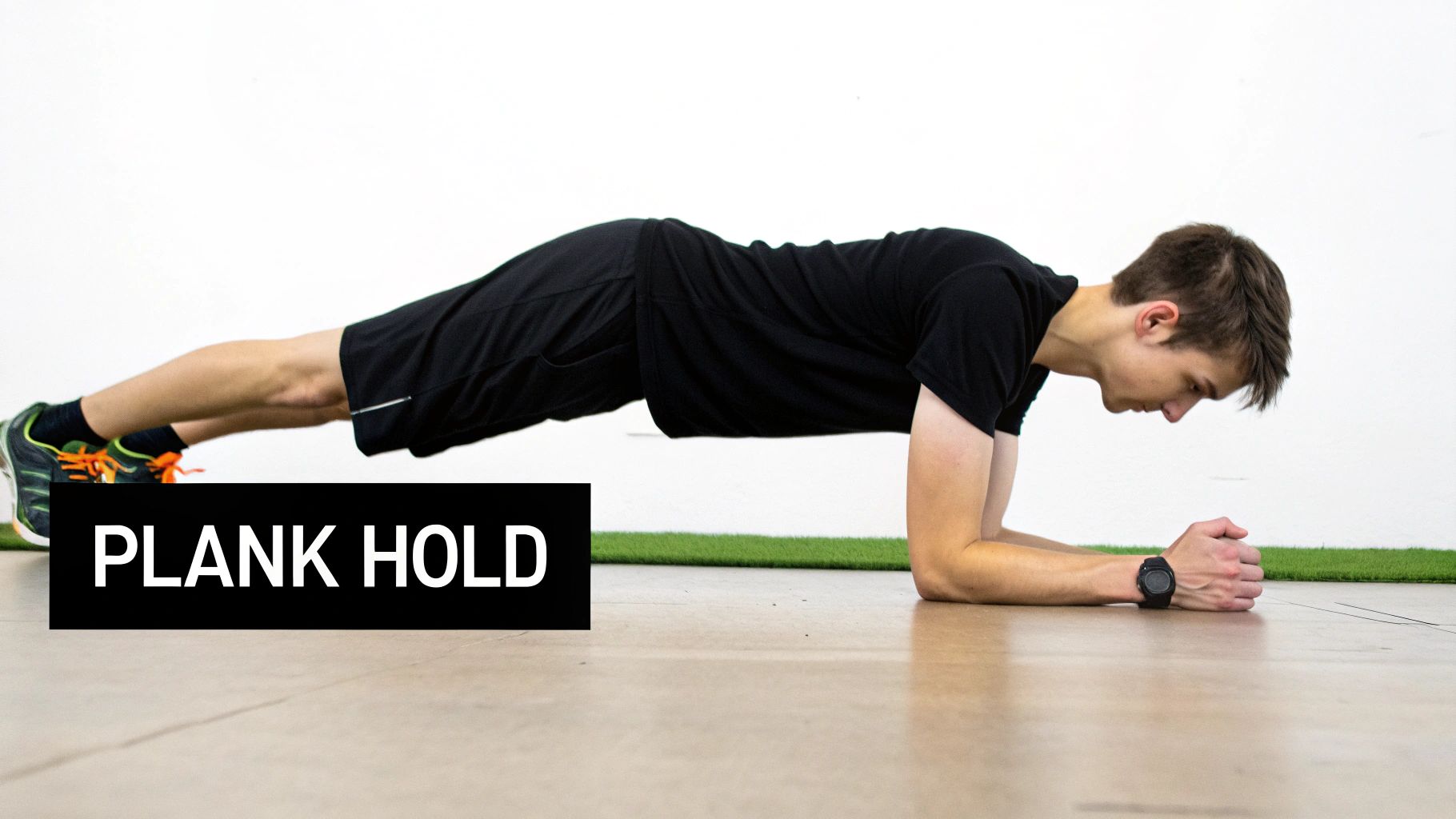
Plank variations are quintessential isometric exercises celebrated for their ability to build total core stability without placing undue stress on the spine. An isometric hold, like the plank, involves contracting muscles without any movement in the surrounding joints. This exercise builds endurance in the entire core musculature, including the deep transverse abdominis, rectus abdominis, obliques, and the crucial erector spinae muscles that support the lower back, making it one of the best exercises for lower back resilience.
The primary benefit of the plank is its capacity to teach and reinforce neutral spinal alignment under sustained tension. By strengthening the muscles that prevent the spine from sagging or arching, planks enhance postural control and protect the lumbar region during dynamic activities. Its foundational role is recognized across various disciplines, from military physical training programs and CrossFit to the mindful strength sequences in yoga and Pilates, all of which use it to forge a strong, functional core.
How to Perform the Plank Correctly
Proper form is non-negotiable for safety and effectiveness. Follow these steps for a perfect forearm plank:
- Starting Position: Begin by lying face down. Place your forearms on the floor with your elbows aligned directly under your shoulders and your hands clasped or palms flat. Extend your legs straight back, resting on the balls of your feet.
- Execution: Engage your core, glutes, and quads to lift your body off the floor, forming a straight, rigid line from the back of your head through your heels. Your hips should not sag or pike towards the ceiling.
- Hold: Maintain this static position, focusing on keeping your entire body tight and your spine neutral.
- Return: Gently lower your knees to the floor to exit the pose with control.
Actionable Tips for Maximum Benefit
- Neutral Spine: Imagine a straight line connecting your head, shoulders, and hips. Use a mirror or record yourself to check your alignment and avoid a drooping or arched back.
- Core Engagement: Brace your core as if preparing for a gentle punch to the stomach before you lift into the hold.
- Breathing: Never hold your breath. Breathe steadily and deeply throughout the entire duration of the hold to keep your muscles oxygenated.
- Progression: Once you can comfortably hold a standard plank with perfect form, challenge yourself with side planks to target the obliques or dynamic plank variations like shoulder taps. For those managing chronic pain, integrating such exercises with a broader treatment plan can be highly effective. You can explore how holistic medicine addresses chronic pain for a more comprehensive approach.
For optimal results, start with 3-4 sets of 20-30 second holds, gradually increasing the duration as you build endurance. Consistent practice will create a powerful muscular corset that supports and protects your lower back.
8. Child's Pose (Balasana)
Child's Pose, or Balasana, is a gentle, restorative yoga posture widely recognized for its profound ability to release tension in the posterior chain. It acts as a passive stretch that allows the spine to decompress and lengthen, specifically targeting the lumbar region, hips, and thighs. This grounding pose is a cornerstone of many therapeutic and movement practices, making it one of the best exercises for lower back relief by countering the compressive forces of gravity and poor posture.
By folding the torso forward over the thighs, Child's Pose gently stretches the erector spinae muscles and the latissimus dorsi. This position also encourages a deep diaphragmatic breath, which activates the parasympathetic nervous system, promoting relaxation and reducing the muscle guarding that often accompanies back pain. Physical therapists, yoga instructors, and wellness professionals universally recommend it as a safe and effective way to alleviate discomfort, improve spinal mobility, and calm the mind.
How to Perform Child's Pose Correctly
Proper alignment in Child's Pose allows for maximum spinal decompression and muscular release. Follow these steps for the ideal posture:
- Starting Position: Begin on your hands and knees in a tabletop position. Bring your big toes to touch and widen your knees to about hip-width apart or slightly wider for more comfort.
- Execution: Exhale and gently sit your hips back onto your heels. Walk your hands forward, allowing your torso to fold down between or onto your thighs.
- Peak Position: Rest your forehead on the mat. Let your arms extend forward with palms down, or bring them alongside your body with palms facing up. Allow your entire back to round and release.
- Hold: Breathe deeply into your back body, feeling the rib cage expand and the lower back lengthen with each inhale. Hold the pose for at least 30 seconds, or longer for a deeper release.
Actionable Tips for Maximum Benefit
- Breathing is Key: Focus on long, deep breaths directed into your lower back. Imagine creating space between each vertebra with every inhalation.
- Support and Modify: If your hips don't reach your heels, place a folded blanket or pillow between your thighs and calves. A block or pillow under your forehead can also provide support if it doesn't comfortably reach the floor.
- Widen Your Stance: If you feel pinching in your hips, widen your knees further apart to create more space for your torso.
- Add a Twist: For a gentle rotational stretch, walk both hands to one side of the mat, hold for a few breaths, and then repeat on the other side.
For optimal results, hold Child's Pose for 30 seconds to several minutes, repeating as needed. Integrating this restorative pose into your daily routine, especially after long periods of sitting or before bed, can significantly reduce lower back tension and promote overall spinal health.
Top 8 Lower-Back Exercises Comparison
| Exercise | Complexity 🔄 | Resources ⚡ | Expected outcomes 📊 ⭐ | Ideal use cases 💡 | Key advantages ⭐ |
|---|---|---|---|---|---|
| Glute Bridges | Low 🔄 — simple hip hinge | Minimal ⚡ — bodyweight; optional weight | 📊 Posterior chain strength; reduced APT; ⭐⭐⭐⭐ | Rehab, postural correction, warm-up | Isolates glutes; safe; easy progression |
| Bird Dogs (Quadruped Reaches) | Low–Medium 🔄 — coordination required | Minimal ⚡ — bodyweight | 📊 Core stability & proprioception; ⭐⭐⭐⭐ | Rehab, injury prevention, motor control training | Trains anti‑rotation & unilateral stability |
| Dead Bugs | Low–Medium 🔄 — precise core control | Minimal ⚡ — bodyweight; bands optional | 📊 Deep core activation & motor patterning; ⭐⭐⭐⭐ | Rehabilitation, prenatal core work, beginners | Supine, low compression; highly modifiable |
| Cat‑Cow Stretch (Marjaryasana‑Bitilasana) | Very Low 🔄 — rhythmic mobility | None ⚡ | 📊 Spinal articulation & relaxation; ⭐⭐⭐ | Warm-up, desk breaks, gentle mobility sessions | Gentle full‑spine mobilization; breath‑linked |
| Superman Holds (Prone Back Extensions) | Medium 🔄 — control to avoid hyperextension | None ⚡ | 📊 Posterior chain endurance & extension control; ⭐⭐⭐ | Athletic conditioning, posture correction (advanced) | Comprehensive extensor strengthening; functional |
| Quadratus Lumborum (QL) Stretching | Low–Medium 🔄 — requires localization | None ⚡ | 📊 Lateral back pain relief & side‑flex mobility; ⭐⭐⭐ | Targeted lateral‑back pain protocols, manual therapy | Targets often‑overlooked deep lateral muscle; quick relief |
| Plank Variations (Static Core Stability) | Low–Medium 🔄 — form maintenance | None ⚡ | 📊 Core endurance & spinal stability; ⭐⭐⭐⭐ | Functional fitness, military, general core programs | Time‑efficient, highly scalable, many variations |
| Child's Pose (Balasana) | Very Low 🔄 — passive and safe | None ⚡ | 📊 Spinal decompression & parasympathetic relief; ⭐⭐⭐ | Recovery, relaxation, desk breaks, gentle mobility | Passive decompression; accessible for all populations |
Integrating Movement with Professional Care for Lasting Relief
Navigating the path to a strong, pain-free lower back is a journey of consistency, awareness, and strategic action. Throughout this guide, we've detailed some of the best exercises for lower back health, from foundational strengthening movements like Glute Bridges and Bird Dogs to essential mobility work like the Cat-Cow stretch. Each exercise serves a distinct purpose, whether it's activating dormant gluteal muscles to support your lumbar spine, enhancing core stability with Plank variations, or releasing deep-seated tension with targeted QL stretches and Child's Pose.
The true power of this routine lies not in performing one exercise perfectly, but in weaving them together into a consistent practice. Mastering these movements means building a resilient foundation that can withstand the daily demands placed upon your spine. This is about more than just temporary pain relief; it's a long-term investment in your mobility, independence, and overall quality of life.
Key Takeaways for a Healthier Spine
As you integrate these exercises, remember these core principles for success:
- Consistency Over Intensity: A gentle, 15-minute routine performed five days a week will yield far greater results than a single, intense weekly session. Build the habit first.
- Listen to Your Body's Signals: Differentiate between the mild discomfort of muscle engagement and sharp, radiating, or worsening pain. Pain is a signal to stop, reassess your form, or consult a professional. Never push through alarming sensations.
- Form is Paramount: Executing an exercise with proper technique is more important than the number of repetitions you complete. Poor form can reinforce dysfunctional movement patterns and potentially worsen your condition.
- Progression is Key: Your body adapts. As movements like the Dead Bug become easier, it's time to introduce a progression to continue challenging your muscles and building strength.
Beyond the Mat: Creating a Supportive Ecosystem for Your Back
While targeted exercises are the cornerstone of a healthy back, achieving lasting relief often requires a holistic approach. Your daily habits and environment play a significant role in supporting or sabotaging your efforts. For example, the eight hours you spend sleeping are critical for muscle recovery and spinal alignment. To ensure overall back health, it's also important to consider how your sleeping environment supports your spine. For those seeking comprehensive relief, consult resources on finding the best mattress for back pain to complement your active recovery efforts.
Pro-Tip: Pay attention to your posture throughout the day, not just during exercise. Set reminders to get up, stretch, and walk around every 30-60 minutes if you have a sedentary job. Small, consistent adjustments make a significant cumulative impact.
When to Seek Professional Guidance
These exercises are a powerful tool, but they are not a substitute for a professional diagnosis. If your lower back pain is severe, persists despite your efforts, or is accompanied by red-flag symptoms such as numbness, tingling, leg weakness, or changes in bowel or bladder function, it is imperative to seek immediate medical attention.
For chronic, nagging pain that limits your daily life, integrating your exercise routine with professional care can unlock a new level of healing. A physical therapist can provide a tailored exercise prescription, while a holistic practitioner can address underlying imbalances. At our Chino clinic, we use Dr. Tsai’s Dynamic Balanced Medicine approach, which combines modern diagnostics with traditional therapies like acupuncture and tuina massage. This integrative model works synergistically with your strengthening routine, helping to release deep muscular tension, reduce inflammation, improve circulation, and restore the body’s natural healing capabilities.
By combining the best exercises for lower back with mindful daily habits and targeted professional care, you create a powerful, multi-faceted strategy. You are not just managing symptoms; you are building a resilient, functional, and pain-free back for the long term.
Ready to complement your exercises with a personalized, holistic treatment plan? Contact Eric Tsai Acupuncture and Herbs to verify your insurance and schedule a consultation. Discover how our integrative approach can address the root cause of your back pain and accelerate your journey to lasting relief.