
Bringing your cortisol levels back into balance naturally isn't about some magic pill. It really comes down to a few core lifestyle shifts: prioritizing quality sleep, learning to manage daily stress with simple, mindful practices, and fueling your body with a balanced, whole-foods diet. These are the pillars that help regulate your body's stress response system and stop that chronically elevated cortisol from throwing your health off-kilter.
Your Body’s Response to Chronic Stress
Before we jump into the "how," let's clear something up about cortisol itself. It gets a bad rap as just the "stress hormone," but its real job is much bigger. Cortisol is a crucial regulator of your energy levels, inflammation, and even your internal body clock. Its natural rhythm is there to support you, not sabotage you.
In a healthy system, cortisol follows a predictable daily pattern called the diurnal rhythm. Think of it as your body's get-up-and-go signal. Levels peak first thing in the morning, giving you that jolt of energy to wake up and tackle the day. From there, they should gradually taper off, hitting their lowest point at night so you can drift into deep, restorative sleep. This elegant cycle is fundamental to feeling your best.
The Problem with Being Stuck in "On" Mode
The trouble starts when the relentless demands of modern life—work deadlines, endless phone notifications, and poor sleep habits—keep your body’s stress alarm blaring all day long. Instead of that healthy rise and fall, cortisol can get stuck in high gear, completely disrupting its natural rhythm. A system that’s constantly on high alert eventually leads to a cascade of unwanted health effects.
This persistent activation is what we mean by chronic stress. It's like flooring the gas pedal in your car 24/7; eventually, the engine is going to wear out. Over time, this often shows up as:
- Persistent Fatigue: Feeling completely drained, even after what should have been a full night's sleep.
- Sleep Disturbances: Tossing and turning for hours or waking up repeatedly throughout the night.
- Weight Gain: Noticing stubborn fat, especially around your midsection.
- Brain Fog: Struggling with focus, memory, and just feeling mentally fuzzy.
The goal isn't to eliminate cortisol—that would be a disaster. The real aim is to restore its natural, healthy rhythm. Learning to lower cortisol naturally is all about guiding your body back to a state of balance, where it can handle stress effectively without getting stuck in overdrive.
Visualizing a Healthy Cortisol Rhythm
Seeing the difference between a healthy and a dysregulated cortisol curve can be a real "aha!" moment. This chart helps visualize how your daily rhythm should look compared to what happens when chronic stress takes over.
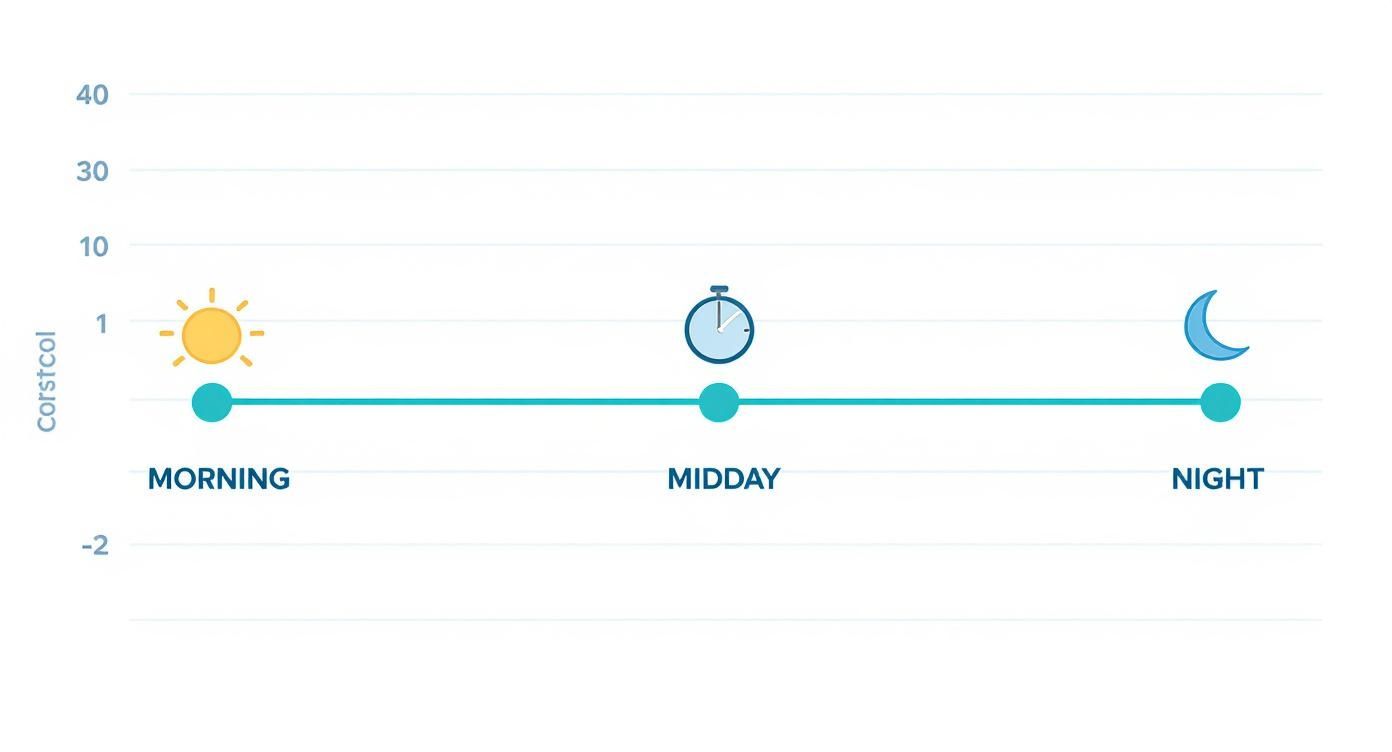
As you can see, a healthy cycle has a sharp peak in the morning and a deep valley at night. A stressed-out rhythm, on the other hand, can stay erratically high or even flatline.
Recognizing this pattern is the first step. Once you understand the "why" behind cortisol management, you can be much more intentional and successful with the "how." In the sections that follow, we’ll walk through the practical, actionable steps you can take to get your curve back on track.
Mastering Nutrition and Sleep for Hormone Balance
https://www.youtube.com/embed/Ibj1k3IZTNU
While things like meditation and mindful movement are incredibly powerful, the real foundation for managing cortisol is built right into your daily life. What you eat and how you sleep are arguably the most direct lines of communication you have with your adrenal system.
When you get these two pillars right, you send a potent signal of safety and stability to your body. This isn't about adding more to your to-do list; it's about making your existing routines work for you.
Fueling Your Body for Stress Resilience
Let's get past the generic "eat healthy" advice. Your food choices have a direct, almost immediate impact on your stress response. The name of the game is keeping your blood sugar stable throughout the day. Those dramatic spikes and crashes from sugary, processed foods? Your body perceives that chaos as a five-alarm fire, and it pumps out cortisol to deal with the crisis.
A cortisol-conscious diet isn’t about deprivation. It's about strategically adding in nutrient-dense foods that feed your adrenal glands and soothe your nervous system. Every single meal is a chance to either sound the stress alarm or dial it down.
Think of your blood sugar like the surface of a calm lake. A meal loaded with refined carbs and sugar is like dropping a giant boulder in—you get a huge splash (a glucose spike) followed by frantic ripples as your body scrambles to rebalance (the dreaded energy crash). A balanced meal, on the other hand, is like a gentle breeze. It creates a little movement but keeps things steady and calm.
To create that balance, build your meals around these key elements:
- Quality Protein: Make sure every meal has a solid source of protein, like chicken, fish, beans, lentils, or tofu. Protein slows down how quickly sugar hits your bloodstream, which helps you feel full longer and keeps your energy on an even keel.
- Healthy Fats: Foods packed with omega-3 fatty acids—think salmon, walnuts, chia seeds, and flaxseeds—are serious inflammation fighters. Since chronic stress fuels inflammation, these fats are absolutely essential for calming your entire system.
- Complex Carbohydrates: Swap out the white bread and pasta for things like quinoa, brown rice, sweet potatoes, and oats. The fiber in these foods ensures a slow, steady release of energy, which is exactly what you want to avoid those cortisol-triggering blood sugar rollercoasters.
A diet rich in whole, unprocessed foods is simply non-negotiable for hormone balance. Foods high in magnesium—like dark leafy greens, avocados, and almonds—are especially crucial. I often refer to magnesium as the "original chill pill" for its remarkable ability to relax the nervous system.
Your Guide to Cortisol-Conscious Eating
I know navigating food choices can feel like a full-time job. To simplify things, here’s a quick-reference guide to help you focus on foods that build stress resilience and steer clear of those that can throw your cortisol out of whack.
| Nutrient Focus | Foods to Incorporate | Foods to Minimize |
|---|---|---|
| Blood Sugar Stability | Sweet potatoes, quinoa, berries, legumes | White bread, sugary cereals, pastries |
| Anti-Inflammatory | Salmon, walnuts, turmeric, dark leafy greens | Processed meats, fried foods, refined vegetable oils |
| Adrenal Support | Avocados, pumpkin seeds, dark chocolate, citrus fruits | Excessive caffeine, sugary drinks, alcohol |
Making these simple swaps can have a profound impact on how you feel day-to-day, both physically and mentally.
The Critical Role of Restorative Sleep
Here’s the hard truth: you can have the most perfect, nutrient-dense diet on the planet, but if your sleep is a mess, your cortisol levels will pay the price.
Just one single night of bad sleep is enough to throw your natural cortisol rhythm into disarray, leaving you with elevated levels the next day. This kicks off a vicious cycle: high cortisol makes it harder to fall and stay asleep, and poor sleep jacks up your cortisol even more.
Breaking this cycle starts with creating a true sanctuary for rest and developing a consistent "wind-down" routine. Your brain doesn't have a simple "off" switch; it needs a gradual transition from the busyness of the day into a state of rest.
Start by optimizing your environment. Your bedroom should be cool, dark, and quiet. Blackout curtains or a quality eye mask can be a game-changer. And, most importantly, you have to get rid of the blue light from screens for at least an hour before bed. That light directly suppresses melatonin, the key hormone that tells your body it's time to sleep.
Creating a Practical Wind-Down Routine
A successful wind-down routine is deeply personal, but the goal is always the same: signaling to your body and brain that the day is done and it’s safe to rest.
Try incorporating a few of these simple practices into your evening:
- Dim the Lights: An hour or two before you plan to sleep, lower the lights in your home to mimic the natural setting of the sun.
- Engage in Something Calm: Put the phone away and pick up a physical book. Listen to some relaxing music or do a few gentle stretches.
- Try a Warm Bath or Shower: It's not just relaxing. The drop in your body temperature after you get out is a powerful, natural trigger for sleepiness. For an extra boost, some people find great success with using a sauna to improve your sleep.
If you find that racing thoughts are still keeping you awake despite your best efforts, it might be time to explore other avenues for sleep support. Many people get incredible relief by using specific botanicals to calm the mind. You can learn more about these options in our guide to herbal remedies for insomnia.
Mastering your sleep is one of the most powerful things you can do to naturally lower cortisol and get your energy back.
Using Strategic Movement to Lower Cortisol

When it comes to stress management, physical activity is a powerhouse. But for balancing cortisol, the old "no pain, no gain" approach can seriously backfire. Intense workouts are a physical stressor, and while they have their place, overdoing it can just tell your adrenal glands to pump out even more cortisol.
The real goal here is to use movement as a tool for regulation, not a means of exhaustion. It's all about finding that sustainable balance where your activity leaves you feeling energized and clear-headed, not completely drained. This means shifting your focus from raw intensity to consistency and restoration.
Finding Your Cortisol-Friendly Exercise Sweet Spot
The right kind of movement helps your body effectively process and clear out stress hormones. Instead of pushing to your absolute limit every day, it's far more beneficial to weave in activities that actively soothe the nervous system.
Think about movement that feels grounding and restorative. These exercises gently get your heart rate up without triggering a full-blown "fight or flight" response, teaching your body that it's safe to relax.
Here are some of my top recommendations for cortisol-conscious movement:
- Walking: Don't underestimate the power of a simple daily walk. It's low-impact, incredibly accessible, and works wonders for clearing your head while gently moving your body.
- Yoga: Styles like Hatha or Yin are particularly effective. They beautifully combine physical postures with mindful breathing to directly activate your body's relaxation response.
- Swimming: There's something incredibly meditative about the rhythmic nature of swimming. The feeling of being supported by water can be profoundly calming.
- Tai Chi: This ancient martial art uses slow, flowing movements and deep breathing, making it a fantastic practice for reducing stress and improving physical balance.
The most important thing is to listen to your body. On days when you feel rundown, a grueling workout is the last thing you need. A 20-minute restorative yoga session or a quiet walk will do far more to lower your cortisol than forcing a high-intensity session ever could.
The Powerful Science of Ecotherapy
It’s not just about what you do, but where you do it. Getting out in nature—what’s often called ecotherapy or "forest bathing"—is a scientifically proven strategy to bring cortisol levels down. The combination of fresh air, natural light, and the calming environment of the outdoors works directly on a stressed nervous system.
You don't need a multi-day hike to feel the effects, either. Even small, consistent doses of nature make a huge difference. Swapping the treadmill for a park path can be a total game-changer for your hormonal health.
The research on this is compelling. One study on forest therapy, for example, found that walking in a forest significantly lowered participants' cortisol levels compared to walking in a city. In fact, approximately 69% of participants saw this cortisol reduction after their forest walks. You can dive deeper into these findings by exploring the full study on forest therapy's effects.
Practical Ways to Get More Green Time
Even if you're in a bustling city, weaving more nature into your routine is simpler than you might think. It just takes a little intention.
Here are a few easy ideas to get you started:
- Change Your Lunch Spot: Ditch the desk and find a nearby park bench or a small patch of grass. Just 15-20 minutes outside can help reset your stress levels in the middle of a busy day.
- Plan Weekend "Nature Dates": Put a visit to a local botanical garden, nature preserve, or hiking trail on your calendar. Treat it like any other important appointment.
- Bring Nature Indoors: If getting outside is truly a challenge, bring the green to you. Filling your home or office with houseplants is a proven way to improve mood and reduce feelings of stress.
By being strategic with both the type and location of your movement, you can turn exercise from a potential stressor into one of your most powerful allies for lowering cortisol. It’s all about working with your body, not against it.
Mindful Practices for Instant Stress Reduction

While smart nutrition and consistent movement are your foundation for long-term stress resilience, you also need tools for the heat of the moment. This is where mindful practices truly shine. Think of them as your on-demand toolkit for activating your body's relaxation response and down-regulating that "high alert" feeling almost instantly.
These aren't complicated rituals that demand hours of your time. They are practical skills you can use anywhere—at your desk before a big presentation, in your car after a tough commute, or anytime you feel that familiar tide of stress begin to rise. Effectively managing cortisol is about having a plan for both the marathon and the sprint.
The Power of Your Breath
The fastest way to hijack your own nervous system for the better is through your breath. When you're stressed, your breathing almost always becomes shallow and rapid, which only reinforces the danger signal to your brain. By consciously slowing it down, you send a powerful message of safety that can stop the cortisol cascade in its tracks.
Diaphragmatic breathing—often called "belly breathing"—is one of the most effective techniques I teach in my practice. It directly stimulates the vagus nerve, which is the superhighway of your parasympathetic (or "rest-and-digest") nervous system.
Here’s a simple way to get started:
- Find a comfortable position, sitting or lying down. Place one hand on your chest and the other on your belly.
- Breathe in slowly through your nose for a count of four. Your goal is to feel your belly expand like a balloon, pushing your hand out while the hand on your chest stays relatively still.
- Hold that breath for just a moment.
- Exhale slowly through your mouth for a count of six, feeling your belly gently fall.
Doing just a handful of these can create a noticeable shift in your state of mind.
A Simple Mindfulness Meditation
Meditation isn't about forcing your mind to be empty. It's about learning to observe your thoughts without getting swept away by them. Even a few minutes a day can lead to profound changes in your baseline stress response.
The science backs this up. A 2021 analysis of numerous studies confirmed a clear link between regular meditation and lower cortisol levels, proving its real, physiological impact.
My Advice for Beginners: Don't get hung up on the duration. Consistency beats intensity every time. Start with just three to five minutes a day. The real win is creating a sustainable habit that you can lean on.
Try This Simple Body Scan:
Find a quiet place to sit. Close your eyes and bring your attention down to the sensation of your feet on the floor. From there, slowly scan your awareness up through your body—your legs, torso, arms, neck, and head. Simply notice any sensations like warmth, tingling, or tension without judgment or the need to "fix" anything.
Releasing Physical Tension
Chronic stress isn't just a mental state; it gets physically lodged in our bodies as muscle tension. This is why practices that bridge the mind-body gap are crucial for finding complete relief.
Progressive muscle relaxation (PMR) is a fantastic, straightforward technique for letting go of this stored tension. It involves methodically tensing and then relaxing different muscle groups.
- Start with your feet: Squeeze the muscles in your feet and toes for about five seconds, then fully release for 10 seconds, really paying attention to the feeling of letting go.
- Work your way up: Continue this tense-and-release pattern up your body—calves, thighs, glutes, abdomen, hands, arms, and finally, the often-tight muscles in your face and neck.
This practice does more than just relax you; it heightens your awareness of where you hold stress, making it easier to release that tension throughout the day. While these are foundational skills, sometimes deeper, more persistent stress patterns require additional support. For many of my patients, targeted therapies provide significant breakthroughs; you can learn more about acupuncture for stress management to see if it’s a good fit for you.
Exploring Supplements and Adaptogens for Adrenal Support
While lifestyle changes are the absolute bedrock of hormonal balance, some well-chosen supplements and herbs can give your body’s stress response system some powerful, targeted backup. Think of them less as a primary strategy and more as reinforcements you can call on to help your body regain its footing.
This brings us to the incredible world of adaptogens. These are a special class of plants that help your body adapt to and build resilience against physical, chemical, and biological stressors. Their real magic is in how they work as modulators—they don’t act like a stimulant or a sedative, but instead gently guide your system back toward a state of equilibrium.
How Do Adaptogens Actually Work?
At their core, adaptogens help regulate your body's stress response pathway, which is invaluable when you're trying to lower cortisol. They don't just put a band-aid on the symptoms; they work to improve your body's own resilience over the long haul, making you less vulnerable to the fallout from chronic stress.
For those looking to go deeper, exploring supplements specifically aimed at stress reduction can offer more targeted support for managing your body's response.
Two of the most well-researched adaptogens I often discuss with patients are:
- Ashwagandha (Withania somnifera): A cornerstone of Ayurvedic medicine for centuries, this herb is prized for its calming effects. Clinical studies have shown it can significantly lower cortisol levels, reduce feelings of anxiety, and improve sleep.
- Rhodiola Rosea: If you’re dealing with that "wired but tired" feeling, Rhodiola is a fantastic herb. It's known to fight fatigue while boosting mental clarity and physical stamina during stressful periods, helping to support a healthy cortisol awakening response without making you feel jittery.
It’s important to remember these botanicals don't work instantly like a cup of coffee. Their effect is more cumulative, helping your adrenal system find its natural rhythm so you can handle daily demands more effectively.
The Nutrients Stress Burns Through
Beyond adaptogens, we have to consider what chronic stress robs from your body. Constant stress can rapidly deplete your reserves of key vitamins and minerals, and replenishing them is a crucial piece of the puzzle.
When your body is stuck in "fight or flight," it's burning through resources at an accelerated rate just to keep up. This can quickly create deficiencies in the very nutrients your nervous system needs to stay calm.
If I had to pick two essential nutrients to focus on for stress, it would be magnesium and B vitamins. Magnesium is often called the "relaxation mineral" for a reason, while B vitamins—especially B5 (pantothenic acid)—are directly involved in producing adrenal hormones.
Stocking up on these core nutrients gives your body the raw materials it needs to manage stress. This foundational support can make all your other efforts, from diet changes to meditation, that much more powerful. Traditional Chinese Medicine also offers a rich framework of botanical solutions for mood and stress. For more on this, you can explore some insights into herbal medicine for depression.
A Smart and Safe Approach to Supplementation
The supplement aisle can be a confusing place. It’s absolutely critical to approach it with a clear, informed strategy, because self-prescribing can be ineffective at best and harmful at worst.
Before you add anything new to your routine, I always recommend following these guidelines:
- Talk to a Professional: Never start a new regimen without speaking to a qualified healthcare provider like a licensed acupuncturist, naturopathic doctor, or your physician. We can assess your specific needs, check for potential drug interactions, and recommend the right dose.
- Choose Quality Over Hype: The supplement industry isn't always tightly regulated. I advise my patients to stick with professional-grade brands that use third-party testing to verify the purity and potency of their products. This ensures you're getting what you pay for.
- Start Low, Go Slow: Always begin with the lowest effective dose to see how your body responds. This lets you gently gauge the effects and minimizes the chance of any side effects.
Supplements are a fantastic tool, but they are just one tool in the toolbox. They work best when integrated into a holistic plan built on a solid foundation of good nutrition, restorative sleep, and mindful stress management.
Your Questions About Cortisol Answered
As you start weaving these new habits into your life, questions are bound to pop up. It’s completely normal to wonder about timelines, how your morning coffee fits in, and when it might be time to bring in a professional. Let's tackle some of the most common questions I hear from my patients.
How Long Does It Take to Naturally Lower Cortisol?
This is probably the number one question I get asked, and the answer isn't a simple one. The good news is that most people start to feel a difference—things like steadier energy levels and a calmer mind—within just two to four weeks of making consistent changes. That initial shift is often what gives you the momentum to keep going.
However, seeing a real, measurable change on a lab test takes a bit longer. We're talking about retraining your body's entire stress response system, and that requires patience. For your cortisol rhythm to show significant improvement on a salivary or urine test, you're typically looking at about three to six months of dedicated effort.
Remember, this is about building sustainable habits that support you for the long haul, not a quick fix. Progress isn't always a straight line, so be sure to celebrate the small wins.
Does Coffee Really Increase Cortisol Levels?
Yes, it absolutely does. Caffeine gives you an immediate, sharp spike in cortisol. This is especially true if you drink it first thing in the morning when your cortisol is already at its natural peak to help you wake up. Pouring caffeine on top of that can overstimulate your stress response, leaving you feeling anxious and jittery instead of alert.
This doesn’t mean you have to break up with coffee for good. It’s more about being strategic with your timing.
- Delay that first cup. Try waiting until 9:30 or 10:00 AM, once that natural morning cortisol surge has started to come down.
- Try a calmer alternative. For some, green tea is a much better fit. It contains L-theanine, an amino acid that smooths out the caffeine kick and promotes a feeling of calm focus.
A simple experiment can tell you a lot. Just try pushing that first cup of coffee back by 90 minutes. For many of my patients, this single change makes a massive difference in how they feel all day long.
What Are the Most Common Signs of High Cortisol?
Chronically high cortisol shows up in ways that are all too easy to brush off as just the side effects of a busy life. But these symptoms are your body waving a red flag, signaling that your stress system is overloaded.
The classic sign I see in my clinic is that feeling of being "wired but tired"—you're completely exhausted, yet your mind won't shut off when you try to rest.
Other common red flags include:
- Stubborn Belly Fat: You’re eating well and exercising, but you’re still accumulating fat around your midsection.
- Constant Cravings: You find yourself reaching for sugary, salty, or high-fat foods, especially when you're stressed.
- Sleep Issues: You have trouble falling asleep, you wake up frequently during the night, or you just never feel rested.
- Brain Fog: It’s hard to focus, your memory feels fuzzy, and making simple decisions feels overwhelming.
- Getting Sick Often: You seem to catch every cold that goes around, a sign of a suppressed immune system.
- Mood Swings: You feel more irritable, anxious, or easily overwhelmed than usual.
Because these symptoms overlap with so many other health issues, it's crucial not to self-diagnose based on a checklist alone.
When Should I Talk to a Doctor About My Cortisol?
While these lifestyle shifts are powerful, sometimes they aren't enough on their own. If you’ve been putting in the work for a few months and your symptoms aren't improving, it’s time to consult a healthcare provider.
It's especially important to get professional guidance if you notice more specific or severe symptoms, like:
- Rapid weight gain, especially in your face and abdomen
- Noticeable muscle weakness
- Skin that bruises easily or new, purple-colored stretch marks
- High blood pressure
A knowledgeable provider, like a functional medicine doctor or a licensed acupuncturist, can help you get to the root of the problem. They can order the right tests—like a 4-point salivary cortisol test that maps your rhythm throughout the day—to see exactly what’s going on. This objective data helps rule out more serious conditions, like Cushing's syndrome, and paves the way for a targeted, effective treatment plan.
At Eric Tsai Acupuncture and Herbs, we specialize in creating personalized plans that blend the wisdom of Traditional Chinese Medicine with a modern understanding of hormonal health. If you're ready to move beyond guesswork and get to the root of your stress-related symptoms, we invite you to book a consultation and discover how we can help restore your body's natural balance. Learn more at https://drerictsai.com.