
The path to naturally boosting your progesterone starts with a few foundational pillars: nutrient-rich foods, smart stress management, and a commitment to healthy lifestyle habits. Simple, consistent changes in your diet and daily routines can create the right environment for your body to produce its own hormones, helping you find balance over time.
Why Progesterone Matters for Your Well-Being

I often refer to progesterone as the "calming hormone," and for good reason. Its influence on a woman's health goes far beyond just reproduction. While it's famous for regulating the menstrual cycle and sustaining a healthy pregnancy, its effects ripple through almost every aspect of your daily life. The best way to think of it is as the steady, grounding counterpart to estrogen. When they're in harmony, you feel like your best self.
Progesterone is primarily produced by the ovaries right after ovulation, during the second half of your cycle known as the luteal phase. Its main gig is to prepare the uterine lining for a potential pregnancy. If that doesn't happen, progesterone levels fall, which is the signal for your period to start.
But its benefits don't end there. This vital hormone also plays a role in:
- Mood Stability: Progesterone has a wonderfully calming effect on the brain, helping to dial down anxiety and promote a real sense of well-being.
- Restful Sleep: It contributes to better sleep quality. It’s no coincidence that a dip in progesterone can lead to insomnia or those frustratingly restless nights.
- Thyroid Function: Healthy progesterone levels are crucial for supporting your thyroid, the master gland that governs metabolism and energy.
Truly understanding progesterone's role is a fundamental step in empowering women's health and wellness.
Recognizing the Signs of Low Progesterone
When progesterone is running low, your body sends out signals. Unfortunately, these clues are often brushed off as just a "bad period" or the effects of stress. This imbalance can trigger a state we call estrogen dominance—where estrogen is too high in relation to progesterone—kicking off a cascade of uncomfortable symptoms.
Learning to recognize these signs is the first step. Your body might be trying to tell you something is off if you're experiencing:
- Irregular or short menstrual cycles (think less than 24-26 days)
- Intense PMS with dramatic mood swings, anxiety, or very tender breasts
- Spotting between periods, especially in the days right before your flow
- Trouble conceiving or history of early miscarriage
- Persistent sleep issues, like difficulty falling or staying asleep
- Hormonal migraines or headaches that pop up right before your period
- Unexplained weight gain or feeling puffy from fluid retention
These symptoms are more than just minor annoyances; they are important messages about your internal hormonal landscape.
What Causes Progesterone Levels to Drop
So, what throws progesterone production off track? Several factors can be at play, but chronic stress is a huge one. When you're constantly under pressure, your body shifts its resources to make the stress hormone cortisol, often at the expense of sex hormones like progesterone. Some experts even call this the "cortisol steal."
Other common culprits I see in my practice include:
- Anovulation: Simply put, if you don't ovulate, you don't make progesterone. This is a common feature of conditions like Polycystic Ovary Syndrome (PCOS).
- Nutritional Deficiencies: Your body can't create hormones out of thin air. It needs specific building blocks, like healthy fats and key vitamins, to get the job done.
- Age: It’s a natural process. Progesterone levels typically start their slow decline in our mid-to-late 30s as we head toward perimenopause.
- Thyroid Issues: An underactive thyroid (hypothyroidism) can directly interfere with ovulation and, consequently, progesterone production.
By getting to the bottom of these root causes, we can start to address the source of the imbalance instead of just chasing symptoms. In the next sections, we’ll walk through practical, actionable strategies to help your body get back on track.
The Best Foods for Natural Progesterone Production
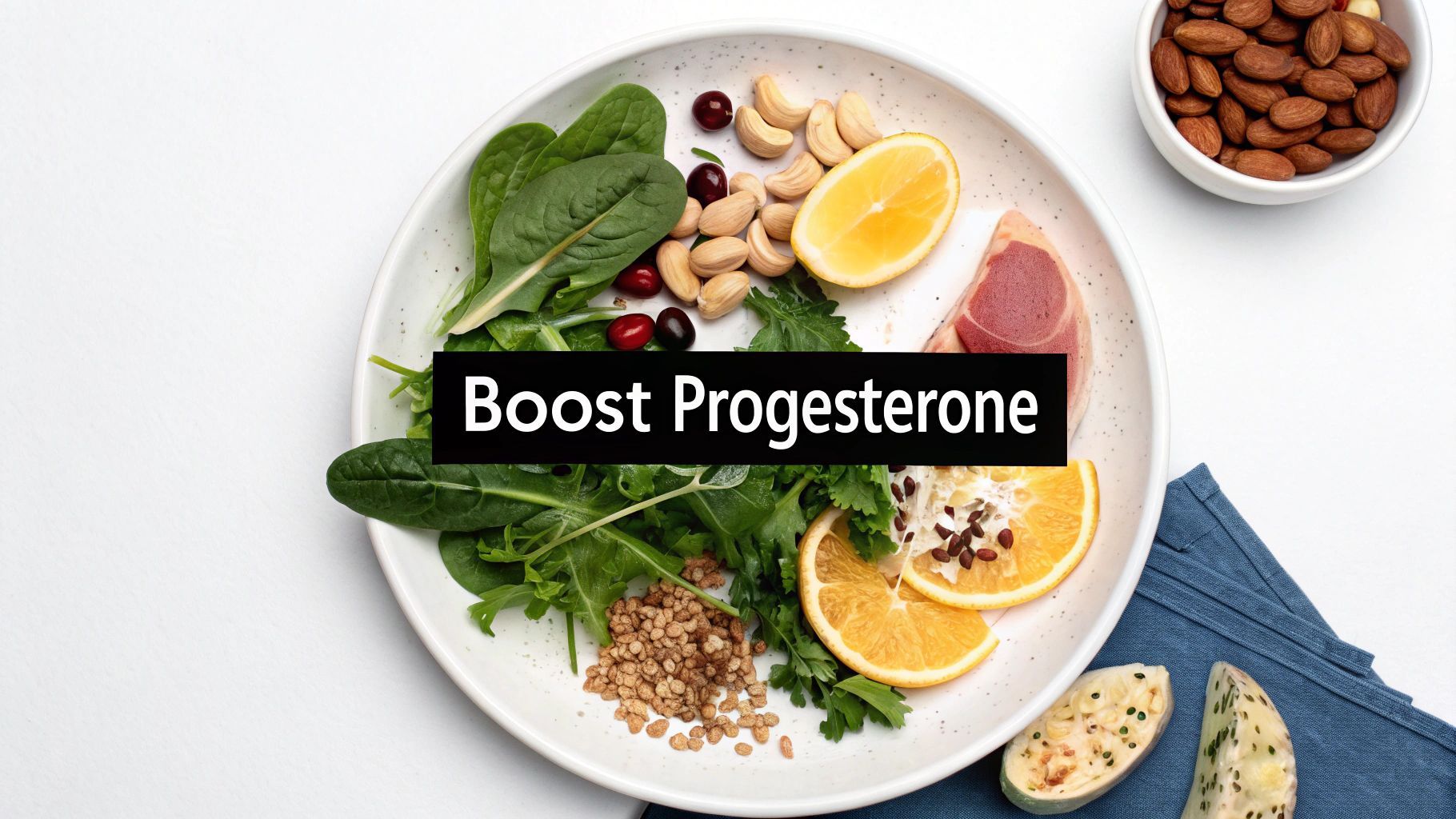
While you can't eat progesterone directly, your plate holds incredible power to influence how much your body makes. I like to think of the body as a sophisticated hormone-building factory. The food you eat provides the raw materials—the specific vitamins and minerals—that this factory needs to run efficiently.
By focusing on nutrient-dense foods, you're essentially giving your body the exact building blocks it needs to create and sustain healthy progesterone levels. This isn't about restrictive dieting. It’s about strategically adding powerful ingredients to your meals that support the intricate hormonal dance happening inside you every day.
The Micronutrient Power Players
To really move the needle on progesterone, we need to zoom in on a few key micronutrients. These are the vitamins and minerals that play a starring role in hormone synthesis and regulation.
Vitamin C: A Luteal Phase Ally
Most of us think of Vitamin C for immunity, but it’s a powerhouse for ovarian function, too. Research has shown a direct link between higher Vitamin C intake and better progesterone levels, especially during the second half of your cycle (the luteal phase). This antioxidant works by protecting the corpus luteum—the temporary gland that pumps out progesterone after ovulation—from cellular damage.
To load up, think beyond oranges. Some of the best sources are:
- Bell Peppers: Red, yellow, and orange varieties are absolutely packed with it.
- Citrus Fruits: Grapefruits, lemons, and limes are fantastic choices.
- Berries: Strawberries are a particularly delicious and potent source.
- Leafy Greens: Kale and spinach are easy to toss into almost any meal.
Zinc: The Master Hormone Regulator
Zinc is a non-negotiable mineral for hormone health. It has a direct line to your pituitary gland, which acts as the master controller for your entire endocrine system. Specifically, zinc helps regulate follicle-stimulating hormone (FSH), which then signals the ovaries to get to work producing progesterone.
A zinc deficiency can throw a major wrench in this communication system, and it’s surprisingly common, affecting nearly 20% of the global population. You can learn more about how zinc supports hormone levels on letsgetchecked.com.
You can find plenty of zinc in both plant and animal foods:
- Lean red meat and poultry
- Shellfish, with oysters being the top source
- Pumpkin and sesame seeds
- Lentils and chickpeas
Building Your Hormone-Friendly Plate
Knowing which nutrients matter is one thing; actually getting them onto your plate is another. A simple rule I give my clients is to build a plate full of color and variety. This naturally ensures you're getting a wide spectrum of essential vitamins and minerals.
A Practical Takeaway: Aim for at least one source of these key nutrients at every single meal. A breakfast of scrambled eggs (B6, healthy fats) with a side of wilted spinach (magnesium) and a small bowl of berries (Vitamin C) is a perfect example of a progesterone-supportive start to your day.
Magnesium: The Calming Mineral
Often called the "calming mineral," magnesium is critical for regulating the pituitary gland and helps keep your stress hormone, cortisol, in check. Since high cortisol directly interferes with progesterone production, managing stress with adequate magnesium is a brilliant strategy. It also promotes deep, restorative sleep—another cornerstone of hormonal balance.
Great sources of magnesium include:
- Dark chocolate (look for 70% cacao or higher)
- Avocados
- Nuts, especially almonds and cashews
- Legumes and whole grains
B Vitamins: The Progesterone Precursors
The B-vitamin family, especially Vitamin B6, is essential for healthy liver function. Your liver is responsible for breaking down excess estrogen, which helps maintain that delicate estrogen-to-progesterone ratio. Vitamin B6 is also directly involved in building a strong corpus luteum, the very structure that produces your progesterone post-ovulation.
To boost your B vitamin intake, add these to your rotation:
- Wild-caught salmon and tuna
- Eggs
- Legumes like chickpeas
- Sweet potatoes and carrots
To make this even easier to digest, I've put together a quick-reference table summarizing the key nutrients we've just discussed and their best food sources.
Key Nutrients for Natural Progesterone Support
This table outlines essential vitamins and minerals that support progesterone production, their function, and the best dietary sources.
| Nutrient | Role in Progesterone Support | Top Food Sources |
|---|---|---|
| Vitamin C | Supports corpus luteum health and boosts progesterone output. | Bell peppers, citrus fruits, broccoli, strawberries, kiwi. |
| Zinc | Essential for pituitary gland function, which regulates hormone production. | Oysters, beef, pumpkin seeds, lentils, cashews. |
| Magnesium | Helps regulate the stress response, lowering cortisol to support progesterone. | Dark leafy greens, almonds, dark chocolate, avocado. |
| Vitamin B6 | Aids in developing the corpus luteum and helps balance estrogen levels. | Salmon, tuna, chickpeas, sweet potatoes, bananas. |
| Healthy Fats | Cholesterol is a precursor for all steroid hormones, including progesterone. | Avocado, olive oil, nuts, seeds, coconut oil. |
Having this cheat sheet handy can make grocery shopping and meal planning much more straightforward when your goal is to support your hormones from the ground up.
Lifestyle Changes That Support Hormone Balance
While a hormone-friendly diet lays the groundwork, it’s your daily habits that truly create the environment where your hormones can thrive. I like to think of lifestyle as the operating system for your body's internal hormone factory. When that system is calm, rested, and balanced, progesterone production hums along beautifully.
Unfortunately, modern life often pushes this system into overdrive, putting up some serious roadblocks for hormonal health. Chronic stress, poor sleep, and the wrong kind of exercise can completely throw off that delicate hormonal symphony. The good news? Making a few intentional, sustainable changes in these areas can have a massive impact on your progesterone levels.
Manage Your Stress Response
If there’s one major antagonist to healthy progesterone, it’s chronic stress. When you’re constantly under pressure, your body shifts into survival mode and starts pumping out the stress hormone cortisol. This creates a huge problem because both cortisol and progesterone are made from the same precursor hormone, pregnenolone.
This is what’s known as the "pregnenolone steal" or "cortisol steal." In a high-stress state, your body literally diverts the raw materials away from making progesterone and channels them into producing more cortisol. It's a physiological triage system—your body prioritizes immediate survival over long-term functions like reproduction.
To get out of this cycle, weaving stress-management practices into your daily routine is absolutely non-negotiable.
Here are a few simple but effective strategies I recommend to my patients:
- Take Mindful Moments: You don’t need an hour-long meditation session. Just taking five minutes to focus on your breath can dial down cortisol. Try this: before you even reach for your phone in the morning, set a timer for three minutes to just sit and breathe.
- Embrace Gentle Movement: Activities like restorative yoga, tai chi, or even a slow walk in nature activate your parasympathetic nervous system—the "rest and digest" mode. This is the biological off-switch for the "fight or flight" state that’s been draining your progesterone.
- Try Journaling: Spending a few minutes before bed to get your thoughts down on paper is a powerful way to process the day's stressors. This simple act can clear your mind, which prevents stress from wrecking your sleep and, by extension, your hormones.
Prioritize Restorative Sleep
Sleep is prime time for hormonal repair work. The intricate conversation between your brain and ovaries—known as the hypothalamic-pituitary-ovarian (HPO) axis—gets fine-tuned while you rest. When sleep is off, that whole system gets thrown into disarray.
Even a single night of bad sleep can spike your cortisol and mess with your blood sugar the next day, creating a ripple effect that tanks hormone production. Consistent, high-quality sleep is foundational for regulating your entire menstrual cycle and ensuring you have a robust luteal phase where progesterone is supposed to peak.
A consistent sleep schedule is one of the most powerful levers you can pull for hormonal health. Aiming for 7-9 hours per night helps regulate cortisol, improve insulin sensitivity, and support the delicate rhythms of your endocrine system.
If you struggle with sleep, start by creating a relaxing bedtime routine. Dim the lights, put screens away an hour before bed, and maybe sip on a cup of chamomile tea. For more in-depth strategies, you might find some helpful ideas in these best natural sleep remedies.
Find Your Exercise Sweet Spot
Physical activity is incredible for hormone balance, but only if it's the right kind and the right amount for your body. It's all about finding that Goldilocks zone, because both over-exercising and being completely sedentary can sabotage progesterone.
Pushing through high-intensity, lengthy workouts without enough rest can be perceived by your body as a major stressor. The result? A spike in cortisol and that familiar "cortisol steal" we talked about. I see this a lot in endurance athletes or people who hit the gym hard every day without factoring in proper recovery.
On the flip side, not moving enough can lead to insulin resistance and weight gain, both of which can interfere with ovulation and suppress progesterone.
Here’s how to strike the right balance:
- Sync with Your Cycle: Try shifting to lighter activities like walking, yoga, or swimming during your luteal phase (the two weeks before your period). Your energy is naturally a bit lower then, so it’s a great time to honor that.
- Focus on Strength: Incorporating resistance training two to three times a week is a game-changer. Building muscle improves your body's insulin sensitivity, which is crucial for healthy ovaries and balanced hormones.
- Prioritize Recovery: Don't skip your rest days. Recovery is when the magic happens—it’s when your body repairs tissue and rebalances hormones. Never underestimate the power of a day off.
Maintaining a healthy body weight is also key here. Both being underweight and overweight can scramble the hormonal signals needed for ovulation—and without ovulation, you simply can't produce progesterone. These adjustments aren't about perfection. It’s about consistently creating a supportive foundation where your hormones can finally find their rhythm.
Using Herbs And Supplements To Support Progesterone
Once you've fine-tuned your diet and lifestyle, you might still feel like you need an extra layer of support. This is where a few carefully chosen herbs and supplements can make a real difference. Think of them less as a first line of defense and more as strategic reinforcements to the foundational work you’re already doing.
Navigating the world of supplements can feel overwhelming, but it doesn't have to be. Some herbs work by influencing the pituitary gland's signals, while others help your body adapt to stress, indirectly creating a healthier environment for progesterone to thrive. The key is to understand how they work and choose options that make sense for your specific situation.
Key Herbal Allies For Hormone Balance
A handful of botanicals have a long and trusted history in supporting female hormonal health. They aren't magic bullets, but their gentle, supportive actions can be a significant part of a holistic plan to boost progesterone naturally.
Chasteberry (Vitex agnus-castus)
Often considered the star player for progesterone support, Chasteberry is interesting because it doesn't contain hormones itself. Instead, it works on the pituitary gland—the body's hormonal command center. It helps regulate prolactin and supports the luteinizing hormone (LH) surge, which is the direct trigger for ovulation and, consequently, progesterone production.
I find it’s especially helpful for women dealing with a short luteal phase (the second half of their cycle) or generally irregular cycles. It’s a slow-acting herb, though, so consistency over several months is crucial to see results.
Maca Root (Lepidium meyenii)
This adaptogenic root from the Andes is known for its ability to nourish the entire endocrine system. Maca doesn’t supply hormones but instead provides key nutrients your body needs to produce them in the right amounts. It’s a great choice for supporting energy, libido, and overall hormonal balance without acting like a hormone itself.
Ashwagandha (Withania somnifera)
As a premier adaptogen, Ashwagandha’s primary superpower is helping your body build resilience to stress. By modulating your cortisol response, it directly counters the "cortisol steal" that can deplete your progesterone stores. Since we know high cortisol interferes with progesterone, using some of the best supplements to reduce cortisol is a smart strategy.
For a deeper dive into how different botanicals can help, this guide on the best herbs for hormone balance offers more traditional and effective options.
Essential Nutrients In Supplement Form
While getting nutrients from food is always the ideal, supplementation can be a powerful way to correct specific deficiencies or provide a therapeutic dose that’s tough to get through diet alone.
This chart shows just how foundational factors like stress and sleep are. They are the bedrock of hormonal health.
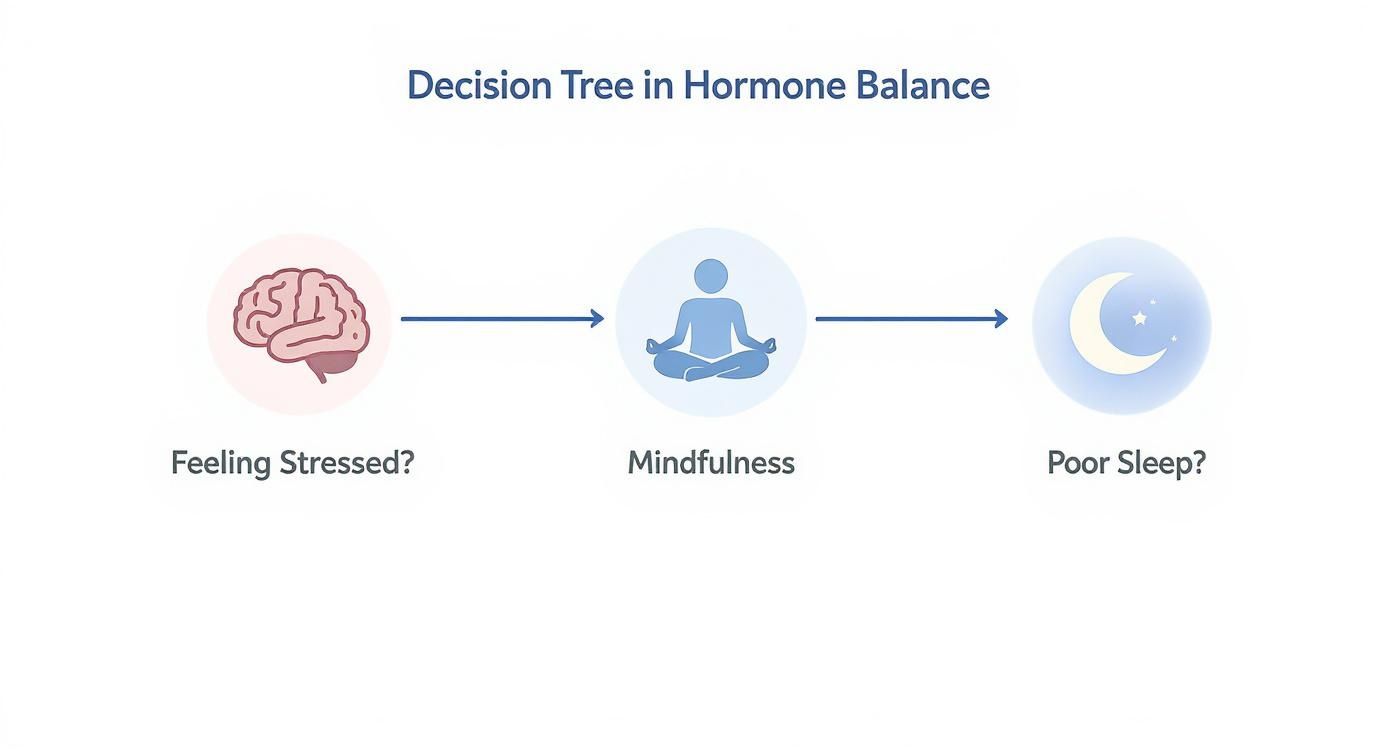
Before you jump to more complex solutions, getting these basic wellness pillars in order is almost always the most effective place to start.
Vitamin B6
This vitamin is a co-factor in countless bodily processes, including making the neurotransmitters that keep your mood stable. When it comes to hormones, its most important job is helping to build a healthy corpus luteum after ovulation. It also gives the liver a hand in clearing out excess estrogen, which is crucial for maintaining a healthy progesterone-to-estrogen balance.
Magnesium
Magnesium is a true workhorse, involved in over 300 enzymatic reactions in the body. It’s famous for its calming effect on the nervous system and its ability to improve sleep quality. By supporting your stress response and promoting deep rest, magnesium helps create the physiological calm needed for robust progesterone production. The glycinate and citrate forms are both highly absorbable and good ones to look for.
A Note on Safety: Herbs and supplements are potent. It's absolutely essential to consult with a healthcare provider—like a naturopathic doctor, functional medicine practitioner, or licensed acupuncturist—before starting any new regimen. They can help you determine the right options and dosages for your unique health profile and ensure there are no issues with other medications or conditions.
A Safe And Considered Approach
Bringing these natural tools into your routine should be a deliberate and personalized process. What works wonders for one person may not be the right fit for you.
My best advice? Start with one new supplement at a time. Give your body at least one full cycle to see how it responds before adding anything else. This way, you can accurately gauge what’s working. Remember, the goal is to gently guide your body back to its own innate rhythm, not to force an outcome. This patient and mindful approach will give you the most sustainable and positive results on your journey to hormonal wellness.
The Growing Movement Toward Natural Hormone Balance
If you’ve found yourself looking for ways to naturally increase your progesterone, you’re in good company. There’s a major shift happening in women's health, a move away from the old one-size-fits-all synthetic prescriptions and toward more personalized, body-aware approaches.
For a long time, the standard playbook didn't offer much nuance. But today, women are asking for—and demanding—therapies that work with their bodies, not against them. This has opened the door for bioidentical hormones, which mirror what our bodies produce naturally, as well as time-tested, plant-derived options. It’s more than a trend; it's a fundamental rethinking of how we manage everything from PMS and fertility to the journey through perimenopause.
Market Trends Are Telling the Story
You can see this shift playing out in the numbers. The global progesterone market is growing, largely because more people understand the crucial role natural hormones play in reproductive health.
Specifically, natural progesterone formulations are leading the charge, holding about 59% of the market share in 2023. This isn't just a small preference; it's a clear signal that patients want bioidentical and plant-based options. You can discover more insights about these market trends on pharmiweb.com if you're curious about the data.
This isn't just happening on the consumer side, either. Clinical practice is catching up. As more evidence comes out supporting natural approaches, more practitioners are integrating them into their treatment plans, especially for fertility support. Natural progesterone, for example, is now a go-to in many modern IVF protocols because it’s effective and has a great safety profile.
When you choose to explore natural solutions, you're not just following a hunch. You're part of a larger, evidence-backed evolution in women's healthcare that connects your personal choices to these major industry shifts.
Why This Matters for Your Health Journey
What does this all mean for you? It's empowering. It means more choices, more research, and more healthcare professionals who get it—who understand and support a holistic view of hormonal health. This guide was created to give you the actionable, safety-first strategies that fit right into this new way of thinking.
Deciding to support your hormones naturally is a powerful step. It’s an acknowledgment that your lifestyle, your diet, and your body's inner world are all deeply connected. By embracing these strategies, you're joining a growing community of people focused on sustainable, body-centric wellness.
When to Talk to a Healthcare Professional
While the natural strategies we've covered can be incredibly effective for supporting healthy hormone levels, they have their limits. Knowing when to escalate your care from home-based efforts to a professional consultation is a crucial part of managing your health responsibly.
The bottom line is this: if your symptoms are severe, don't seem to be improving, or are genuinely getting in the way of you living your life, it's time to get a clinical evaluation. The same goes for fertility—if you’ve been trying to conceive for over a year (or six months if you're over 35) without success, it's wise to bring in an expert.
Identifying Red Flags
Some symptoms and situations really shouldn't wait. I always advise my clients to book an appointment right away if they're experiencing any of the following:
- Severe PMS or PMDD: We're talking mood swings, anxiety, or depressive episodes that feel completely overwhelming and unmanageable.
- Persistent Fertility Issues: This is especially important if you've experienced recurrent early miscarriages, which can be a key sign of luteal phase issues.
- Suspected Underlying Conditions: Things like Polycystic Ovary Syndrome (PCOS) or thyroid disorders are notorious for disrupting hormone production.
- Very Irregular Cycles: If your cycles are consistently all over the place—very short, very long, or even absent—it’s a clear signal that something is off.
What to Expect from a Clinical Evaluation
When you see a doctor or a licensed practitioner, you get access to a deeper level of investigation. A thorough evaluation usually starts with a detailed health history, followed by targeted lab work to get a precise, data-driven picture of your hormone status.
The gold standard for checking progesterone is a serum progesterone blood test. This is typically done on day 21 of your cycle (or about seven days post-ovulation) to catch progesterone at its peak during the luteal phase. This kind of test provides definitive data that at-home methods simply can't match.
Seeking professional care is a sign of empowerment. It means you are gathering all the necessary information to make the best decisions for your health, combining natural wisdom with clinical insights.
This focus on progesterone isn't just a local trend; it's a global one. While North America currently represents the largest part of the progesterone market, the Asia-Pacific region is the fastest-growing, with Europe also seeing a major uptick. This reflects a worldwide commitment to better addressing women's hormonal health. You can learn more about these global progesterone market insights.
Working with a skilled professional, like a practitioner of Traditional Chinese Medicine, can bring all the pieces of your health puzzle together into one cohesive plan. If you're looking to explore this route, you can find options for acupuncture and herbs near me to support your journey.
Common Questions About Naturally Boosting Progesterone
When you start exploring how to balance your hormones, it's natural to have a lot of questions. Let's tackle some of the most common ones I hear from my patients so you can feel more confident on this journey.
How Long Does It Take to See a Real Difference?
This is probably the most frequent question, and the honest answer is: it depends. Hormonal shifts don't happen overnight. Think of it less like a quick fix and more like nurturing a garden—it takes time and consistent effort.
Generally, you’ll want to give it at least two to three full menstrual cycles to really gauge the effects of your lifestyle and diet changes. Your body needs that time to respond, recalibrate, and establish a new rhythm. Your starting point, the root cause of the imbalance, and how consistent you are will all play a big part in your personal timeline.
Can I Test My Progesterone Levels at Home?
While you can buy at-home test strips, they have their limitations. These kits typically measure a progesterone metabolite called PdG in your urine to confirm that ovulation happened. They're great for cycle tracking but don't give you a precise number to diagnose a deficiency.
For a true diagnosis, nothing beats a serum progesterone blood test from your doctor. It's the gold standard. This test is usually timed for day 21 of a 28-day cycle (or about 7 days after you ovulate) to catch your progesterone at its peak, providing the most accurate picture of what's going on.
Are There Foods That Actually Contain Progesterone?
This is a very common myth. No food on earth actually contains progesterone. It's a hormone your own body has to make.
What certain foods do have are the crucial building blocks—the raw materials—your body needs to produce progesterone on its own. Think of nutrients like zinc, magnesium, and vitamin B6 as the essential ingredients. The whole point of a hormone-supportive diet is to stock your body's "hormone factory" with high-quality supplies so it can do its job properly.
At Eric Tsai Acupuncture and Herbs, we blend the time-tested wisdom of traditional medicine with a modern understanding of hormonal health to create plans that are unique to you. If you feel like you need a more guided and personalized approach, we'd be honored to support you. We invite you to book a consultation with us today.