
Tuina is so much more than what most people think of as "massage." It’s not just about relaxation; it's a sophisticated form of therapeutic bodywork rooted in Traditional Chinese Medicine (TCM) designed to bring your body back into balance.
Think of it as a hands-on method for addressing the root cause of your symptoms, whether that’s chronic pain, stress, or other health issues. The core tuina massage benefits come from its unique ability to get stagnant energy moving, improve circulation, and kickstart your body's own powerful healing mechanisms.
How Does Tuina Actually Work?
To really get why Tuina is so effective, you need to understand the philosophy behind it. It's built on the exact same principles as acupuncture, focusing on the body's vital energy, called Qi (pronounced "chee"), and the specific pathways, or meridians, that it flows through.
I often ask my patients to imagine their body’s meridian system as a network of rivers. When those rivers flow freely, every part of the landscape—your muscles, organs, and tissues—is nourished and healthy. This smooth, unobstructed flow of Qi is the very definition of good health in TCM.
What Happens When Qi Gets Stuck?
Life happens. Things like physical injuries, chronic stress, poor diet, and even emotional strain can act like dams, creating blockages in these energetic rivers. When Qi and blood can't circulate properly, problems start to pop up.
Picture a logjam in that river. Downstream, the land gets parched and weak. Upstream, the water backs up, creating pressure, swelling, and stagnation. In your body, this blockage can show up as:
- Pain and Stiffness: That nagging ache in your lower back or that stiff neck is often a sign of stuck energy.
- Fatigue and Low Energy: If Qi isn't reaching your vital organs, you're going to feel drained.
- Emotional Imbalances: In TCM, feelings like irritability or anxiety are often linked to stagnated Qi.
- Digestive Issues: When the energy flow to your digestive system is compromised, things just don't work right.
This is where a Tuina practitioner steps in. We work to clear those logjams and get things flowing again.
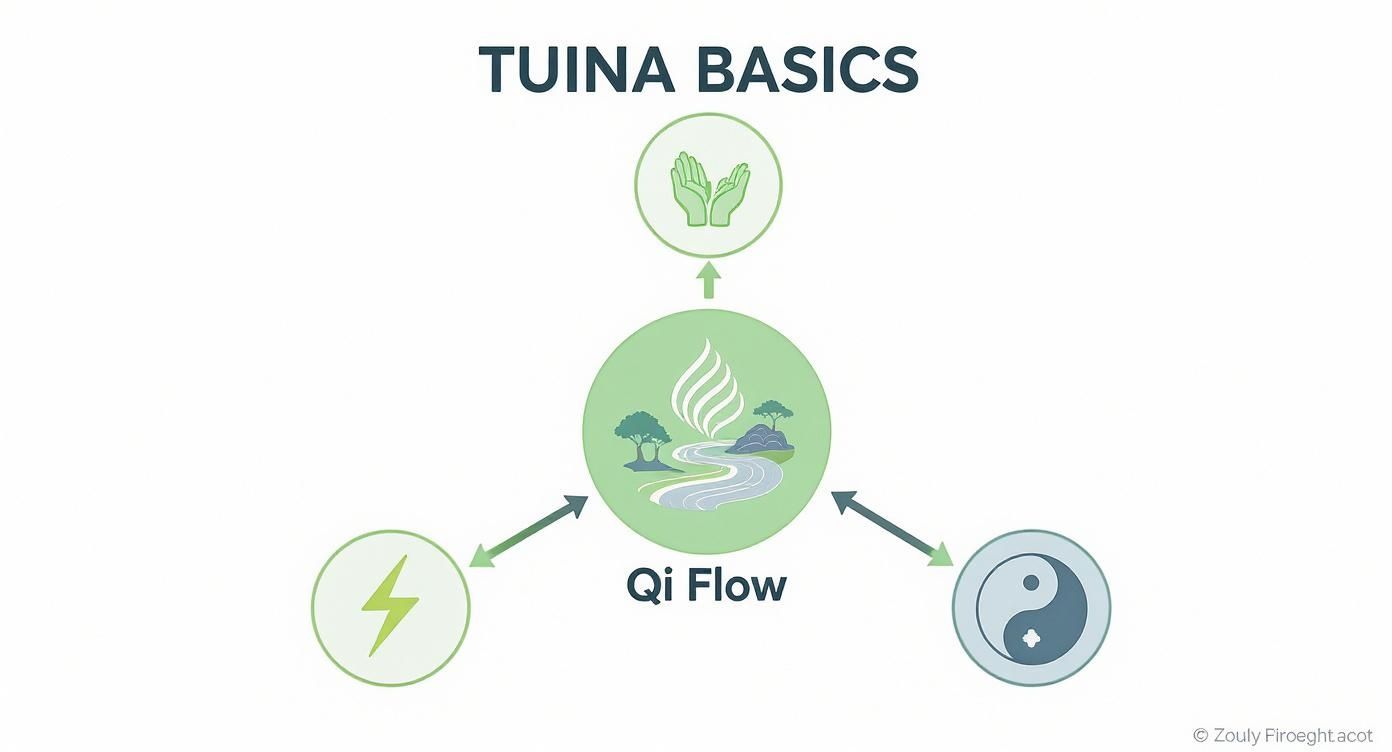
The goal is always to clear the obstruction, restore proper circulation, and guide the body back to its natural state of harmony.
The Practitioner's Toolkit: Therapeutic Techniques
Tuina isn't a passive, one-size-fits-all massage. A trained practitioner is like an engineer for your body’s energetic grid. We use a whole toolbox of specific, hands-on techniques to break down those blockages and get your Qi and blood moving freely.
Tuina is dynamic and intentional. Unlike a general relaxation massage, every single push, grasp, and knead has a clear therapeutic purpose: to influence the flow of Qi along specific pathways and address your unique pattern of imbalance.
This is done using a range of specialized hand techniques, including:
- Tui (Pushing): A smooth, gliding stroke that moves stagnant energy along a meridian.
- Na (Grasping): A technique where we lift and squeeze soft tissue to release deep-seated tension.
- An (Pressing): Applying firm, steady pressure to specific acupoints to activate energy flow. If you're curious, you can learn more about the differences between acupuncture and acupressure here.
- Gun (Rolling): Using the back of the hand in a rhythmic rolling motion to warm up muscles and invigorate circulation.
By skillfully combining these and many other methods, a Tuina session works on two levels. It addresses the physical problem you feel (like a tight muscle) while also correcting the underlying energetic imbalance causing it. This dual focus is precisely what makes Tuina such a powerful system for achieving lasting relief and genuine wellness.
Tuina Massage vs. Other Common Modalities
It's helpful to see how Tuina stands apart from more familiar types of massage. While they all involve touch, their underlying goals and techniques are quite different.
| Feature | Tuina Massage | Swedish Massage | Deep Tissue Massage |
|---|---|---|---|
| Primary Goal | Restore energetic balance (Qi flow), address root cause of symptoms | General relaxation, stress relief, improve circulation | Release chronic muscle tension, knots, and adhesions |
| Foundation | Traditional Chinese Medicine principles (meridians, acupoints) | Western anatomy and physiology | Western anatomy and physiology |
| Technique | Pushing, grasping, pressing, rolling along specific energy channels | Long gliding strokes (effleurage), kneading (petrissage), friction | Slow, forceful strokes and deep finger pressure on specific muscles |
| Pressure | Varies from light to deep, but is highly targeted and dynamic | Typically light to medium, focused on broad muscle groups | Consistently firm to deep, focused on the deepest layers of muscle |
| Clothing | Often performed over loose-fitting clothing or a sheet | Performed directly on the skin with oils or lotions | Performed directly on the skin with minimal lubricant |
As you can see, Tuina's diagnostic and therapeutic framework is what truly sets it apart. It’s a targeted medical treatment, not just a way to relax, which is why it can be so effective for such a wide range of health concerns.
Tackling Pain at its Source with Tuina Massage
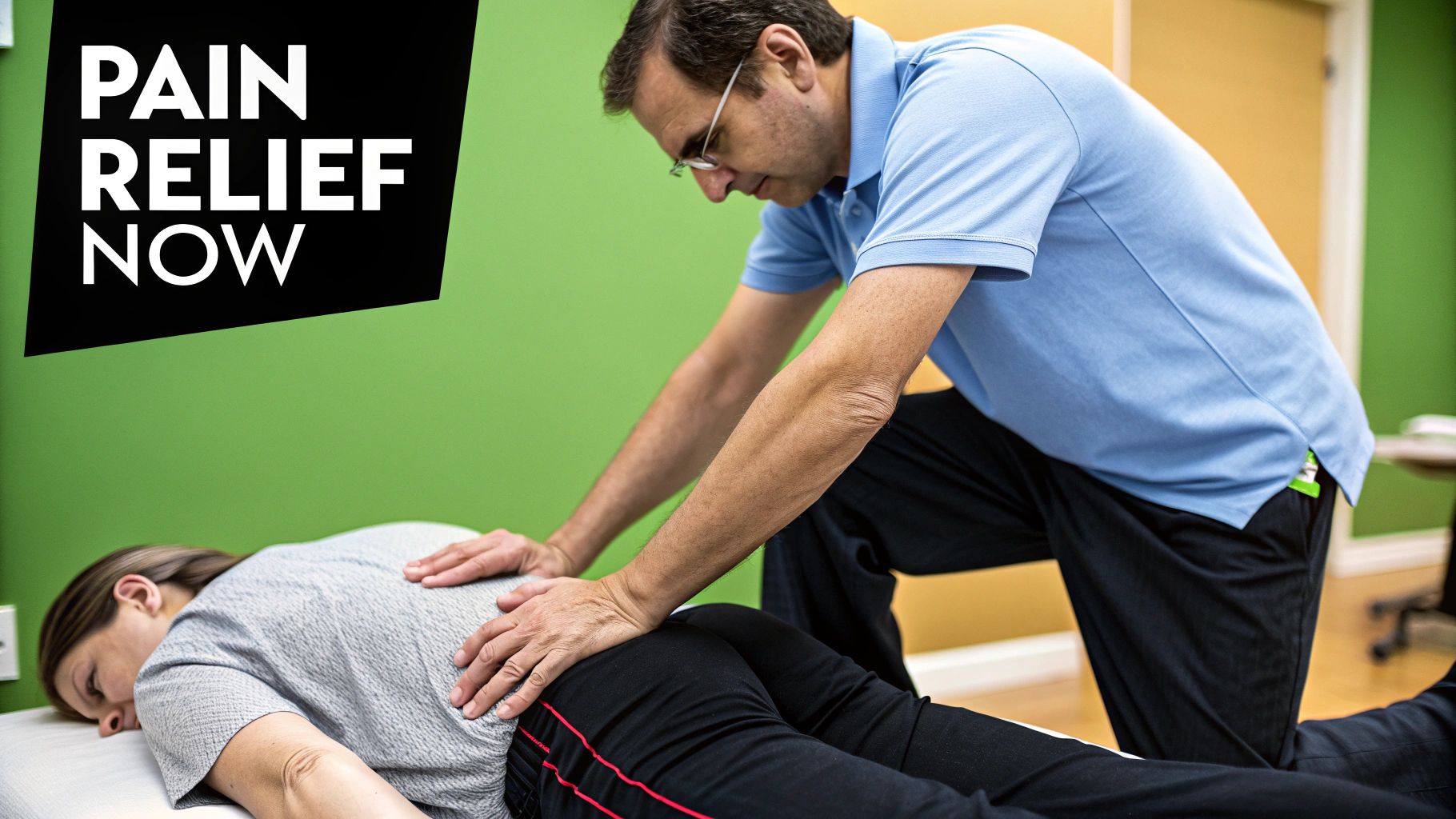
Without a doubt, one of the most common reasons people walk through our doors for Tuina is pain. Whether it's persistent lower back pain, a stiff neck that just won't quit, sciatica, or the ache of arthritis, Tuina offers a powerful, hands-on path toward real relief.
What makes it different is that it doesn't just chase the symptoms. Tuina gets to the root cause of pain by addressing it from both a modern physiological and traditional energetic standpoint. It’s about restoring function, not just temporarily quieting the noise.
This isn’t just a simple muscle rub; it’s a sophisticated system. A skilled practitioner uses a whole toolbox of targeted techniques to create specific, lasting changes within your body’s tissues.
How Tuina Breaks the Pain Cycle
So, how does it actually work? Instead of just masking pain, Tuina taps into the body's own powerful healing mechanisms to resolve the underlying problem.
Think of a muscle knot as a traffic jam on a highway. It’s a tight bundle of fibers where blood, oxygen, and nutrients can’t get through. Tuina techniques like kneading (Rou Fa) and pressing (An Fa) act like a traffic controller, physically breaking up that congestion and separating the adhered fibers.
Suddenly, local circulation is restored. This flood of fresh, oxygenated blood does two crucial things: it brings in the raw materials needed for tissue repair and washes away the metabolic junk that fuels inflammation and pain.
Tuina essentially unlocks your body's internal pharmacy. By stimulating specific acupressure points and releasing deep-seated muscle tension, it triggers the release of endorphins—your body’s own natural painkillers—providing relief you can feel right away.
This one-two punch of mechanically breaking down adhesions and biochemically shutting down pain signals is what makes Tuina so incredibly effective. The results often stick around long after you get off the table.
Targeted Relief for Specific Conditions
The real magic of Tuina is in its precision. We don't just give a generic massage; we apply specific techniques to address the exact muscles, ligaments, and nerve pathways involved in your pain. This is what sets it apart.
Let’s look at a few examples:
- Sciatica and Piriformis Syndrome: If you have that tell-tale pain shooting down your leg, we might use grasping (Na Fa) and rolling (Gun Fa) techniques directly on the piriformis muscle deep in your glutes. Releasing this stubborn muscle often takes the pressure right off the sciatic nerve.
- Tension Headaches: So many headaches actually start in the neck and shoulders. By focusing on the upper trapezius and other key neck muscles, Tuina can melt away the tension patterns that send pain signals up into your head, hitting the problem at its source.
- Arthritic Joint Pain: For something like knee arthritis, the work is done around the joint, not directly on it. We use techniques to boost circulation, ease inflammation, and improve mobility without aggravating the joint itself.
This targeted approach ensures your treatment is both safe and maximally effective. You can learn more about how we blend different alternative therapies for chronic pain to build a truly personal recovery plan.
The Evidence Backs It Up
This isn't just folk medicine; the effectiveness of Tuina is well-supported by modern research. Clinical studies are consistently showing its value for managing pain.
A major 2017 meta-analysis, which reviewed multiple studies covering over 1,500 people, came to a clear conclusion. It found that Tuina was significantly more effective than standard treatments like traction or medication for chronic neck and back pain. Patients who received Tuina reported an average pain reduction of 35%, a big step up from the 20% seen in the control groups. You can read more about these Tuina massage findings online.
This growing body of evidence confirms what practitioners have known for centuries: Tuina is a serious therapeutic tool. It’s designed to create genuine, long-term changes, helping you finally get a handle on your pain and get back to living your life.
Relieving Stress and Enhancing Mental Wellbeing
While Tuina is a powerhouse for physical pain, its impact on mental and emotional health is just as profound. In our non-stop world, chronic stress feels like a constant companion. Tuina offers a direct, hands-on way to break that cycle and bring back a sense of inner calm, treating stress not just as a feeling, but as a physical and energetic state that needs rebalancing.
From a Traditional Chinese Medicine standpoint, emotions like stress and anxiety aren’t just in your head—they create tangible disruptions to your body's energy, or Qi. Think of persistent stress as low-level static messing with your body’s internal communication system. This static gets in the way of smooth energy flow, leaving you with that familiar, frazzled feeling of being overwhelmed and constantly on edge.
Tuina works by methodically clearing that static, helping to re-establish clean, clear signals throughout your body's meridian network.
Resetting Your Nervous System
Your body essentially has two main operating modes, both run by the autonomic nervous system. The first is the sympathetic nervous system, your "fight or flight" response. It's crucial for emergencies, but it becomes draining when chronic stress keeps it switched on all the time. The other mode is the parasympathetic nervous system, or your "rest and digest" state, which handles healing, recovery, and relaxation.
Tuina massage acts like a manual reset button for your mental wellbeing. Specific techniques applied to key acupoints on the back, neck, and scalp help shift your body out of high-alert mode. This gentle guidance encourages the parasympathetic system to take the driver's seat, which is why so many people feel a deep sense of peace and relief both during and after a session.
This physiological shift creates measurable changes:
- Lower Cortisol Levels: By easing the "fight or flight" response, Tuina helps dial down the production of cortisol, the body's main stress hormone.
- Improved Sleep Quality: A calmer nervous system naturally leads to deeper, more restorative sleep, which is absolutely vital for mental resilience.
- Enhanced Mood: The massage triggers the release of endorphins, giving you a natural mood lift and helping to push back against feelings of anxiety and irritability.
More and more people are catching on to these benefits. A 2025 market analysis projects the global massage therapy services market will reach USD 126.8 billion by 2035, driven in part by a growing demand for effective stress relief. This is a trend we're seeing up close, as wellness centers in Western countries noted a 25% increase in Tuina bookings between 2020 and 2025.
The Physical Side of Emotional Stress
Ever notice how, when you're stressed, your jaw clenches, your shoulders hike up toward your ears, and your neck feels like a brick? That's a perfect illustration of how emotional tension creates very real physical blockages. Those tight muscles aren't just uncomfortable; they’re physical roadblocks that choke off the flow of Qi and blood to your head.
Tuina recognizes that the tension in your shoulders is directly connected to the weight on your mind. By releasing the physical knot, we also help to release the emotional burden it represents, providing a more complete form of relief.
A skilled practitioner will use targeted grasping (Na Fa) and rolling (Gun Fa) techniques along the neck, shoulders, and upper back to melt away this built-up tension. Releasing these muscles gives you immediate physical relief and can also ease other stress-induced issues like tension headaches and brain fog. For a deeper dive into stress management, take a look at our guide on how to cope with stress.
By addressing both the physical symptoms and the underlying energetic imbalance, Tuina provides a powerful path to genuine mental wellness. For another therapeutic modality that combines touch and scent to promote relaxation, you might also want to explore the principles of aromatherapy massage.
Boosting Digestion and Overall Systemic Health
While most people think of Tuina for aching backs and tense shoulders, some of its most profound benefits happen on a much deeper level. The same principles that unknot a tight muscle can bring harmony to your internal systems, making Tuina a truly comprehensive therapy for whole-body health.
Many are surprised to learn that a key component of Tuina is targeted abdominal massage. This is far more than a simple stomach rub. It’s a series of precise techniques designed to directly influence how your digestive organs function.
Imagine your digestive tract is a river. For everything to run smoothly, it needs a steady, unimpeded current. But when stress, diet, or other factors create a logjam, you get that familiar feeling of bloating, constipation, and discomfort. Abdominal Tuina works to clear that jam, using skilled pushing and kneading motions to restore the natural downstream flow.
Calming the Gut and Improving Motility
This hands-on work directly stimulates peristalsis, which is the natural wave-like muscle contraction that moves food through your system. By re-establishing that healthy rhythm, Tuina can bring incredible relief to common digestive complaints.
It's especially helpful for people struggling with the frustrating symptoms of Irritable Bowel Syndrome (IBS). A big part of IBS is a communication breakdown between the gut and the brain. Tuina helps reset that connection, calming the nervous system's "fight-or-flight" response while physically soothing the digestive tract itself.
The results are tangible:
- Less Bloating and Gas: By getting things moving properly, Tuina prevents the buildup that causes that uncomfortable, swollen feeling.
- Relief from Constipation: The techniques physically encourage bowel motility, alleviating sluggishness and promoting regular, healthy habits.
- Soothed Abdominal Cramps: The gentle, rhythmic pressure relaxes tense abdominal muscles, which can significantly ease the cramping that comes with digestive upset.
Tuina for digestion is a perfect example of treating the whole person. We address the physical symptoms you feel in your gut while also calming the underlying stress response that often triggers these issues in the first place.
Supporting Reproductive and Respiratory Wellness
The systemic benefits don't stop with digestion. Because Tuina improves the flow of Qi and Blood throughout the entire body, it has a positive ripple effect on other core systems.
For women's health, we use specific protocols on the lower back and abdomen to improve blood flow to the pelvic area. This nourishment to the reproductive organs can help regulate the menstrual cycle and provide much-needed relief from painful period cramps.
In a similar way, Tuina can support your respiratory system. We apply techniques to the chest and upper back to help loosen congestion, open up the airways, and strengthen what we call Wei Qi, the body's protective energy field that is closely linked to the immune system. This makes Tuina a great therapy for managing seasonal allergy symptoms or recovering more quickly from a common cold.
From calming the mind to ease insomnia to supporting fertility by improving circulation, the applications are incredibly broad. This versatility speaks to a core truth about Tuina: it doesn't just chase isolated symptoms. It works to harmonize and energize your entire body as one interconnected whole.
What to Expect During Your Tuina Session
If you're new to Tuina, it's completely normal to wonder what a session is actually like. Forget what you know about a typical spa massage; this is an active, therapeutic experience that’s tailored to your specific health goals right from the start. Knowing the flow of a treatment can help you relax and get the most out of your visit.
Your session doesn't begin on the table—it starts with a conversation. We'll sit down for a brief but thorough consultation to discuss your primary concerns, go over your health history, and understand what you hope to achieve. This chat is the foundation of your treatment, allowing us to build a personalized plan based on the time-tested principles of Traditional Chinese Medicine.
The Treatment Process Unpacked
Once we have a clear picture of your needs, the hands-on work begins. First things first: you'll remain fully clothed. Tuina is performed over loose, comfortable clothing, so there's no need to disrobe. You'll simply lie on a padded treatment table, and we can use a sheet for extra comfort if you like.
The session itself is both dynamic and focused. Your practitioner will apply a wide range of specialized hand techniques—pushing, grasping, rolling, and pressing—along the body's meridian pathways and specific acupressure points. The pressure is always adjusted to what feels right for you, but expect it to be firm and intentional, especially over areas of stagnation or tension.
This is a partnership. Your feedback is absolutely essential. We encourage you to speak up if the pressure is ever too much or if any technique feels uncomfortable. Your comfort and safety are the top priorities.
This targeted work is all about breaking up stagnant Qi and blood. As this happens, you might feel a deep, therapeutic ache—a "good hurt"—rather than a sharp pain. Many people also report a pleasant sensation of warmth spreading through the area as circulation kicks in and energy starts moving freely again.
What You Might Feel During and After
Everyone’s experience is unique, but there are a few common sensations you can anticipate both during and after your session.
- During the Session: Expect to feel a mix of deep pressure, a satisfying release in tight muscles, and a growing sense of overall relaxation. It’s also common to feel a gentle warmth or even a light tingling sensation along the energy pathways as they open up.
- Immediately After: Most people leave feeling lighter, more mobile, and with a sense of mental clarity. Your muscles will likely feel as though they've had a good, deep stretch.
- The Next Day: Don't be surprised if you feel some mild soreness in the areas that received the most focused work. This is a great sign! It means we've successfully released long-held blockages and your body is actively responding. Think of it like the soreness after a really productive workout—it's a sign that positive changes are underway.
This temporary soreness usually fades within 24 to 48 hours. Afterward, you're typically left with improved flexibility and a real reduction in the symptoms that brought you in. Just remember to wear comfortable clothes and be open to communicating, and you'll be all set for a positive and deeply healing experience.
Common Questions About Tuina Massage
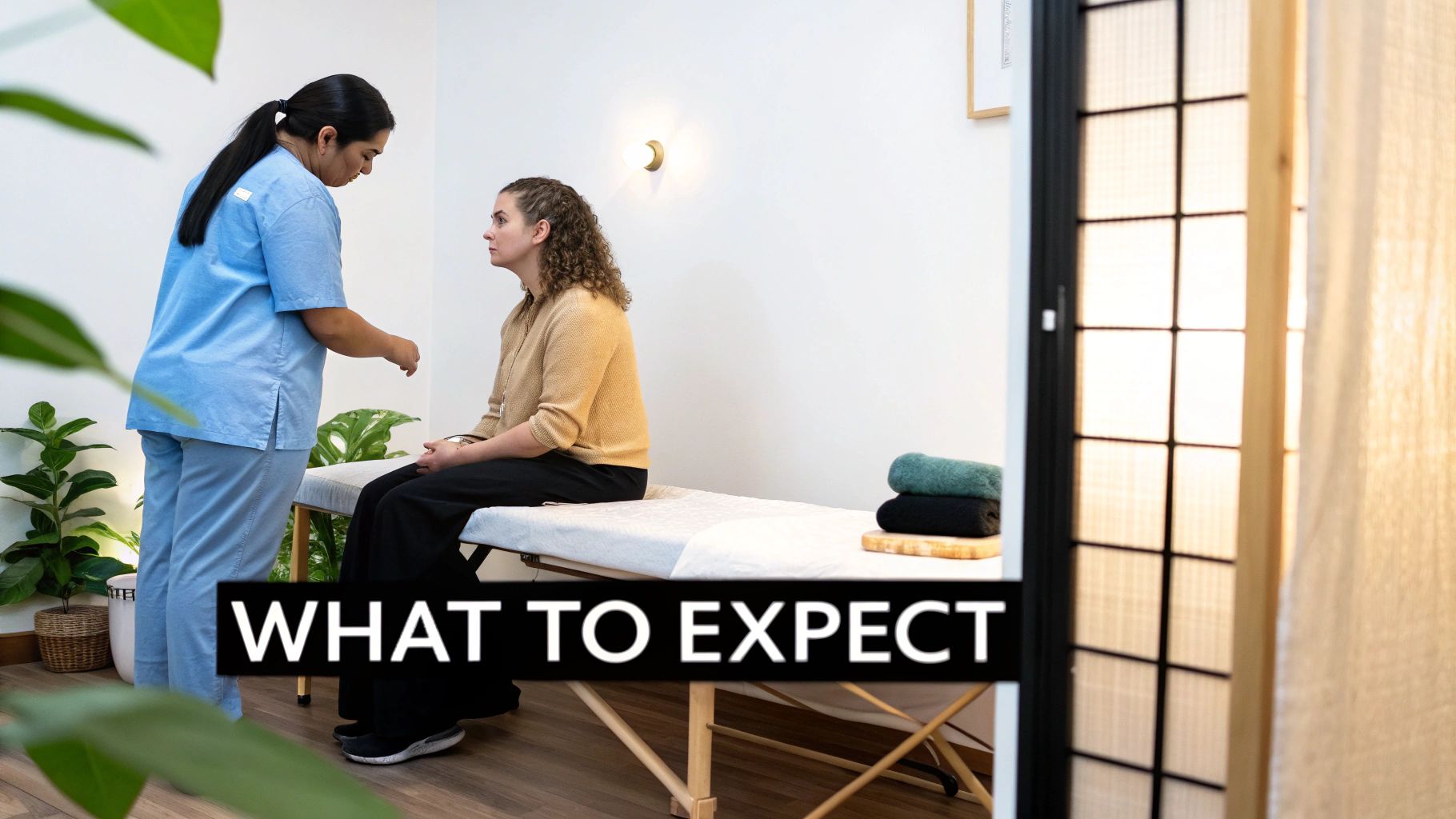
It's completely normal to have questions when you're considering a new approach to your health. Getting clear on what to expect can help you feel confident that Tuina is the right step for you. Let's walk through some of the most common things people ask us about this therapy.
A top question is always: "Will it hurt?" While Tuina gets deep into areas of tension and stagnation, it shouldn't be a painful experience. You might feel a deep, satisfying ache as a blockage starts to release, but never sharp pain. We always adjust the pressure to match what feels right for your body.
Your feedback is essential. We'll check in with you during the session, but please don't hesitate to speak up if any technique feels too intense. We can adjust our approach in an instant.
People also wonder how Tuina is different from a regular massage. Think of it this way: a Swedish massage is for general relaxation and a deep tissue massage targets muscle knots. Tuina, on the other hand, is a form of medical treatment. It uses precise techniques on specific acupressure points to address the root cause of your health issue, making it far more targeted.
Preparing for Your Session
Wondering what you should wear? Simple is best. Because we perform Tuina over your clothing, we recommend loose, soft items like sweatpants and a t-shirt. Stiff fabrics like denim can restrict movement and make it harder for us to apply the techniques effectively.
Finally, how often should you come in? The honest answer is that it really depends on you—your body, your condition, and your goals.
- For acute problems, like a recent sprain, you might need a session or two per week to get ahead of the inflammation and speed up healing.
- For chronic conditions or just keeping your body in balance, a session every two to four weeks is often a great rhythm.
We'll work with you to create a personalized plan. After your first session, we can assess how your body responds and recommend a schedule that makes sense for your long-term health.
Ready to feel the difference Tuina can make? Contact Eric Tsai Acupuncture & Herbs to set up your first consultation. Let's work together to find lasting balance and relief. Book your appointment online today.