
When you're dealing with knee pain, it’s easy to feel a bit lost. But the truth is, effective non surgical knee pain relief almost always begins with a few straightforward things you can do right at home. The goal is to get the inflammation under control, keep the joint from getting stiff, and start figuring out what’s causing the problem in the first place. These first few actions really set the stage for a successful recovery down the road.
Your First Steps for Managing Knee Pain at Home
The moment your knee starts hurting, your first instinct might be to stop moving entirely. And while rest certainly has its place, the best immediate care is more of a balancing act. You need to combine rest with just the right amount of gentle activity to manage the initial symptoms and get the healing process going. If you ignore those early signals, you’re often left with more stiffness and nagging pain, which only makes it harder to get moving again later.
The priority right out of the gate is to calm down the immediate inflammation and pain. A simple, strategic at-home plan is your best friend here. We're not talking about anything complicated—just consistent, mindful care in those first 24-48 hours.
Beyond Basic Rest and Ice
Everyone knows the classic RICE method: Rest, Ice, Compression, and Elevation. It’s a solid starting point for a reason. An ice pack for 15-20 minutes a few times a day does wonders for swelling and can help numb the pain. Likewise, a compression wrap and propping your leg up helps keep fluid from pooling in the joint.
But we now know that non surgical knee pain relief requires a bit more nuance. Too much inactivity can actually work against you. If you stay completely still, the muscles that support your knee start to weaken and the joint gets stiff, which just feeds into a frustrating cycle of pain and limited mobility. The sweet spot is resting from the activities that make it hurt, while still incorporating some gentle movement.
A common mistake I see is people thinking that any movement is bad for a painful knee. In reality, light, controlled motion is often exactly what the joint needs to recover. It keeps blood and nutrients flowing, which is absolutely crucial for healing.
The Critical Role of Gentle Movement
Once you're past that initial, acute phase, bringing in some gentle range-of-motion exercises can be a total game-changer. Think of it as lubricating the joint from the inside out. These simple movements help prevent that awful "gelling" sensation you get after sitting for too long or first thing in the morning.
This visual guide breaks down the essential process for immediate at-home care, blending those time-tested methods with the modern understanding of why movement matters.
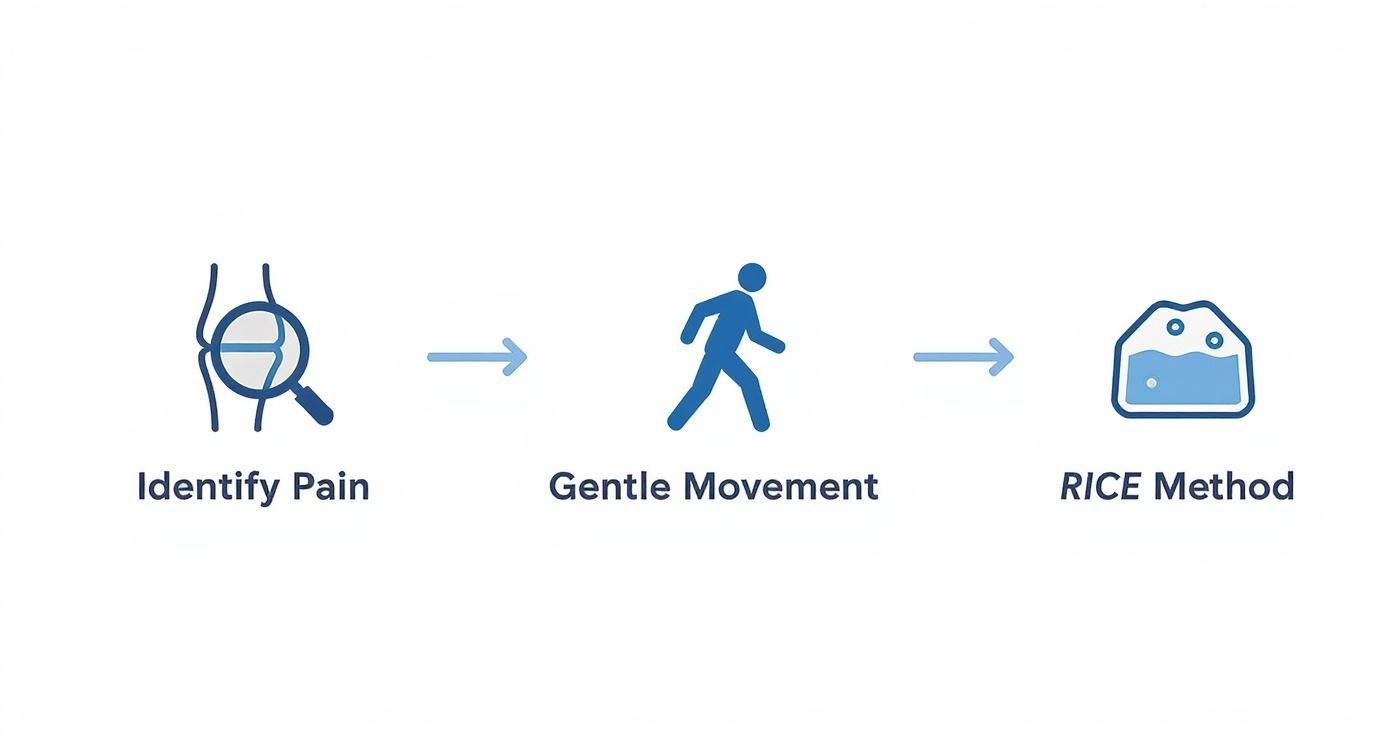
As you can see, the path forward starts with understanding the source of the pain, followed by careful, targeted movement and relief. It's a comprehensive first-response plan.
A few safe movements to try right away include:
- Heel Slides: Lie on your back and slowly slide the heel of your affected leg toward your butt, bending the knee only as far as it feels comfortable. Then, slowly slide it back down.
- Ankle Pumps: This one couldn't be simpler. Just point and flex your foot over and over. It gets blood flowing without putting any real stress on the knee joint itself.
- Short Arc Quads: Lie down with a small, rolled-up towel under your painful knee. Gently tighten your thigh muscle to straighten your leg, hold it for a few seconds, and then slowly lower it back down.
These initial steps aren't just about feeling better for a few hours. They're about preparing your knee for a more structured and effective rehabilitation plan. By actively managing your pain from the very beginning, you're taking back control and building a foundation for a stronger, healthier knee for the long haul.
Understanding the Source of Your Knee Discomfort
If you want lasting, non surgical knee pain relief, you have to start by playing detective. Figuring out the "why" behind your pain is the single most important step in building a recovery plan that actually gets you somewhere. Just slapping on an ice pack or popping a pain reliever might get you through the afternoon, but it won’t solve the underlying problem.
Your first clue comes from the pain itself. What does it feel like? Is it a dull, constant ache that makes the joint feel warm? Or is it a sharp, stabbing pain that only shows up when you try to climb stairs or get out of a chair? The character of the pain points us in the right direction.
Distinguishing Mechanical from Inflammatory Pain
Generally, we can sort knee pain into two major buckets. Knowing which bucket your pain falls into is a game-changer for deciding what to do next.
Mechanical pain is all about movement. It flares up when you're active and eases off when you rest. This is the classic signature of things like wear-and-tear on your cartilage or a minor ligament strain.
On the other hand, inflammatory pain can be a constant companion, even when you're sitting perfectly still. It often brings friends along, like visible swelling, redness, and warmth around the joint. This type of pain is common with conditions like rheumatoid arthritis or gout, where your own immune system is part of the problem.
One of the biggest culprits behind chronic knee pain is knee osteoarthritis (KOA). This is the condition where the smooth, protective cartilage inside the joint gradually wears away over time. Globally, an estimated 365 million people are dealing with KOA, a number that has shot up by 113% since 1990, largely due to aging populations and rising obesity rates. You can dig into more knee pain statistics and facts to see just how widespread this issue is.
The Clinical Evaluation Process
When you see a physical therapist or doctor, they’ll start their own detective work. The physical exam might seem low-tech, but it’s an incredibly powerful tool for understanding what’s really going on with your knee.
Your provider will run through a series of hands-on assessments:
- Palpation: They’ll gently press on different spots around your knee, checking for tenderness, swelling, or heat. This helps them zero in on the exact location of the trouble.
- Range of Motion Tests: By carefully bending and straightening your leg, they can see how much movement you have and whether anything is blocking the joint.
- Strength and Stability Tests: They'll apply light pressure from different angles to test the ligaments that hold your knee together, making sure everything is stable and secure.
The physical exam is often more revealing than people expect. How your knee responds to specific movements and pressures tells a skilled practitioner a detailed story about what's happening inside the joint, long before any imaging is ordered.
When Is Imaging Truly Necessary?
People often ask if they need an X-ray or MRI right away. The answer is usually no. While these are fantastic tools, they aren't always the first step.
An X-ray is great for looking at bones. It can spot fractures, bone spurs, or the narrowing of the joint space that signals more advanced osteoarthritis.
An MRI (Magnetic Resonance Imaging) gives us a beautiful, detailed picture of all the soft tissues. It's what we rely on to diagnose problems like:
- Meniscus tears
- Ligament ruptures (like an ACL tear)
- Damage to the cartilage surface
A good doctor will typically only order imaging if the physical exam points to a specific structural problem they can't confirm by hand, or if your symptoms just aren't getting better with initial treatment. Understanding this helps you have a smarter conversation with your provider, ensuring your plan for non surgical knee pain relief is efficient and tailored specifically to you.
How Physical Therapy Builds Stronger Knees
In my years guiding patients through knee discomfort, I’ve learned that structured, therapeutic movement is far more than a suggestion—it’s the backbone of any non surgical knee pain relief plan. Pain and instability often stem from weakened support muscles, setting up a frustrating cycle of dysfunction.
A skilled physical therapist doesn’t just hand you a generic exercise sheet. They act like a coach, carefully assessing your biomechanics to pinpoint why your knee aches. From there, they craft a program that rebuilds strength, restores flexibility, and guides movement patterns—essentially creating a natural brace around your joint.
Strengthening Your Knee’s First Line Of Defense
Your quadriceps—the powerhouse at the front of your thigh—absorb impact with every step. When these muscles are firing correctly, they offload stress from the knee joint itself.
- Straight Leg Raise: Lie on your back, tighten the quad, and lift your leg about 1 foot off the floor. Hold for 3–5 seconds, then lower gently. This isolates the quads without bending the knee.
- Mini-Squats: Stand with feet hip-width apart and bend your knees just a couple of inches. The controlled motion builds functional strength while protecting the kneecap.
- Terminal Knee Extensions: Anchor a light resistance band, loop it behind your knee, and fully straighten your leg against tension. This hones in on the VMO (vastus medialis oblique), a key muscle for patellar stability.
The Importance Of Flexibility And Balance
Strong muscles matter, but so does length. Tight hamstrings and calves can tug on the knee, throwing off alignment and fueling pain.
- Hamstring Stretch: Sit with one leg extended and hinge at the hip, reaching toward your toes.
- Calf Stretch: Face a wall, place one foot back, and press your heel down as you lean forward.
Think of your knee as the central link in a chain—if your hip or ankle is out of sync, the joint suffers. Addressing muscle tightness and balance above and below the knee restores harmony to the entire chain.
Strengthening the gluteal muscles is one of the most impactful things you can do for non surgical knee pain relief. Often, people are surprised to discover their knee soreness is really a hip issue in disguise.
Correcting Faulty Movement Patterns
Beyond individual exercises, therapists scrutinize everyday actions—walking, stair climbing, even standing up from a chair. Small compensations, like letting the knee cave inward, can overload sensitive areas.
This neuromuscular re-education retrains your brain and body to move in sync, distributing forces evenly across the joint. For many, integrating low-impact routines such as those highlighted in Pilates for Ultimate Health and Strength offers a powerful way to enhance core support and lower-body stability.
Recovery isn’t rushed. You begin with foundational movements and gradually advance as strength and confidence build. Each milestone takes you closer to a resilient, reliable knee—one you can trust with every step.
Modern Biomechanical and Manual Therapies
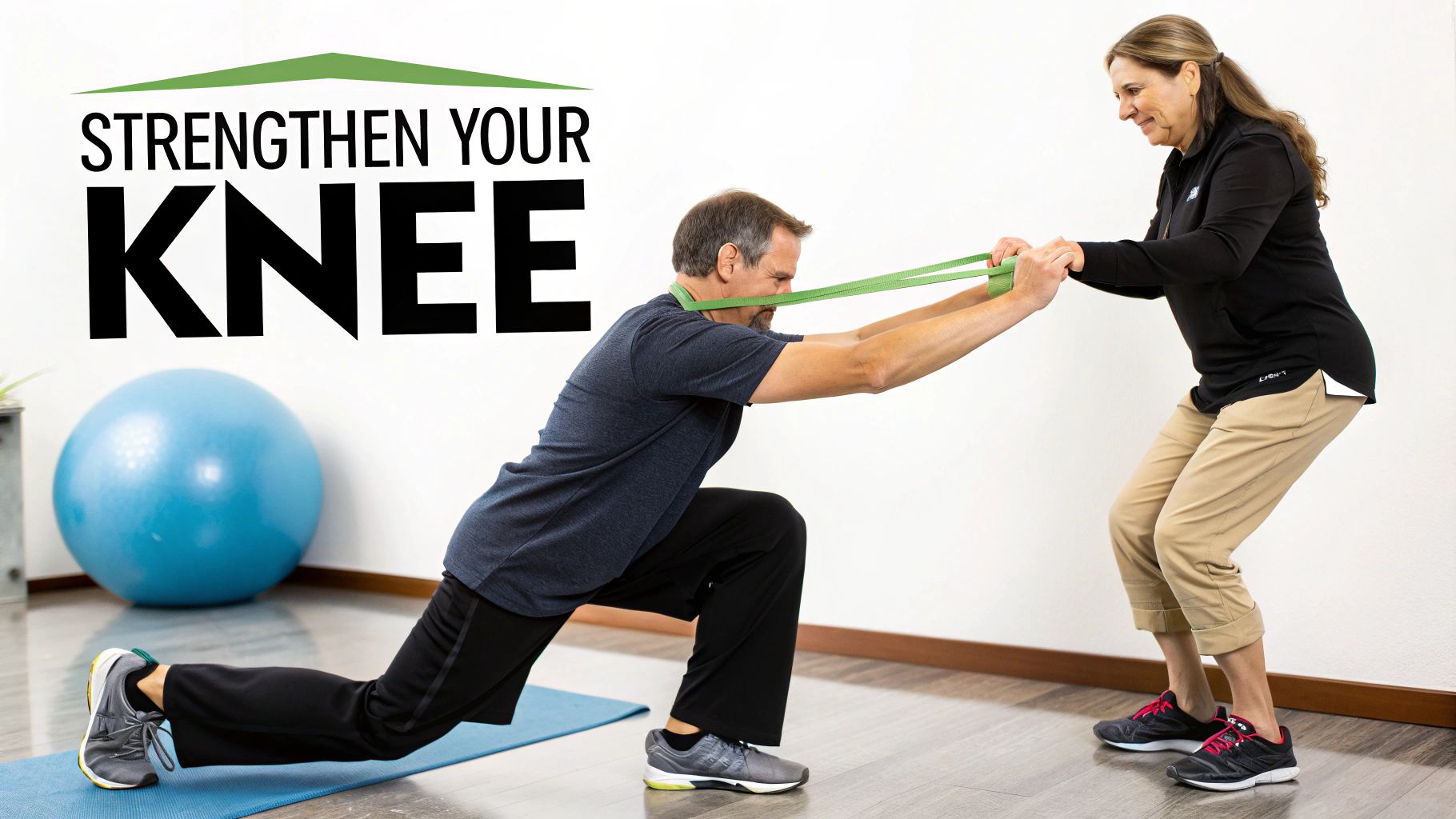
While strengthening exercises are the foundation for long-term knee health, sometimes you need a more direct, hands-on approach to break the cycle of pain and stiffness. That’s where a good physical therapist and manual therapies make all the difference.
Think of it this way: exercises build muscle, but manual therapies restore proper joint mechanics and release deep-seated tension. A skilled practitioner uses their hands to feel for restrictions, gently improve how the kneecap tracks, or break down adhesions limiting your range of motion. It’s a targeted approach that can bring an incredible sense of relief.
Hands-On Techniques for Lasting Relief
Manual therapy isn't just one thing; it's a whole toolbox of specialized techniques a therapist will choose from based on your specific condition. The goal might be to calm down irritated soft tissue or to improve the fundamental movement of the joint itself.
These techniques are especially valuable when your knee is too painful or sensitive for more active exercises. They help pave the way, making it possible to move on to a more robust rehab program.
Some of the most effective approaches include:
- Soft Tissue Mobilization: This is much more than a simple massage. It’s a targeted technique that applies pressure to break down scar tissue and release restrictions in muscles and fascia that could be pulling your knee out of alignment.
- Joint Mobilization: Here, a therapist uses slow, controlled gliding movements at the joint. This helps lubricate the joint surfaces, reduce pain signals, and restore the small but essential movements needed for smooth function.
- Cupping Therapy: This ancient practice uses suction to lift tissue, which can dramatically increase blood flow to the area and release deep muscular tension. We often incorporate this into our plans; you can learn more about what is cupping therapy and how it fits into pain management.
The real power of manual therapy is its ability to get things "unstuck." When we can properly mobilize a joint, patients often feel an immediate improvement in movement and a drop in pain. That little win builds the confidence you need to push forward with your recovery.
Looking Beyond the Knee with Biomechanics
Often, the problem isn’t just the knee—it’s a symptom of a larger issue. Biomechanics is the study of how your body moves as a complete system. Faulty mechanics in your feet or hips can set off a chain reaction, putting uneven and excessive stress on your knees with every single step.
Think of your body like a car with poor alignment. You can keep patching the tire, but the problem will keep coming back until you fix the alignment. Biomechanical corrections are a cornerstone of modern non surgical knee pain relief because they address the root cause.
This might be as simple as getting fitted for custom orthotics that slide into your shoes to correct how your foot hits the ground. Other times, it involves more advanced approaches that actively retrain your gait and movement patterns.
A fantastic real-world example of this is AposHealth's personalized program. In their studies, patients with chronic knee osteoarthritis saw an average 70% reduction in knee pain. What's more, 89% of eligible patients were able to avoid total knee replacement surgery for up to six years. The ripple effects were huge: participants also reported a 61% decrease in pain medication use and an 85% drop in opioid consumption. These are powerful results that show just how effective correcting movement can be. You can discover more about these patient-centric findings directly from their research.
By combining direct, hands-on care with a big-picture view of your body’s mechanics, we can tackle knee pain from every angle. This integrated strategy gives you the best shot at a full recovery without ever having to go under the knife.
Accessible Low-Impact Relief Strategies
Sometimes the best ways to get non surgical knee pain relief are the ones you can easily weave into your daily routine. It's not always about complicated treatments or expensive gadgets. More often than not, it's the consistent, gentle, low-impact work that delivers the most significant and lasting results. These approaches are all about strengthening the knee and improving how it functions without piling on more stress.
This is about working smarter, not harder. You're creating an environment where your knee can actually heal and build resilience on its own. By focusing on these accessible methods, you're giving yourself a toolkit you can use anytime, anywhere, to manage your pain and truly take charge of your recovery.
Harnessing The Power Of Water With Hydrotherapy
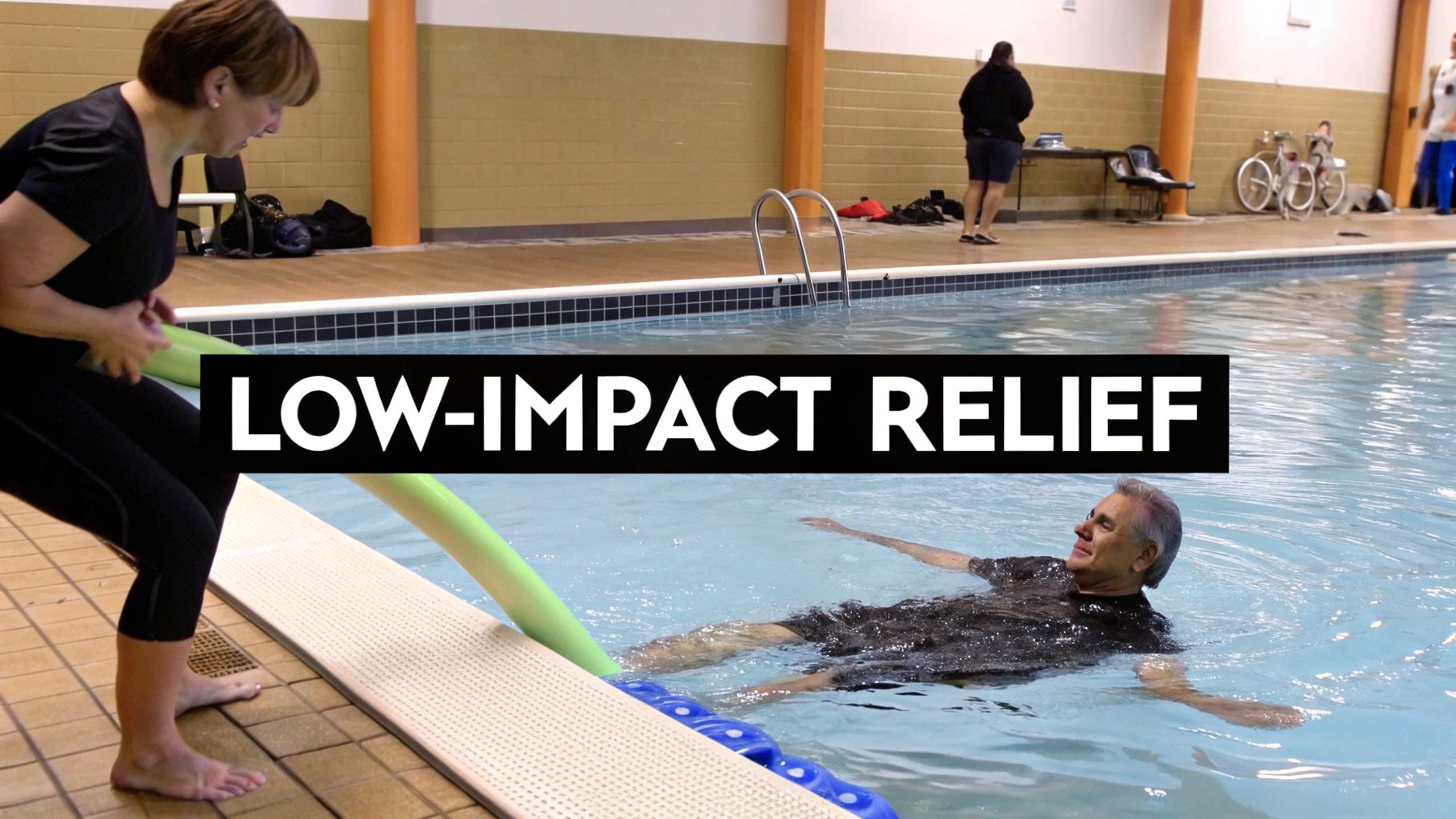
Imagine doing squats, lunges, or even just walking without that familiar, jarring impact on your knees. That's the magic of hydrotherapy. The natural buoyancy of water supports your body weight, which can reduce the load on your joints by as much as 90%. This unique, supportive environment lets you build strength in crucial muscle groups—like your quads and glutes—in a way that might be completely out of the question on solid ground.
Plus, the gentle resistance from the water gives you a safe and surprisingly effective cardio workout. Things like water aerobics or even just walking laps in the pool get your heart rate up, help with weight management, and improve circulation. All of these are critical pieces of the puzzle for managing pain and improving your overall health.
If a pool isn't readily available, an exercise bike for home workouts can offer a similar low-impact benefit, giving you a great cardio session without punishing your knees.
The Strategic Use Of Knee Braces
Knee braces get a bad rap sometimes. People think of them as a permanent crutch, but that's not their purpose at all. Think of a brace as a strategic tool you use to give yourself stability and confidence during specific activities. If your knee feels like it might give way on a walk, a well-fitted brace can provide just enough external support to help you move safely while you work on rebuilding your own muscle strength.
Not all braces are created equal, and they serve different functions:
- Compression Sleeves: These are great for mild support. They also improve proprioception—your brain's awareness of where your knee is in space, which can be a game-changer for stability.
- Unloader Braces: These are specifically designed for osteoarthritis. They work by shifting pressure off the damaged part of the knee and onto a healthier area.
- Stabilizing Braces: With their rigid hinges, these are meant to protect the knee from unstable movements, often used after a ligament injury.
The goal is to use a brace to enable activity, not to replace the hard work of building your own muscular support system.
Exploring Complementary Approaches Like Acupuncture
For many people I've worked with, complementary therapies can be a powerful tool for managing chronic knee pain. Acupuncture, a cornerstone of Traditional Chinese Medicine, uses incredibly fine needles at specific points on the body to kickstart your natural healing processes and dial down pain signals. It’s becoming more and more recognized as a legitimate option for people looking for non-drug pain relief.
I've had many patients report that acupuncture doesn't just help with their knee pain, but it also eases the stress and anxiety that so often come with living with a chronic condition. It works by improving blood flow, relaxing tight, overworked muscles, and triggering the release of endorphins—your body’s own natural painkillers. Our detailed guide on non-drug pain management digs deeper into this and other effective methods.
To help you decide what might work for you, let's compare some of these common therapies.
Comparing Low-Impact Non-Surgical Therapies
This table breaks down some of the most common low-impact and complementary therapies for knee pain, highlighting what they're best for and what you should keep in mind.
| Therapy | Primary Benefit | Best For | Considerations |
|---|---|---|---|
| Hydrotherapy | Reduces joint load, allowing for pain-free strengthening and cardio. | Arthritis, post-op recovery, or when land-based exercise is too painful. | Requires access to a pool. Can be less intense than other cardio forms. |
| Knee Bracing | Provides external stability, improves confidence, and can offload pressure. | Instability, ligament injuries, specific types of osteoarthritis (unloader braces). | Should be properly fitted. Not a substitute for strengthening exercises. |
| Acupuncture | Natural pain relief, reduces inflammation, and improves overall well-being. | Chronic pain (like osteoarthritis), and for those seeking non-pharmaceutical options. | Results can vary; may require multiple sessions to see full benefits. |
| Stationary Biking | Low-impact cardiovascular fitness and quadriceps strengthening. | Maintaining fitness during recovery, improving range of motion. | Proper bike setup is crucial to avoid putting stress on the knee joint. |
Each of these therapies offers a unique benefit, and they often work best when used in combination as part of a holistic recovery plan.
By weaving these accessible and low-impact strategies into your plan, you build a multi-faceted approach to non surgical knee pain relief. You end up addressing the symptoms from several angles, which is the surest path to better mobility and getting back to the life you want to live.
When to Consider Injections and Identify Red Flags
So, you've been diligent. You've stuck with your physical therapy, embraced manual therapies, and made those crucial lifestyle changes. But what happens when the pain still sidelines you from your daily life? This is often the point where we begin to explore the next level of non surgical knee pain relief.
Minimally invasive injections can be a real game-changer. They act as a powerful bridge, dialing down the pain enough for you to get more out of your rehab exercises. Think of them not as a permanent fix, but as a tool to manage symptoms, cool off inflammation, and improve your overall function. They can buy you valuable, more comfortable time to strengthen the muscles that support your knee, potentially putting off—or even avoiding—the need for surgery.
Common Injections for Knee Pain Relief
When it comes to knee injections, there are a few go-to options, and each has a different job. Understanding what they do is the first step in figuring out if one is right for you.
- Corticosteroid Injections: These are the heavy hitters for inflammation. Cortisone is a potent anti-inflammatory that gets right to the source of the problem. A single shot can bring fast, significant relief that might last for several months, which is often exactly what's needed to break a cycle of pain.
- Hyaluronic Acid (HA) Injections: You might hear this called "viscosupplementation." The idea here is to supplement the natural fluid in your joint. Hyaluronic acid is what gives your joint fluid its slippery, shock-absorbing quality. These injections add a gel-like cushion back into the knee, helping it move more smoothly.
- Platelet-Rich Plasma (PRP) Therapy: This is where we tap into your body's own healing ability. We draw a small amount of your blood, spin it down to concentrate the platelets—which are packed with growth factors—and then inject that super-charged plasma back into your knee to encourage tissue repair.
These treatments offer a more direct approach when other conservative methods aren't cutting it. If you're looking at all the ways you can postpone a major procedure, it's worth exploring the full range of alternatives to knee replacement surgery to see how injections fit into the big picture.
I often tell my patients to think of injections not as a finish line but as a strategic pit stop. They can reduce pain enough to make physical therapy more effective, helping you build the strength needed for long-term stability and relief.
Deciding Which Injection Is Right for You
So, which one is best? That depends entirely on your knee. The right choice hinges on your specific diagnosis, how severe your symptoms are, and what you're hoping to achieve. This is a crucial conversation to have with your doctor.
For instance, if you're dealing with an acute flare-up of arthritis with a ton of inflammation, a corticosteroid shot might provide the most immediate rescue. But if your pain is more of a chronic, grinding issue from wear-and-tear osteoarthritis, HA or PRP injections could offer more sustained improvement in joint function over the long haul.
Recognizing Red Flags That Demand Immediate Attention
While we're focused on avoiding surgery, it's just as important to know when your knee is sending out an S.O.S. Ignoring these "red flag" symptoms can lead to much more serious problems or even permanent damage.
Don't hesitate to seek immediate medical care if you experience any of the following:
- Inability to Bear Weight: If your knee suddenly buckles or you absolutely cannot put any weight on it, you could be dealing with a major structural injury like a fracture or a complete ligament rupture.
- Visible Deformity: A glance at your knee shows a clear change in shape—a new lump, a dent, or an obvious misalignment. This isn't normal and needs to be looked at right away.
- Signs of Infection: This is a medical emergency. Watch for intense, throbbing pain combined with significant swelling, redness, and a knee that's hot to the touch. If you also have a fever or feel sick all over, get help immediately.
- Sudden, Severe Swelling: Some swelling is expected, but a knee that blows up like a balloon in a short amount of time, especially after a "pop," could mean internal bleeding or a large tear.
Knowing your treatment options is empowering, but knowing when to call for urgent help is essential for your long-term health. By recognizing these boundaries, you can manage your knee pain safely and make the best decisions for staying mobile for years to come.
Common Questions About Non Surgical Knee Pain Relief
https://www.youtube.com/embed/oM4_uFQEDrs
When you're dealing with knee pain, you're bound to have questions. Everyone wants to know what to expect, how long recovery will take, and if these non-surgical options are really going to work. Let's tackle some of the most common concerns I hear from patients every day.
One of the first things people ask is, "How long until I feel better?" The honest answer is: it depends. It's not a one-size-fits-all timeline. The real progress comes down to what's causing your pain in the first place and which treatments we're using. Physical therapy, for instance, isn't a quick fix. You have to put in the work for several weeks to build strength and see a real, lasting difference.
On the other hand, some treatments offer more immediate relief. A corticosteroid injection can calm down severe inflammation and pain within 24 to 48 hours, but it's important to see it for what it is—a temporary tool to break a painful cycle, not a permanent solution.
How Do I Know Which Treatment Is Best For Me?
This is the most important question of all, and the answer is always unique to you. The right path forward begins with getting an accurate diagnosis. Are we dealing with the wear-and-tear of osteoarthritis, a nagging tendon issue, or a fundamental problem with your body's mechanics?
A plan designed for inflammatory arthritis will be completely different from one for a ligament sprain. That's why a cookie-cutter approach just doesn't cut it. Your best bet is a custom plan that blends different therapies tailored to your specific condition, your lifestyle, and what you want to get back to doing.
The most successful outcomes I've seen come from a combination of therapies. We might use acupuncture to manage pain, physical therapy to build strength, and lifestyle adjustments to reduce daily strain on the joint. It's about attacking the problem from multiple angles.
What If My Pain Comes And Goes?
Pain that fluctuates is incredibly common, particularly with conditions like osteoarthritis. Changes in the weather, how active you've been, or even stress can trigger a flare-up. The most important thing is not to get discouraged.
When you're having a good day, that’s your window to focus on those strengthening exercises and gentle activity. On a bad day, you lean on your immediate relief strategies—maybe it’s ice, some gentle range-of-motion movements, or an acupuncture session to calm things down.
A truly comprehensive non surgical knee pain relief plan gives you the tools to handle these ups and downs. It's about putting you back in control of your condition, not the other way around.
At Eric Tsai Acupuncture and Herbs, we specialize in creating personalized, multi-faceted treatment plans that integrate the best of traditional wisdom and modern understanding. If you're ready to take control of your knee pain without surgery, visit us at our website to learn more and schedule a consultation.