
When couples are struggling to conceive, the focus often lands squarely on female fertility. But that’s only half the story. It turns out that acupuncture for male infertility is a powerful, low-risk approach that can make a real difference in key fertility metrics, giving men a proactive way to contribute to the journey.
Exploring Acupuncture as a Natural Fertility Solution

The path to parenthood is a team effort, and male factor infertility is a consideration in about 50% of cases worldwide. While modern medicine has its solutions, many are looking for complementary treatments that work with the body’s natural ability to heal. This is where acupuncture, a practice rooted in thousands of years of Traditional Chinese Medicine (TCM), is really starting to shine.
In TCM, the body's energy pathways (meridians) are like a complex highway system, delivering essential resources to every part of the body. The Kidney system, specifically, is considered the powerhouse of reproductive energy.
When things like chronic stress, a less-than-ideal diet, or environmental factors create a traffic jam on this highway, the flow of vital energy (Qi) and blood to the reproductive organs gets sluggish. The result? It can show up as poor sperm quality or hormonal disruptions.
Acupuncture works by clearing these energetic roadblocks. An experienced practitioner places incredibly fine needles at precise points, which helps improve circulation and sends signals to the nervous system to get back in balance. This isn't just ancient wisdom; modern science is starting to catch up and confirm what practitioners have known for centuries.
Before we dive deeper, here's a quick look at the key considerations for using acupuncture to address male infertility.
Acupuncture for Male Infertility Key Considerations at a Glance
| Aspect | Summary of Benefits | Typical Timeframe |
|---|---|---|
| Sperm Health | Can improve sperm count, motility (movement), and morphology (shape). | 3 to 6 months of consistent treatment is often recommended. |
| Hormone Balance | Helps regulate hormones like testosterone and FSH, crucial for sperm production. | Initial changes can be seen within weeks, but hormonal shifts take time. |
| Stress Reduction | Lowers cortisol levels, which can negatively impact reproductive health. | Many patients report feeling calmer and more relaxed after the first session. |
| Circulation | Boosts blood flow to the reproductive organs, improving nutrient and oxygen delivery. | Cumulative benefits build with each treatment session. |
This table gives you the bird's-eye view, but let's get into the specifics of how and why this works.
What Does the Science Say?
A major systematic review of multiple studies found that acupuncture has a significant positive impact on male infertility. The research was particularly clear that outcomes improved dramatically when acupuncture was combined with other therapies. In fact, the study showed that adding acupuncture to a treatment plan boosted overall effectiveness far more than using Western medicine on its own. It’s not about replacing conventional care, but about making it work better.
Building a Foundation for Health
At its core, using acupuncture for male infertility isn't just about making better sperm. It’s about getting your entire system running optimally to create the best possible environment for conception. This holistic strategy targets a few key areas all at once:
- Stress Reduction: It's no secret that stress is a killer. High levels of the stress hormone cortisol can throw testosterone and sperm production out of whack. Acupuncture is fantastic for calming the nervous system down.
- Hormonal Regulation: Think of your hormones as a finely tuned orchestra. Acupuncture helps ensure all the instruments are playing in harmony, which is essential for healthy sperm development (spermatogenesis).
- Improved Blood Flow: Better circulation means more oxygen and nutrients are getting delivered to the testes, giving them the fuel they need to do their job properly.
By strengthening these foundational pillars of health, acupuncture creates a solid framework for improving a man's reproductive potential. To see how this fits into a comprehensive strategy, you can learn more about finding the best acupuncture for fertility in our detailed guide.
How Acupuncture Influences Male Reproductive Health

To really get a handle on how acupuncture can help with male infertility, it helps to look at it from two different angles—one from ancient tradition and the other from modern science. They might seem worlds apart, but together they give us a surprisingly complete picture of how tiny needles can spark significant changes in reproductive health.
From a Traditional Chinese Medicine (TCM) perspective, everything about male fertility circles back to the health of the Kidney meridian system. You can think of this system as the body’s fundamental energy reserve, like a deep-cell battery that powers all of our growth, development, and, of course, reproduction.
When this energy, called Qi, is strong and flowing freely, the reproductive organs get all the nourishment they need to do their job well. But things like chronic stress, a less-than-ideal diet, or just plain overwork can drain this battery, creating imbalances that often show up as fertility problems. Acupuncture steps in to correct this by stimulating points that recharge the Kidney Qi and get circulation moving again.
Bridging Ancient Wisdom with Modern Science
While TCM gives us a powerful framework based on energy and balance, Western medicine helps explain what’s happening on a physiological level. We now have research showing that acupuncture isn't just about moving invisible energy—it triggers real, measurable biological responses that have a direct impact on male reproductive health.
One of the biggest ways it does this is by helping to regulate the hypothalamic-pituitary-gonadal (HPG) axis. This is the intricate communication network that acts as the body's command centre for hormone production, including all the key hormones needed for sperm development.
By stimulating certain nerve pathways, acupuncture can help fine-tune these hormonal signals, creating a much more stable and supportive environment for making sperm. A deep understanding of this hormonal dance, including the role of testosterone in male fertility, is key to seeing how an intervention like acupuncture can make a difference.
Reducing Stress and Improving Blood Flow
It's no secret that chronic stress is a major roadblock to fertility. When you're constantly in fight-or-flight mode, your body is flooded with cortisol, a stress hormone that can seriously disrupt reproductive function. Acupuncture is well-known for its ability to activate the parasympathetic nervous system—the body's "rest and digest" state—which helps bring cortisol levels back down and fosters a sense of deep relaxation.
This isn't just about feeling calmer; it has a direct physical benefit.
Lowering stress helps rebalance the entire endocrine system, which is crucial for healthy sperm production. By calming the nervous system, acupuncture helps shift the body out of a constant state of high alert and into a state conducive to healing and reproduction.
On top of that, acupuncture is fantastic for improving microcirculation. By increasing blood flow directly to the testes, it delivers a richer supply of oxygen and nutrients right where sperm are being made. Better circulation also means waste products are cleared out more effectively.
This creates the ideal local environment for several critical processes:
- Sperm Maturation: It supplies the raw materials needed for sperm to develop properly.
- Temperature Regulation: It helps maintain the slightly cooler temperature that the testes need to function at their best.
- Nutrient Delivery: It ensures the reproductive tissues have everything they need to perform optimally.
By tackling hormonal regulation, stress, and local blood flow all at once, acupuncture offers a multi-faceted approach to male infertility. It’s about correcting imbalances from both an energetic and a physiological standpoint, ultimately helping to restore the body’s innate ability to reproduce. The goal isn't to force a result, but to create the perfect internal conditions for fertility to thrive on its own.
Seeing Real-World Results: How Acupuncture Improves Sperm Quality
While the traditional theories are fascinating, what most men really want to know is: does this actually work? Can acupuncture lead to concrete, measurable improvements in fertility? The answer is a definitive yes, and we track this progress using a semen analysis.
Think of sperm production—a process called spermatogenesis—as a delicate, 90-day assembly line. If the factory has power surges (stress), supply chain disruptions (poor circulation), or malfunctioning equipment (hormonal imbalances), the quality of the final product suffers. Acupuncture steps in as the master technician, fine-tuning the entire system to ensure a better outcome.
These aren't just subtle shifts. The goal is to see tangible improvements in the numbers that matter most for conception.
What We Look for on a Semen Analysis
A semen analysis gives us a clear report card on male reproductive health, and it focuses on three critical factors. Each one tells a crucial part of the fertility story.
-
Sperm Count (Concentration): This is simply the total number of sperm in a sample. More is often better, as it increases the statistical probability of one successfully reaching the egg.
-
Sperm Motility (Movement): This measures what percentage of the sperm are active swimmers. We pay special attention to progressive motility—the sperm swimming with purpose in a straight line, not just wiggling in circles. This is the quality that gets them to their destination.
-
Sperm Morphology (Shape): This looks at the structure of the sperm. A "normal" sperm has a classic oval head and a long tail, a design that's essential for both efficient swimming and penetrating the egg's outer layer.
Improving any single one of these can boost your chances, but making gains across all three can be a game-changer. This is exactly where the clinical evidence for acupuncture gets really interesting.
The Proof Is in the Numbers
Modern research is consistently backing up what practitioners have known for centuries: acupuncture can produce significant, measurable improvements in key sperm parameters. This goes far beyond just reducing stress; the treatment triggers real biological changes that show up on a lab report.
A major review of multiple studies found that acupuncture therapy led to a significant increase in both sperm concentration and the percentage of sperm with strong, forward motility. Put simply, men produced more sperm, and a higher portion of them were effective swimmers.
One compelling study directly compared acupuncture to varicocelectomy, a common surgery to fix varicose veins in the scrotum. The results were striking. Acupuncture actually improved sperm concentration more than the surgery did. Even more telling, both approaches resulted in the exact same pregnancy rate: 33%. Acupuncture achieved this without any invasive procedures.
These findings show that acupuncture isn't just a "last resort" therapy. It's a powerful and effective treatment, whether used on its own or alongside conventional medical approaches. You can dive deeper into the data from this comparative research on improving sperm health.
Why Patience and Consistency Are Your Best Allies
It's crucial to understand the timeline here. Seeing those improved numbers doesn't happen overnight. The entire life cycle of a sperm, from its initial formation to full maturity, takes about 70 to 90 days.
This biological reality is why a consistent treatment plan is non-negotiable. A one-off session might make you feel relaxed, but to fundamentally change sperm quality, we need to influence that entire three-month development cycle.
Typically, I'll recommend a course of treatment involving weekly or bi-weekly sessions for at least three months. This sustained approach ensures that every new batch of sperm develops in an optimized, healthier internal environment. That's what ultimately moves the needle and leads to a much-improved semen analysis report.
Navigating Your Acupuncture Treatment Journey
Walking into an acupuncturist's office for the first time can feel a little mysterious, but the whole process is actually quite straightforward and centered around you. Let’s walk through what you can expect, step by step, so you can feel confident about starting this journey.
Your first appointment is really a deep dive into your health history. It’s less of a typical physical exam and more of an in-depth conversation. Your practitioner is trying to connect the dots between your lifestyle, your health, and your fertility goals to see the full picture of what’s going on.
This is where the unique diagnostic tools of Traditional Chinese Medicine (TCM) come into play. Your acupuncturist will likely ask to look at your tongue and will take your pulse at both wrists. It might seem strange, but these methods give us a surprisingly detailed snapshot of your internal health, revealing subtle imbalances that conventional tests might miss.
The Personalized Diagnostic Process
In Chinese medicine, we don't do "one-size-fits-all." The color, shape, and coating of your tongue, along with the specific quality and rhythm of your pulse, help us form a personalized "TCM diagnosis." This allows for a treatment plan built just for you, not some generic protocol for male infertility.
Once we have this roadmap, the treatment can begin. A lot of guys worry about the needles, but it's important to know that acupuncture needles are incredibly thin—about the width of a human hair—and very flexible.
The sensation is nothing like getting an injection. Most men feel a tiny pinch when the needle goes in, which might be followed by a gentle tingling, a feeling of warmth, or a dull, heavy sensation. We call this "de qi," and it's actually a good sign that the body's energy is being engaged. Honestly, it's so relaxing that it’s not uncommon for people to fall asleep during their session.
If you want to get a better feel for a typical session, you can learn more about what to expect from your first acupuncture appointment and how to prepare.
Crafting Your Treatment Schedule
When it comes to seeing results, consistency is everything. The entire process of sperm development, known as spermatogenesis, takes about 70 to 90 days. Our treatment schedule is specifically designed to work with this natural timeline, supporting the sperm at every stage of their growth.
A typical plan usually looks something like this:
- Initial Phase: We start with sessions once or twice a week for the first month or two. This frequency helps us correct any underlying imbalances and build positive momentum.
- Maintenance Phase: Once your body starts responding well, we can often reduce the frequency to once a week or every other week for the next couple of months.
- Re-evaluation: After about three months—the length of a full sperm cycle—we typically recommend another semen analysis. This lets us see tangible progress and fine-tune your treatment plan.
This is a journey, and each treatment builds on the last to support sperm health over time.
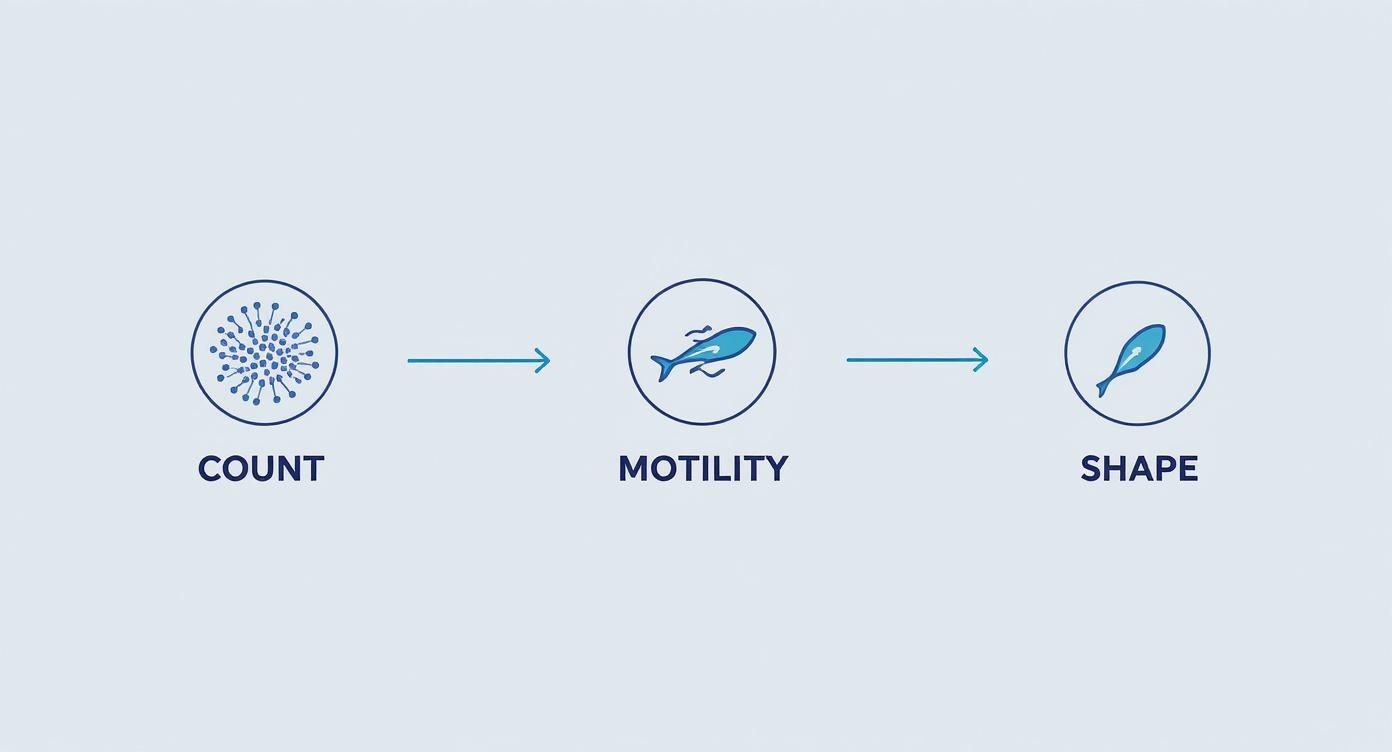
As you can see, the focus shifts from boosting sperm count to improving motility and then refining morphology. This patient, structured approach helps create the ideal environment for healthy sperm to develop, which directly enhances your fertility potential.
Integrating Acupuncture with Other Fertility Strategies
Think of acupuncture for male infertility not as a solo performance, but as a key player in a skilled ensemble. When you're building a fertility plan, you're essentially assembling a team of specialists for a complex project. Each expert—whether it's your acupuncturist, a herbalist, or a reproductive endocrinologist—brings a unique and valuable skill set to the table. When these different approaches work in concert, the results are often far more powerful than what any single strategy could achieve on its own.
This collaborative mindset is where the magic happens. Acupuncture shines as a supportive therapy, enhancing the effectiveness of other treatments while addressing the root causes of imbalance from a completely different, yet complementary, angle.
Enhancing Conventional Fertility Treatments
For many couples, the fertility journey involves conventional medical procedures like Intrauterine Insemination (IUI) or In Vitro Fertilization (IVF). Acupuncture is an excellent partner to these treatments, helping to optimize your chances of success by preparing your body beforehand.
By starting acupuncture sessions a few months before a planned IUI or IVF cycle, we can actively work on improving the fundamental quality of the sperm. The whole idea is to ensure that the sperm used in the procedure are as healthy, motile, and well-formed as they can possibly be. This preparation phase can make a significant difference in the final outcome.
The benefits go far beyond just the physical. The stress of undergoing fertility treatments can be immense, and we know that high cortisol levels can throw reproductive hormones out of whack. Acupuncture is incredibly effective at calming the nervous system, reducing anxiety, and helping you navigate the emotional ups and downs of the process with greater resilience.
The Synergy of Acupuncture and Chinese Herbal Medicine
Within the world of Traditional Chinese Medicine, acupuncture and herbal medicine are two sides of the same coin. While acupuncture is fantastic at unblocking energy pathways and improving circulation to the reproductive organs, Chinese herbal formulas work from the inside out to provide deep, systemic nourishment.
Here's a simple analogy: think of acupuncture as the electrician who fixes the wiring and ensures proper energy flow. Herbal medicine, then, is the premium fuel source that powers the entire system. As an acupuncturist, I might prescribe a custom herbal blend to:
- Nourish Kidney Essence: This is considered the foundational energy for all reproduction in TCM.
- Invigorate Blood: This ensures the reproductive organs receive a rich supply of oxygen and nutrients.
- Clear Damp-Heat: This helps address internal inflammation that can be incredibly harmful to sperm quality.
This combination creates a robust, multi-layered approach to improving male fertility. When we layer these two therapies with Western medicine, the results can be particularly compelling. Research continues to show that integrated approaches are often superior to using any single therapy on its own. For men specifically, acupuncture has been shown to improve sperm quality, balance hormones, and even help protect testicular tissue from damage. You can read more in these studies on combined fertility therapies.
Building a Complete Lifestyle Plan
The most successful fertility strategies I've seen always extend beyond the treatment room. A good acupuncturist will often act as a health coach, guiding you on lifestyle modifications that support your progress. This creates a 360-degree plan where every aspect of your life contributes positively to your fertility goals.
This holistic plan will almost certainly include advice on:
- Nutrition: Focusing on a diet rich in antioxidants, zinc, selenium, and healthy fats.
- Exercise: Engaging in moderate, consistent physical activity to improve circulation and manage stress.
- Sleep: Prioritizing 7-9 hours of quality sleep per night is non-negotiable for hormone regulation.
- Environmental Factors: Reducing exposure to toxins like plastics and pesticides that can act as endocrine disruptors.
By integrating these elements, you're not just passively receiving treatment; you are actively participating in your own health transformation. Making these changes can profoundly impact your sperm health, and you can explore more practical tips in our guide on how to increase sperm count and overall quality. This complete approach ensures that every pillar of your well-being is aligned toward the ultimate goal of starting or growing your family.
Your Questions on Acupuncture for Male Fertility, Answered
Deciding to try acupuncture to improve your fertility is a big step, and it’s completely natural to have a lot of questions. We get it. This is a personal journey, and you deserve clear, honest answers before you begin.
Think of this section as a conversation where we tackle the most common concerns we hear from men just like you. We’ll go over everything from what the needles feel like to how long it might take to see real results, so you can feel confident and informed.
Does Acupuncture for Male Infertility Hurt?
This is usually the first thing people ask, and for good reason. Let’s put that worry to rest right away: acupuncture is almost always a painless and surprisingly relaxing experience.
First off, these aren't the needles you're used to seeing at a doctor's office. Acupuncture needles are incredibly thin—some are as fine as a strand of human hair—and they’re solid, not hollow. This means they gently part the skin and tissue instead of cutting through it like an injection needle does.
Most people feel a tiny pinch or a brief tingling sensation right as the needle is inserted, but that feeling disappears almost immediately. In Chinese Medicine, we sometimes look for a subtle, dull ache or a warm, spreading sensation called "de qi." This is actually a good sign—it tells us we’ve connected with the body's energy at that specific point.
The entire experience is designed around your comfort. The treatment itself is meant to calm your nervous system, and it’s not uncommon for patients to relax so deeply they actually fall asleep on the table. A skilled, licensed acupuncturist knows how to make the entire process smooth and comfortable.
How Long Until I See Results from Acupuncture?
Acupuncture is about helping your body function at its best, which means we’re working with its natural rhythms. When it comes to sperm, that means we’re on a specific biological clock.
The full process of creating and maturing new sperm, called spermatogenesis, takes roughly 70 to 90 days. This isn’t a timeline we can rush; it’s hardwired into male biology. That’s why we build our treatment plans around this cycle.
Because of this, you should plan on at least three months of consistent treatment before you can expect to see meaningful changes in a semen analysis. It's a marathon, not a sprint. But while we're waiting for sperm parameters to improve, many men start noticing other positive changes much sooner.
These early benefits often include:
- Feeling Less Stressed: A deep sense of calm is one of the first things people report, sometimes after just one or two sessions.
- Better Sleep: Restorative sleep is a welcome side effect, and it plays a huge role in balancing hormones.
- More Energy: As we work to rebalance your system, many men notice a natural increase in their daily energy levels.
A standard treatment plan usually starts with weekly or bi-weekly sessions for about 12 weeks. After that initial period, we’ll reassess with you—often using a new semen analysis—to measure progress and fine-tune the plan going forward.
How Do I Find a Qualified Fertility Acupuncturist?
This is probably the most important step you’ll take. Finding the right practitioner can make all the difference. Not every acupuncturist specializes in reproductive health, so you’ll want to do a little homework.
Start by looking for a licensed acupuncturist (L.Ac.) who is also board-certified by the National Certification Commission for Acupuncture and Oriental Medicine (NCCAOM). This is the baseline—it guarantees they’ve met rigorous national standards for safety and expertise.
But you need to go a step further and find someone with a genuine focus on fertility. Here’s what to look for:
- Specialized Training: Have they completed post-graduate work or certifications in reproductive medicine?
- Professional Affiliations: Membership in an organization like the American Board of Oriental Reproductive Medicine (ABORM) is a strong indicator of advanced knowledge and commitment to the field.
- Real-World Experience: Don't be shy during your first consultation. Ask about their experience treating male infertility and what their approach typically looks like.
- A Collaborative Attitude: The best fertility acupuncturists are team players. They should be more than willing to work with your urologist or reproductive endocrinologist to ensure your care is integrated and seamless.
Is Acupuncture for Male Infertility Covered by Insurance?
Navigating insurance can be tricky. Coverage for acupuncture varies wildly based on your provider, plan, and even the state you live in. While more insurance companies are starting to recognize its benefits, coverage is still most common for pain-related conditions like backaches or migraines.
Unfortunately, fertility treatments—especially for male factor infertility—are covered less often.
Your best move is to call your insurance company directly before you book your first appointment. Get a clear "yes" or "no" upfront.
Questions to Ask Your Insurance Provider
| Category | Specific Question to Ask |
|---|---|
| Coverage | "Does my plan cover acupuncture services?" |
| Diagnosis | "Is it covered for a diagnosis of male infertility?" |
| Practitioner | "Does the acupuncturist have to be in-network for me to be covered?" |
| Limitations | "Are there any limits on the number of visits I can have per year?" |
| Cost | "What will my copay or coinsurance be for each visit?" |
If you find out your plan doesn’t cover it, don’t give up. Many clinics understand this is a common hurdle and offer treatment packages or wellness plans to make the care more affordable.
At Eric Tsai Acupuncture and Herbs, we're committed to offering clear, effective, and personalized care to guide you on your path to parenthood. We know this journey has its challenges, and we’re here to support you with an approach that blends timeless wisdom with a modern, evidence-based understanding. To find out more about how we can work together, please visit our website.